

Got ducts? Central AC. No ducts? Mini splits.
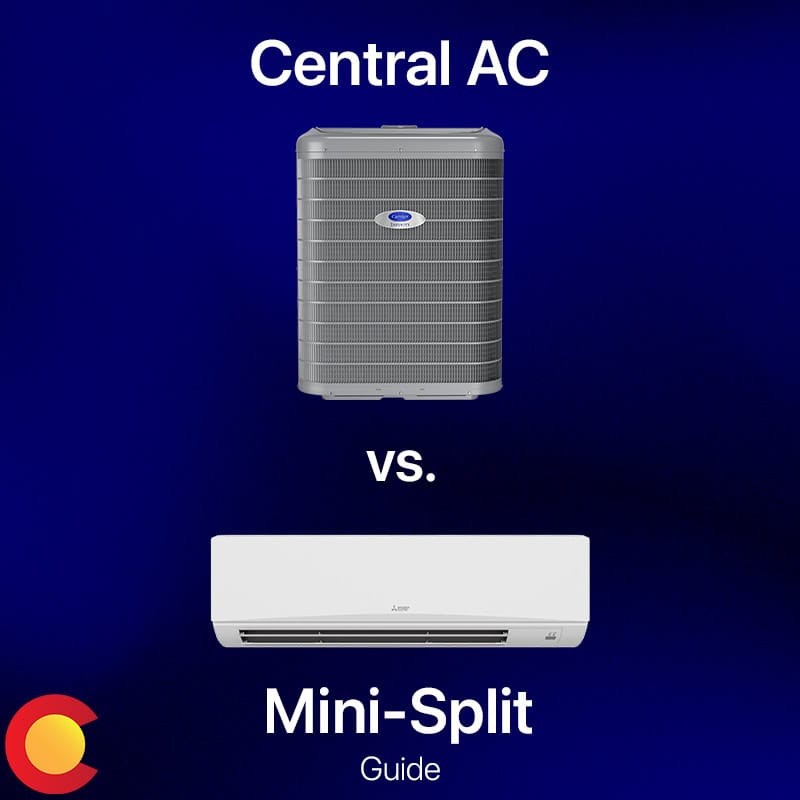
The simplest answer to "ducted vs ductless": if your home already has ductwork, central AC is typically the most cost-effective path to whole-home cooling. No ductwork - or cooling a specific room, addition, or garage - and mini splits are almost always the better choice.
Both systems work well. The decision usually comes down to your home's existing infrastructure, not which technology is "better" on paper (though mini splits do carry higher SEER2 efficiency ratings). We install both across Denver metro, and the right pick depends on your house, not a preference for one system over the other.
Central AC is typically better when...
- Your home already has ductwork in place
- You want whole-home cooling from one outdoor unit
- Budget is the primary concern and ducts are in good shape
Mini splits are typically better when...
- No existing ductwork, or it isn't worth extending
- You want independent temperature control per room or zone
- Adding a room addition, garage, or detached space
Central Air Conditioning
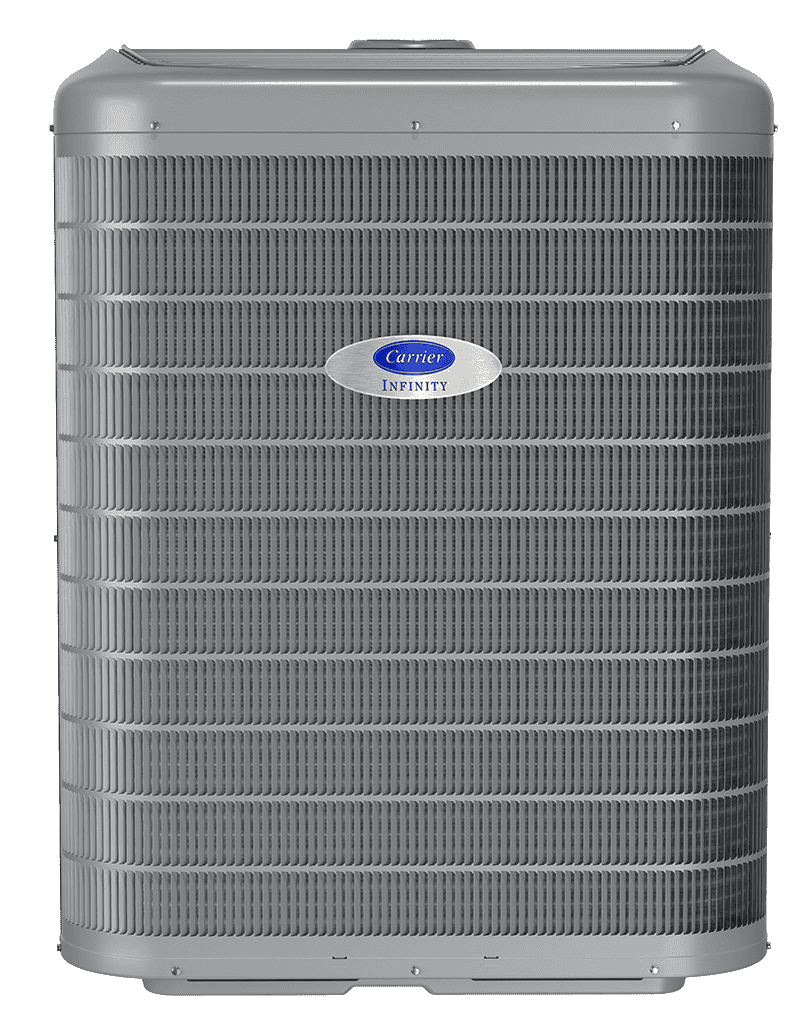
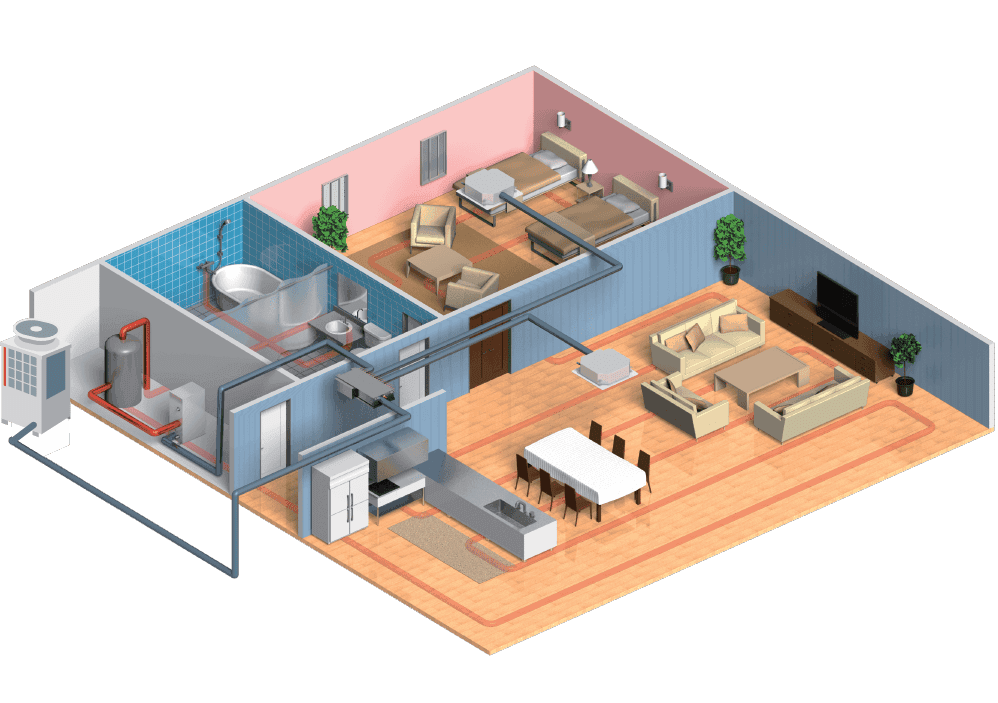
Central AC circulates cooled air through a network of ducts connected to a single outdoor condenser and indoor air handler. If your home already has a forced-air furnace, it very likely has the ductwork a central AC system needs - adding AC then becomes a matter of pairing an outdoor condenser with the existing air handler, rather than running new distribution throughout the house.
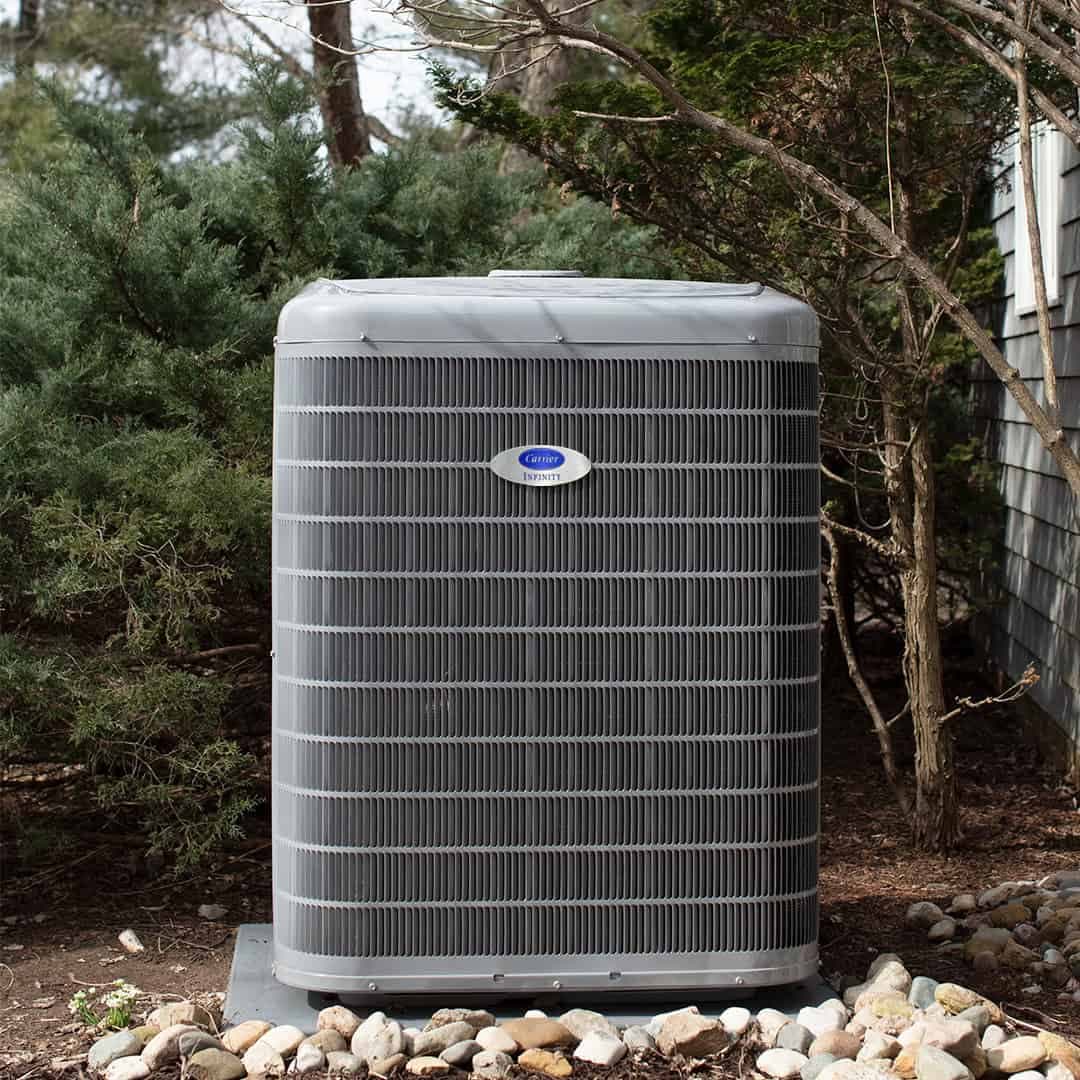
Central AC
Best for homes with existing forced-air ductwork
- Whole-home cooling through one outdoor unit
- Lower install cost when ductwork already exists
- Indoor components hidden in utility space
- Familiar technology, widely serviced
- High installation cost if ductwork must be added from scratch
- Leaky or uninsulated ducts reduce efficiency
- Single thermostat - no per-room temperature control without added zoning hardware
Ductless (Mini-Split) Systems
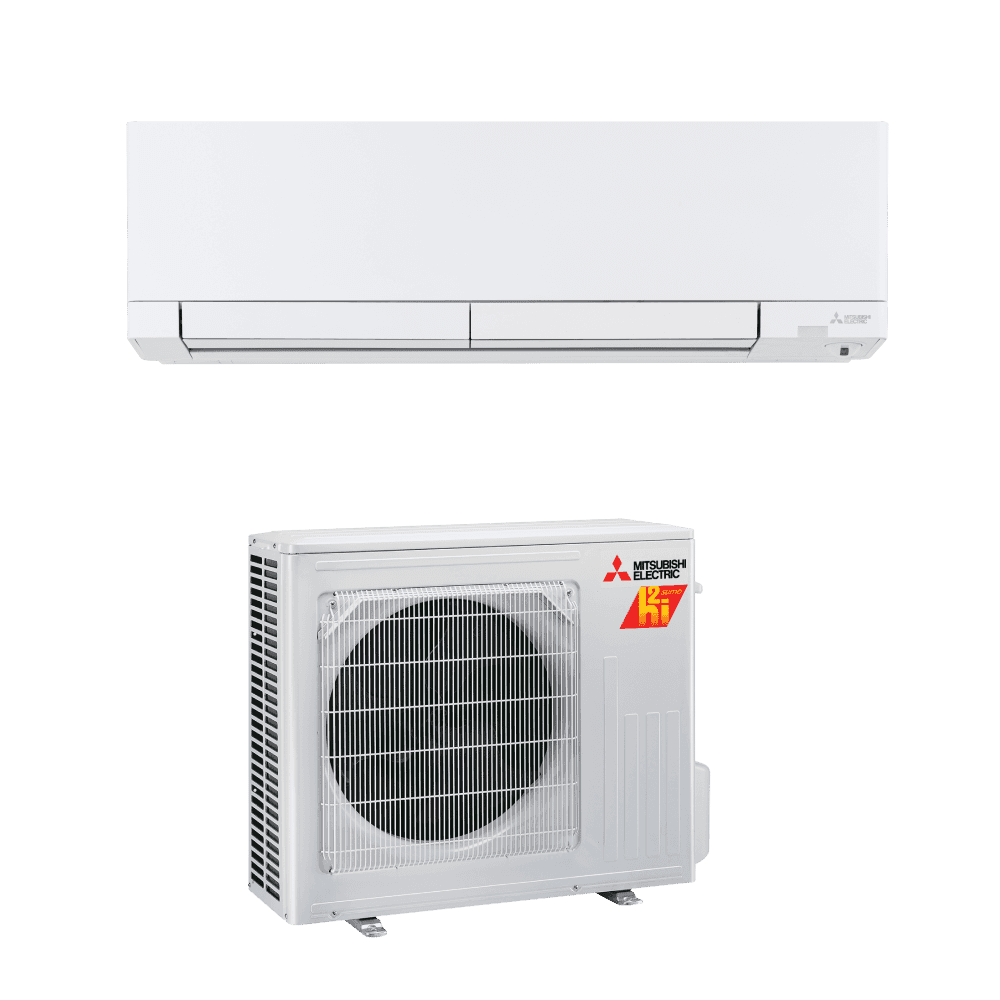
Mini-split systems pair one outdoor compressor with one or more wall-mounted (or ceiling cassette) indoor units. Each indoor unit handles its own zone independently - a big advantage if you have a hot upstairs and cold downstairs problem. Because there's no duct network, installation requires only a small refrigerant line set through the wall - far less invasive than running ductwork through finished ceilings and floors.
Modern mini splits are also heat pumps, meaning they can both cool in summer and heat in winter with high efficiency - an advantage if you're replacing both a window AC and electric baseboard heat at the same time. Our mini-split sizing guide covers how to pick the right capacity for each zone.
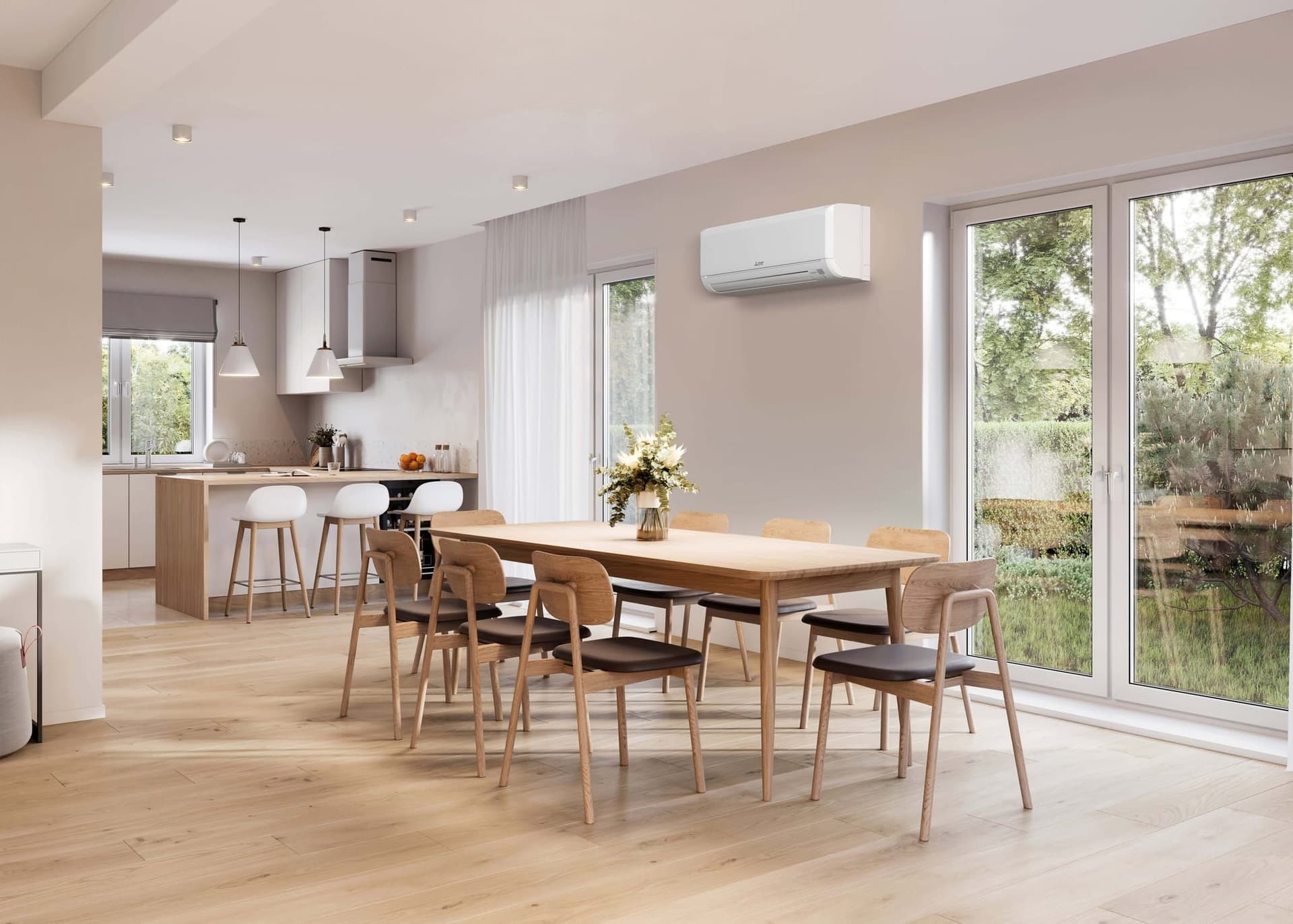
Mini Splits
Best for no-duct homes, additions, garages, or zone control
- No ductwork required - works in older homes, additions, detached spaces
- Per-zone temperature control - each room set independently
- Higher efficiency - no duct losses
- Also heats - can replace electric baseboard or radiant
- Quieter operation (compressor stays outside)
- Higher upfront cost when cooling multiple rooms across a whole home
- Visible wall units - not to every homeowner's taste
- Filter cleaning every 4-6 weeks (more frequent than central AC filters)
Side-by-side comparison
The table below covers the most common decision factors. Costs are typical Denver metro ranges - see our detailed breakdowns for central AC installation cost and mini-split installation cost for more detail on what drives the price.
| Factor | Central AC | Mini Split | Details |
|---|---|---|---|
| Ductwork required | Yes - existing or new | No | |
| Whole-home coverage | Yes, one system | Yes, with multi-zone setup | |
| Install cost (ducted home) | $5,000 - $12,000 | $5,500 - $15,000+ | |
| Install cost (no ducts) | $15,000 - $30,000+ | $5,500 - $15,000+ | |
| Efficiency (SEER2) | 14 - 22 SEER2 | 18 - 30+ SEER2 | |
| Per-zone control | Requires add-on zoning | Built in | |
| Heating capable | No (separate furnace) | Yes (heat pump) | |
| Indoor unit visibility | Hidden in utility space | Wall or ceiling mounted | |
| Filter maintenance | Every 1-3 months | Every 4-6 weeks |
Which is right for your home?
If your home has a functioning forced-air furnace and ductwork in reasonable condition, central AC is almost always the most cost-effective choice for whole-home cooling. Our guide to choosing a new central AC covers what to look for in equipment. If you're starting from scratch, adding a room, or want zone control, mini splits are the practical answer - and often the more efficient one.
There is no universal winner. We install both. When you contact us for an estimate, we'll look at your existing infrastructure and give you a straightforward recommendation based on what makes sense for your house - not what's easiest to sell.


Not Sure Which Is Right for Your Home?
We install both. Free estimates, honest recommendations based on your existing setup.