

Heat PumpBasics
What Is a Heat Pump? Is It Gas or Electric?
A heat pump is the outdoor unit, and it is electric. It is an air conditioner that can also run in reverse and heat your house. Whether your home still uses gas depends on the indoor unit it pairs with.
Heat Pump (n.): The electric outdoor unit of a heating and cooling system. It is an air conditioner with a reversing valve, so it can move heat into the house as well as out of it. Indoors it pairs with a gas furnace and coil (dual fuel) or an electric air handler (all-electric).
What a heat pump is
A heat pump is the outdoor unit, and it runs on electricity. It is an air conditioner that can also heat. In summer it pulls heat out of your house and dumps it outside, the same as any AC. In winter a reversing valve flips the direction, and it pulls heat out of the outdoor air and pushes it into your ducts.
Physically it looks like an AC condenser: a metal box with a fan on top, sitting on a pad next to the house. The difference is that reversing valve and, on cold climate models, a variable-speed compressor that keeps producing heat at low temperatures. Nothing burns inside it. There is no gas line to it and no flue from it.
Moving heat takes less electricity than making it, which is why a heat pump delivers more heat per kilowatt-hour than a space heater or an electric furnace. How much more depends on the outdoor temperature. We cover the bill side in do heat pumps use a lot of electricity.
Is a heat pump gas or electric?
The heat pump itself is electric. Residential heat pumps in the Denver market run on electricity, and nothing in the outdoor unit burns fuel. The gas question is really about the indoor unit, because a ducted heat pump system has two halves: the heat pump outside and something inside that moves air through your ducts.
That indoor half is one of two things. It can be a gas furnace with a refrigerant coil added on top, so the house has both a heat pump and a furnace. That is called dual fuel, and it is what we install in most Denver homes. Or it can be an electric air handler, which is a blower and a coil with no burner and no gas connection. That is all-electric.
So "do I need gas if I have a heat pump" has two answers. With dual fuel, yes, the furnace still uses gas on the coldest days. With an air handler, no, and you could cap the gas line if nothing else in the house uses it.
The outdoor unit decides whether you have a heat pump. The indoor unit decides whether you still have gas.
| Setup | Gas line? | Details |
|---|---|---|
| Dual fuel | Yes, to the furnace | |
| All-electric | No | |
| Furnace + AC | Yes, to the furnace |
Does a heat pump replace a furnace?
Usually not by itself. In most of our Denver installs the heat pump replaces the AC condenser and takes over most of the heating, while a gas furnace stays indoors as the blower and the backup. Whether that furnace is your existing one or a new one depends on its age.
How does a heat pump work in a Denver winter?
It moves heat that is already in the outdoor air, and there is usable heat in air well below freezing. The refrigerant in the outdoor coil is colder than the air around it, so it absorbs heat even on a 10°F morning. The compressor then concentrates that heat and the indoor coil releases it into your ducts.
The Refrigeration Cycle
See how the reversing valve changes the flow of heat.
What's happening?
The outdoor coil absorbs heat from the cold outside air. The compressor pressurizes the refrigerant, making it hot. The indoor coil then releases this heat into your home.
The Magic of Refrigerant
Refrigerant boils at very low temperatures. Even when it's 5°F outside, the refrigerant is colder, allowing it to absorb heat energy from the outdoor air.
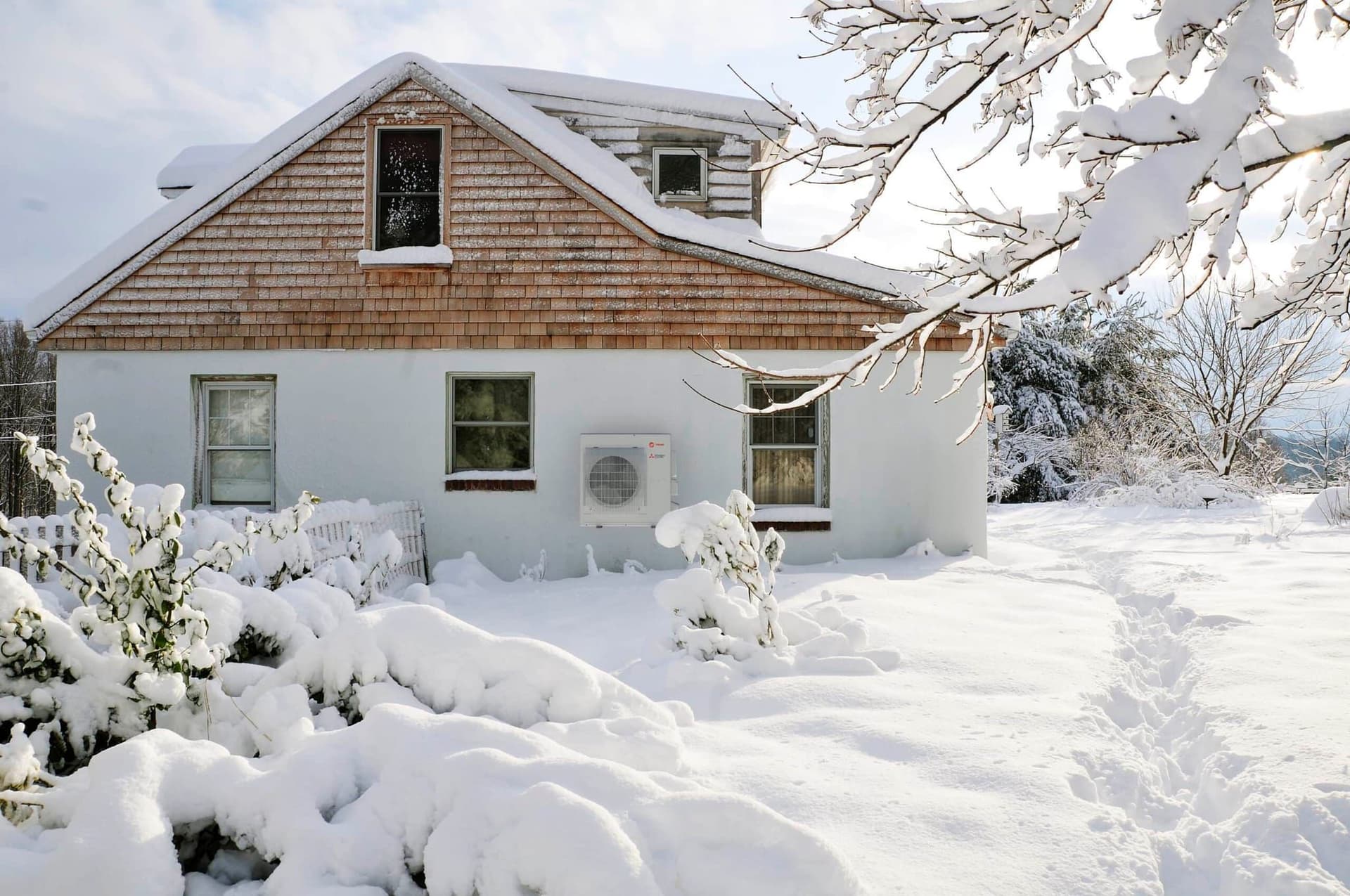
Cold climate models are built for this. The Bosch IDS Ultra holds 100% of its heating capacity at 5°F, and the Carrier Infinity 27VNA1 is rated to run at -23°F. Every heat pump we install is a cold climate unit sized to the heating load, which is why they keep up on Denver's coldest nights. Field detail in cold climate heat pumps in Colorado.
Interactive Performance Curve
See how a cold-climate heat pump performs as the temperature drops.
Two winter behaviors to expect. Frost builds on the outdoor coil in cold, damp weather, so a few times a day the unit runs a short defrost cycle, which sounds different and sends a puff of steam off the unit.
And on a dual fuel system the thermostat hands heating to the gas furnace below a changeover temperature, which we usually set around 25°F. That number is an operating cost setting, chosen because gas is currently cheap in Colorado, and it can be moved any time. It is not the point where the heat pump stops working.
Heat pump pros and cons
The catch matters as much as the benefits. Both sides, for a Denver home.
Advantages
One system heats and cools
The heat pump replaces the AC condenser and takes over both jobs outside. The indoor unit (a furnace and coil, or an air handler) moves the air.
Dual fuel gives you two heating modes
The heat pump runs down to the changeover and the gas furnace takes over below it, usually around 25°F in our installs, which is roughly where the heat pump stops being the cheaper fuel for a home on Xcel time-of-use; on the flat rate the break-even sits higher, closer to 40°F. The setpoint can be re-tuned any time.
Variable speed
Cold climate units modulate instead of cycling on and off. The Carrier Infinity 27VNA1 runs anywhere from 30 to 100% of capacity, so it holds temperature at low speed most of the day.
Around $7,000 in incentives on a typical 3-ton stack
Xcel pays up to $1,500 per heating ton, Power Ahead Colorado adds up to $1,500 in the Denver metro, and the state heat pump discount stacks on top. We pass all of it as an upfront discount.
The catch
Higher gross price before rebates
A heat pump and coil on an existing furnace runs $16,000 to $22,000 before incentives, against $7,400 to $10,450 for an AC alone. Rebates bring the out-of-pocket to about $7,000 to $10,000, but the gross number is real.
Depends on the installer sizing for the heating load
Most installers size to the cooling load, which leaves the heat pump short in winter. Xcel's Quality Install rule sizes to the heating load. Ask which one your quote used.
All-electric needs preparation
Solar, batteries, and air sealing. Without them the winter electric bill can climb a lot. Most Denver homes are not there yet, which is why we recommend dual fuel for most of them.
Outdoor unit sound during defrost
A few times a day in cold, damp weather the unit runs a short defrost cycle that sounds different from normal running. In normal operation the Carrier 27VNA1 is rated at 54 dB and the Bosch IDS Ultra at 60 dB.
Our position: Dual fuel is the better setup for most Denver homes. All-electric works when the house is prepared for it: air sealing done, and ideally solar and a battery. The full list of catches is in the downsides of heat pumps in Denver.
How can I tell if my heat pump is gas or electric?
Look at the indoor unit first, then the outdoor unit in winter, then the data plate.
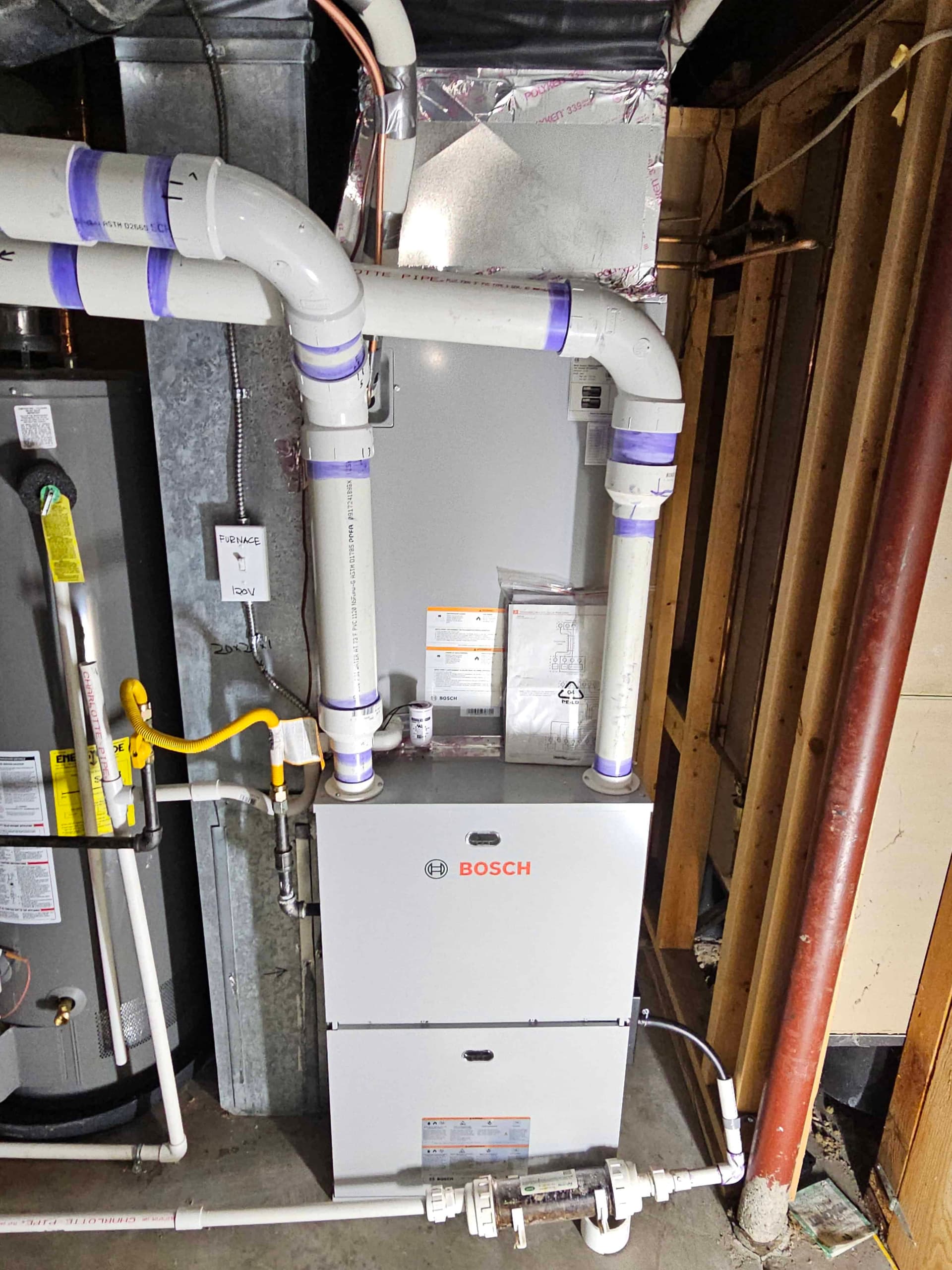
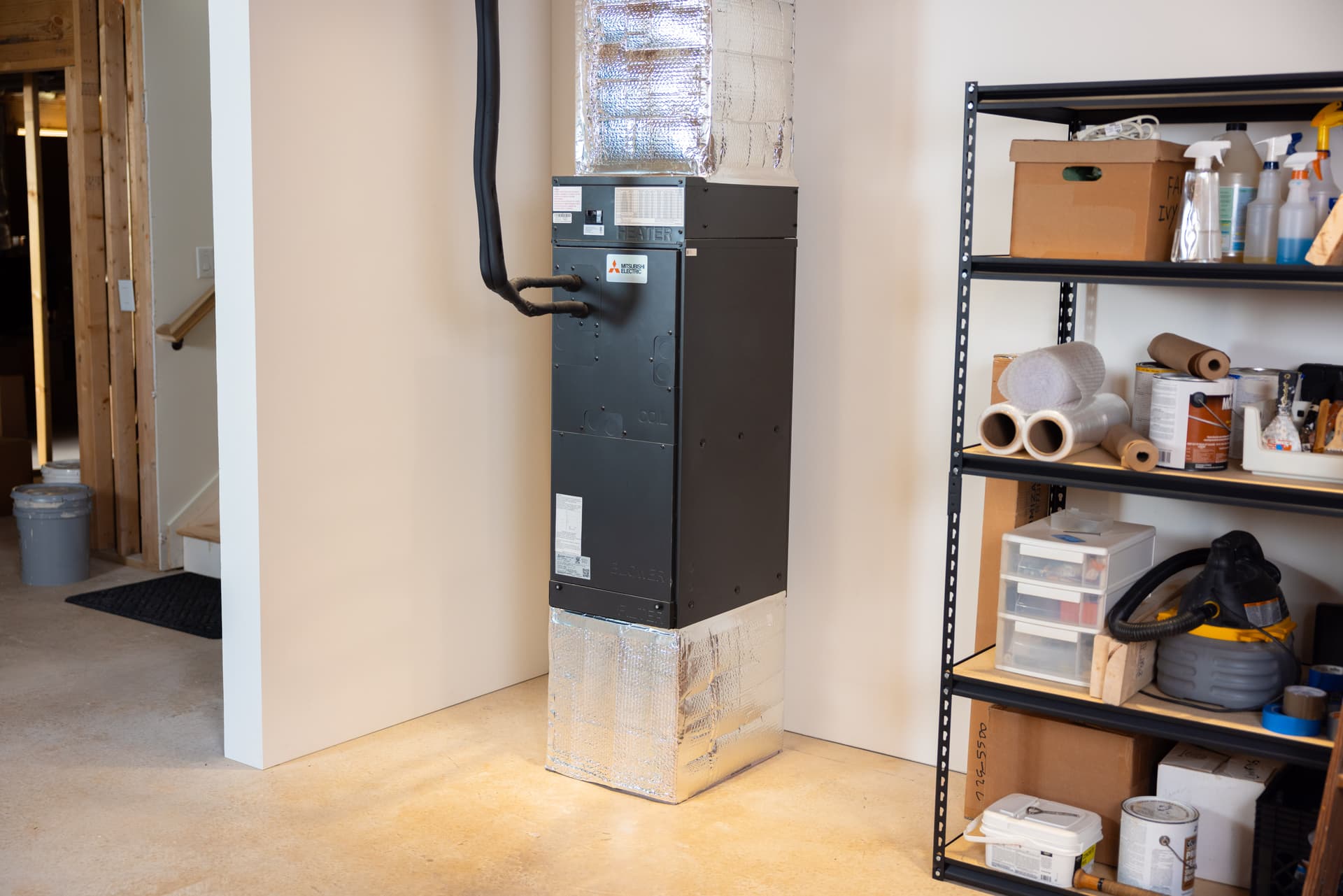
Look at the indoor unit first
A gas pipe running to it and a metal or PVC flue leaving it means a gas furnace. You have either dual fuel or a plain furnace and AC. No gas pipe and no flue means an electric air handler.
Watch the outdoor unit in winter
If it runs when you call for heat, it is a heat pump. An outdoor unit that only ever runs in summer is an air conditioner.
Check the data plate
The model number on the outdoor unit's data plate settles it if you are still unsure. The manufacturer's site will say whether it is a heat pump or a condenser.
What a heat pump costs in Denver
Adding a heat pump and coil to an existing furnace runs $16,000 to $22,000 before incentives, and about $7,000 to $10,000 out of pocket after rebates. A combination system with a new furnace runs $19,100 to $27,600 before incentives, about $13,000 to $14,000 net. These are ranges; size, brand, and electrical work move the number.
| System | After rebates | Details |
|---|---|---|
| Heat pump only (condenser + coil on the existing furnace) | $7,000 to $10,000 | |
| Combination (heat pump + new furnace + coil) | About $13,000 to $14,000 | |
| Furnace + AC (no heat pump) | No heat pump rebates | |
| AC only | No rebates |
Interactive Cost Estimator
See what rebates you qualify for based on your home size.
Rebates shown are the Xcel cold climate heat pump rebate at $1,500 per heating ton on contractor-applied installs. Ductless systems that heat less than half the home, or only a space that was never heated before, get a flat $500 from Xcel instead. Power Ahead Colorado adds up to $1,500 in the Denver metro, and the State of Colorado heat pump discount stacks on top. Click above to see our complete pricing guide including equipment, labor, and permits.
CommonQuestions
Frequently Asked Questions
Which setup fits your house?
We size to the heating load, file every rebate, and tell you straight whether your furnace should stay.