

Efficiency Ratings: The Honest Take
Here's what most HVAC content won't tell you: efficiency ratings matter less than you think.
Yes, you should understand what SEER2, HSPF2, and AFUE mean. Yes, you should hit certain thresholds for tax credits. But the difference between an 18 SEER2 and 20 SEER2 unit? Rarely worth the upcharge. Your house's air sealing and insulation affect your actual energy bills far more than a few rating points.
That said, you're shopping for equipment and contractors are throwing numbers at you. Here's what they mean.
The Three Ratings, Simply Explained
- Rating
- SEER2
- Used For
- AC & heat pumps
- What It Measures
- Cooling efficiency over a season
- Higher =
- Lower cooling bills
- Rating
- HSPF2
- Used For
- Heat pumps only
- What It Measures
- Heating efficiency over a season
- Higher =
- Lower heating bills
- Rating
- AFUE
- Used For
- Gas/oil furnaces
- What It Measures
- Percentage of fuel converted to heat
- Higher =
- Less fuel wasted
SEER2 (Seasonal Energy Efficiency Ratio 2)
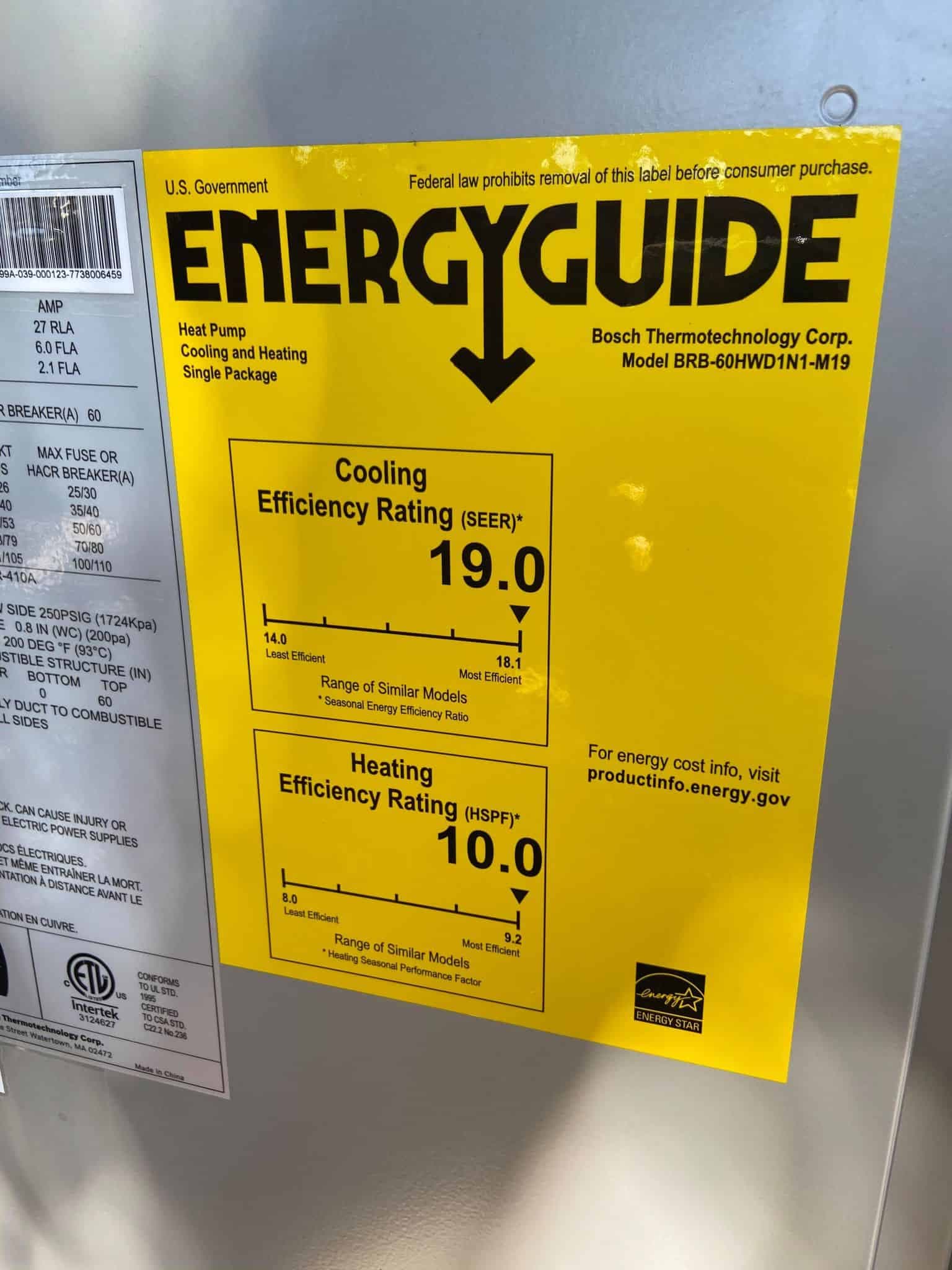
SEER2 measures cooling efficiency across a range of outdoor temperatures (65 degrees F to 104 degrees F). It's the total cooling output divided by total electricity used over a typical cooling season.
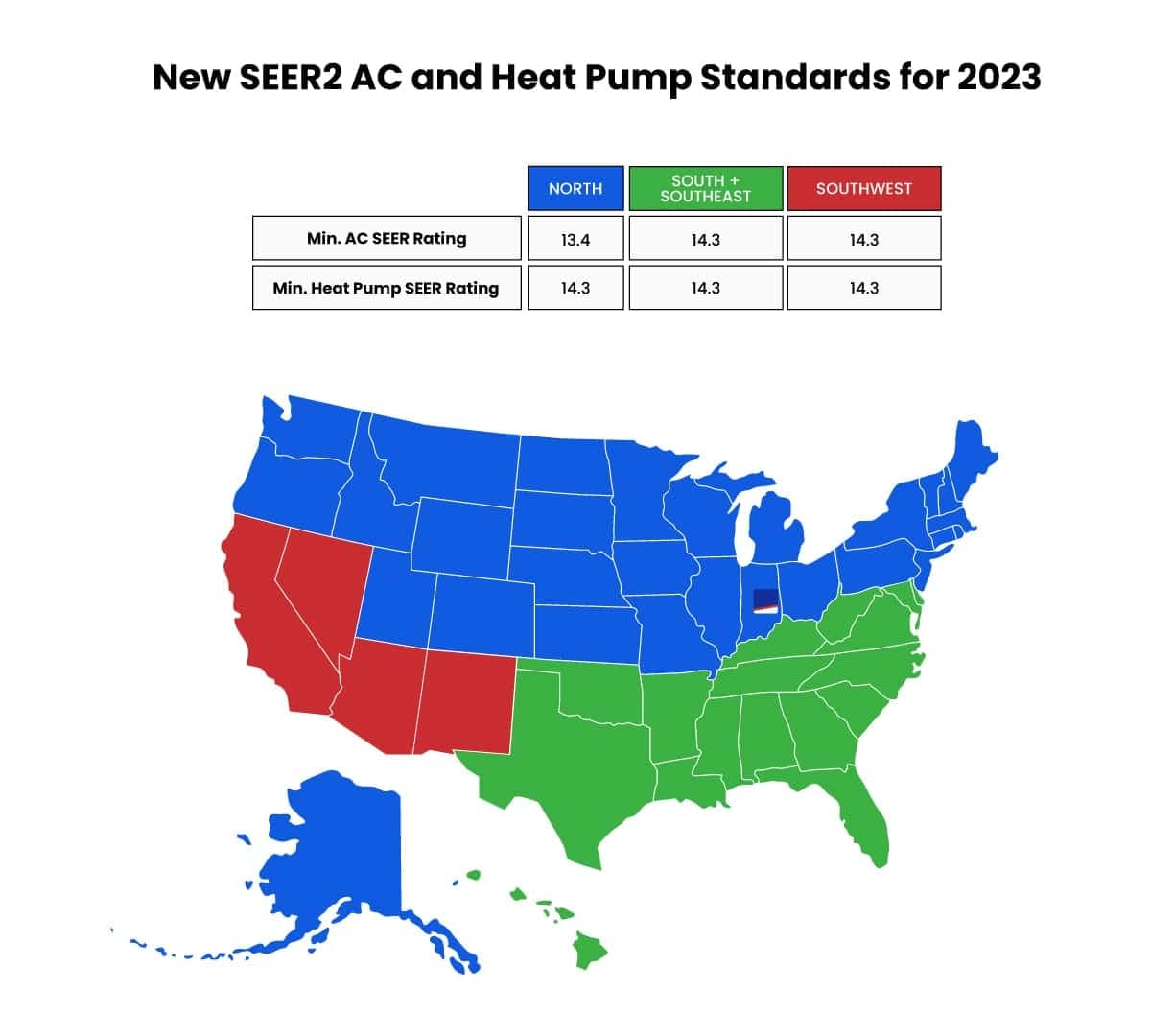
Current range: 13.4 (minimum legal) to 24+ (premium units)
For Colorado: Most homes do fine with 15-17 SEER2. We don't run AC as many hours as Phoenix or Houston, so the payback on ultra-high SEER2 is slower here.
HSPF2 (Heating Seasonal Performance Factor 2)
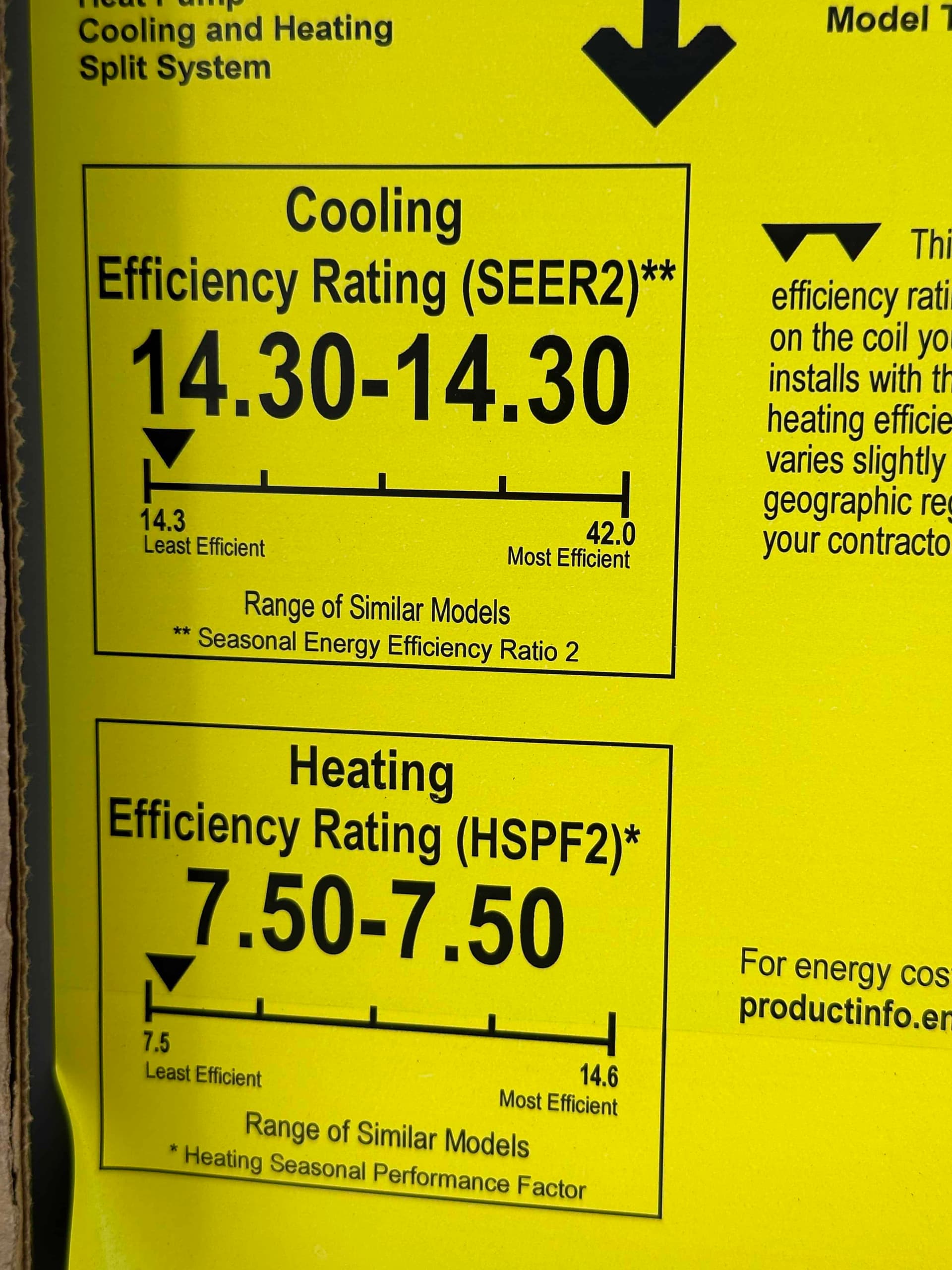
HSPF2 measures heating efficiency for heat pumps. It accounts for varying outdoor temperatures, including cold weather where heat pumps work harder.
Current range: 7.5 (minimum legal for split systems) to 13+ (premium cold-climate units)
For Colorado: This matters more than SEER2 if you're using a heat pump for heating. Look for 8.5+ HSPF2 minimum, higher if you want the federal tax credit (8.1+ required).
AFUE (Annual Fuel Utilization Efficiency)
AFUE is a percentage: how much of the fuel your furnace burns actually becomes heat in your home. An 80% AFUE furnace sends 20% of energy up the flue. A 96% AFUE furnace only wastes 4%.
Current range: 80% (minimum legal) to 98% (premium condensing furnaces)
For Colorado: 80% AFUE furnaces are still common and legal here. High-efficiency (90%+) condensing furnaces require different venting, which adds installation cost.
The Old vs. New Rating Confusion
If you're comparing quotes or looking at older equipment, watch out: the rating system changed in January 2023.
- Old Rating
- SEER
- New Rating
- SEER2
- Approximate Difference
- Numbers dropped roughly 5%
- Old Rating
- HSPF
- New Rating
- HSPF2
- Approximate Difference
- Numbers dropped roughly 15%
- Old Rating
- EER
- New Rating
- EER2
- Approximate Difference
- Numbers dropped roughly 5%
The equipment didn't get worse. The testing got more realistic.
The old tests used 0.1 inches of water static pressure, basically ideal ductwork that doesn't exist in real homes. The new "2" tests use 0.5 inches, which reflects actual duct resistance. Same equipment, tougher test, lower number.
Why This Matters When Shopping
Some contractors still quote old ratings because the numbers look better. A unit marketed as "16 SEER" under the old standard might be "15.2 SEER2" under the new one.
Always ask: "Is that SEER or SEER2?"
If a contractor can't answer clearly, that's a red flag. Any equipment manufactured after January 2023 should have SEER2/HSPF2 ratings.
Quick Conversion Reference
- Old Rating
- 14 SEER
- Approximate New Rating
- roughly 13.4 SEER2
- Old Rating
- 16 SEER
- Approximate New Rating
- roughly 15.2 SEER2
- Old Rating
- 18 SEER
- Approximate New Rating
- roughly 17.1 SEER2
- Old Rating
- 20 SEER
- Approximate New Rating
- roughly 19.0 SEER2
- Old Rating
- 10 HSPF
- Approximate New Rating
- roughly 8.5 HSPF2
Convert Between Old and New Ratings
Use this tool to convert between SEER/SEER2 and HSPF/HSPF2. It will also show you what tier the equipment falls into and whether it qualifies for tax credits.
What Numbers to Actually Look For
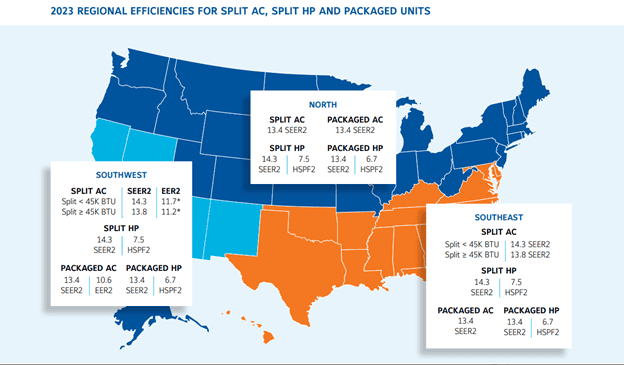
Minimum Legal Standards (Colorado/Northern Region)
- Air conditioners: 13.4 SEER2
- Heat pumps: 14.3 SEER2 / 7.5 HSPF2 (split systems)
- Furnaces: 80% AFUE
You can't legally buy new equipment below these numbers. Any contractor offering you something lower is either confused or selling old stock.
Federal Tax Credit Thresholds (25C)
To qualify for the $2,000 federal tax credit on heat pumps (ended December 2025):
- SEER2: 15.2 or higher
- HSPF2: 8.1 or higher
- EER2: 10 or higher
- Must meet ENERGY STAR requirements
For central air conditioners (up to $600 credit):
- SEER2: 17.0 or higher
- EER2: 12.0 or higher
ENERGY STAR Levels
ENERGY STAR certification requires efficiency above federal minimums:
- Heat pumps: SEER2 15.2 or higher / HSPF2 8.1 or higher / EER2 10 or higher
- Central AC: SEER2 14.3 or higher / EER2 10.6 or higher
Cold Climate Heat Pumps (ENERGY STAR certified) must also maintain:
- COP 1.75 or higher at 5 degrees F
- At least 70% heating capacity at 5 degrees F compared to 47 degrees F
The Honest Truth About Efficiency Ratings
Here's what we've learned installing thousands of systems in Colorado: within each product tier, efficiency ratings cluster around the same numbers.
Budget Tier
- AC: 14-15 SEER2
- Heat pump: 15-16 SEER2 / 8-9 HSPF2
- Furnace: 80% AFUE
Mid Tier
- AC: 16-17 SEER2
- Heat pump: 17-18 SEER2 / 9-10 HSPF2
- Furnace: 95-96% AFUE
Premium Tier
- AC: 19-24 SEER2
- Heat pump: 19-22 SEER2 / 10-13 HSPF2
- Furnace: 97-98% AFUE
The jump from mid to premium rarely pays back. Going from 17 SEER2 to 20 SEER2 might save you $50-80 per year on cooling in Colorado. If the upgrade costs $1,500, that's nearly 20 years to break even, longer than the equipment will last.
The real differences between tiers are features (variable speed, quieter operation, better humidity control), not efficiency-driven energy savings.
What Actually Affects Your Energy Bills
Your equipment's efficiency rating is one factor. These matter more:
1. Air Sealing and Insulation (Biggest Impact)
A leaky house with a 20 SEER2 system will use more energy than a tight house with a 15 SEER2 system. Air leaks around windows, doors, outlets, and attic penetrations make your equipment work overtime.
Before chasing higher efficiency ratings, ask:
- When was your home's insulation last assessed?
- Have you had a blower door test?
- Are there obvious drafts?
Xcel Energy offers home energy audits. The findings often have better ROI than premium HVAC equipment.
2. Proper System Sizing
An undersized heat pump triggers electric resistance backup heat, which costs 3x more to operate. An oversized system short-cycles, reducing efficiency and comfort.
Sizing requires a Manual J load calculation for your specific home. If a contractor quotes without measuring or calculating, they're guessing.
3. Installation Quality
A system with perfect efficiency ratings, installed poorly, performs poorly. Critical factors:
- Duct connections: Leaky ducts lose 20-30% of conditioned air
- Refrigerant charge: Over or undercharged systems lose 5-20% efficiency
- Airflow: Restrictive ductwork negates high-efficiency equipment
- Thermostat placement: Wrong location causes unnecessary cycling
The difference between a good installation and a bad one often exceeds the difference between equipment tiers.
4. Your Behavior
Efficiency ratings assume standard thermostat settings. If you keep your house at 68 degrees F vs. 72 degrees F in winter, that 4-degree difference affects your bills more than a few HSPF2 points.
What to Do When Shopping for HVAC Equipment
1. Hit the Tax Credit Threshold (If It Makes Sense)
If you're close to qualifying for heat pump rebates, it's usually worth the modest upcharge to reach SEER2 15.2 / HSPF2 8.1. But don't pay $2,000 more to get a $2,000 credit.
2. Don't Overpay for Marginal Efficiency Gains
When comparing quotes, calculate the actual difference:
- How many SEER2/HSPF2 points difference?
- What's the price difference?
- Divide by estimated annual savings
If payback exceeds 10 years, the "upgrade" probably isn't worth it for efficiency alone. (It might be worth it for other features.)
3. Ask About Your House, Not Just Equipment
A good contractor talks about your home's conditions, insulation, ductwork, air sealing, not just equipment specs. If all they discuss is SEER2 numbers, they're selling equipment, not solving your comfort and efficiency problems.
4. Verify the Rating System
"Is that SEER or SEER2?" should be easy for any contractor to answer. While you're at it, ask for the AHRI certificate, which shows the official rated performance for that specific equipment combination.
5. Prioritize Installation Quality
Ask about their installation process:
- Do they perform Manual J calculations?
- How do they verify refrigerant charge?
- Do they test duct leakage?
- What's their warranty on workmanship (not just equipment)?
The Bottom Line
Efficiency ratings help you compare equipment, but they're not the whole story. In Colorado:
- Meet tax credit thresholds if you're close - free money is free money
- Don't overpay for small efficiency gains - mid-tier equipment often hits the sweet spot
- Invest in your house first - air sealing and insulation typically deliver better ROI than premium equipment
- Prioritize installation quality - a well-installed mid-efficiency system beats a poorly-installed high-efficiency system
For a brand-by-brand efficiency comparison based on actual Colorado installations, see our best cold-climate heat pumps guide. If you're evaluating specific models (Mitsubishi H2i, Bosch IDS Ultra, or Carrier 37MUH), see the three-way brand comparison. To understand the long-term savings math, our heat pump vs gas furnace operating cost analysis uses Xcel 2026 rates and Denver climate data.
Related Guides
Brand-by-brand comparison using real performance data from 12,000+ installs.
Side-by-side cost comparison using Xcel 2026 rates and Denver climate data.
Which of our three recommended cold-climate brands fits your home.