







Quick Answer: 12-18 Years, with a Big Caveat
The honest range for a central AC in Denver is 12-18 years, with a median around 14 years on the replacements we've done over the last decade. Heat pumps run similar but tend to land slightly shorter (12-15 years) because they run year-round instead of just summers. National guides quoting 15-20 years are mostly accurate for the Midwest or Pacific Northwest, they don't account for what the Front Range does to outdoor equipment.
The caveat: physical lifespan and economic lifespan are two different numbers, and in 2026 they've started to diverge. A 14-year-old AC may still run, but it's on R-410A refrigerant, which is being phased out. Repair costs are climbing as supply tightens. The math often tips toward replacement at year 10-12 even on systems that are mechanically fine.
- Years 0-8: normal lifespan, minor service only. Expect ~$200-$400/yr in maintenance and the occasional capacitor replacement.
- Years 8-12: the danger zone. Capacitors fail, fan motors start to whine, gradual refrigerant loss. Repairs run $300-$1,600 each.
- Years 12-15: compressor weakness shows up, cooling capacity drops 10-20%, R-410A recharges get expensive ($400-$700 each).
- Years 15+: any major repair (compressor, coil, refrigerant leak) usually exceeds 50% of replacement cost, the standard tipping point.
National Averages vs. Denver Reality
The 15-20 year figure that shows up in most national articles comes from manufacturer engineering data and HVAC industry surveys weighted toward sea-level, humid climates. Those climates have their own problems (coastal salt corrosion, Gulf Coast humidity, Midwest tornado damage) but they don't share Denver's specific combination of stressors.
| Region | Median lifespan | Details |
|---|---|---|
| Pacific Northwest | 18-20 years | |
| Midwest | 15-18 years | |
| Southeast (humid) | 12-15 years | |
| Coastal (salt air) | 8-12 years | |
| Colorado Front Range | 12-18 years | |
| Desert Southwest | 10-15 years |
Denver sits in the middle of the range. We're harder on outdoor equipment than the Pacific Northwest because of hail and UV, but easier on indoor equipment than humid climates because dry air doesn't corrode evaporator coils as fast. The net effect lands around 14 years median.
One thing worth noting: lifespan correlates strongly with whether the system was sized correctly in the first place. An oversized AC in a Denver home short-cycles in shoulder seasons, which causes premature compressor wear. We've replaced 8-year-old units that were oversized and replaced 22-year-old units that were sized correctly. Sizing matters more than brand for longevity.
What Shortens AC Life in Colorado
Four things take a measurable bite out of AC lifespan along the Front Range. They're not equally distributed (homes east of I-25 see more hail, south-facing exposures see more UV) but at least two of the four hit most homes.
1. Hail damage (the big one)
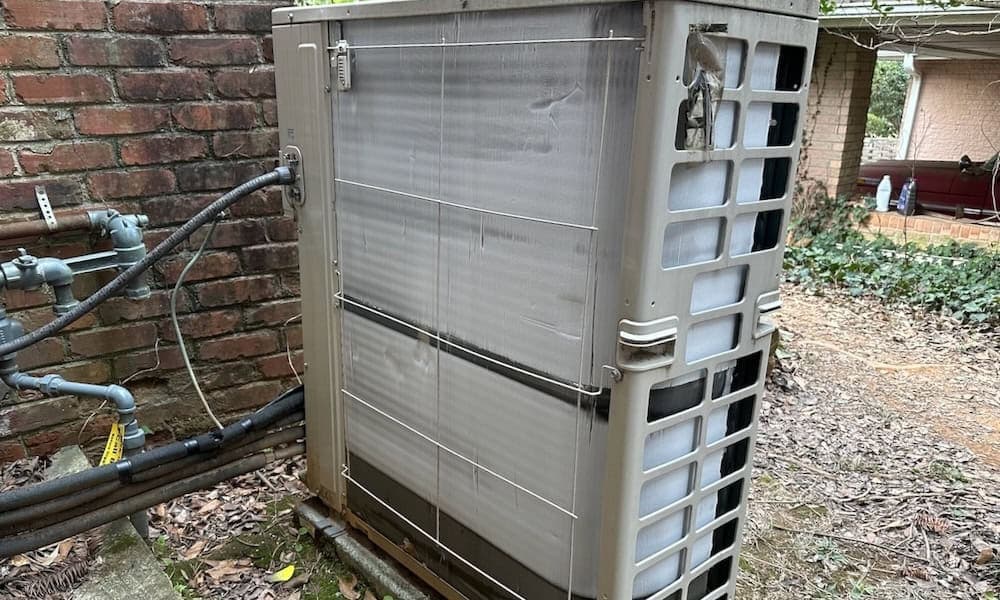
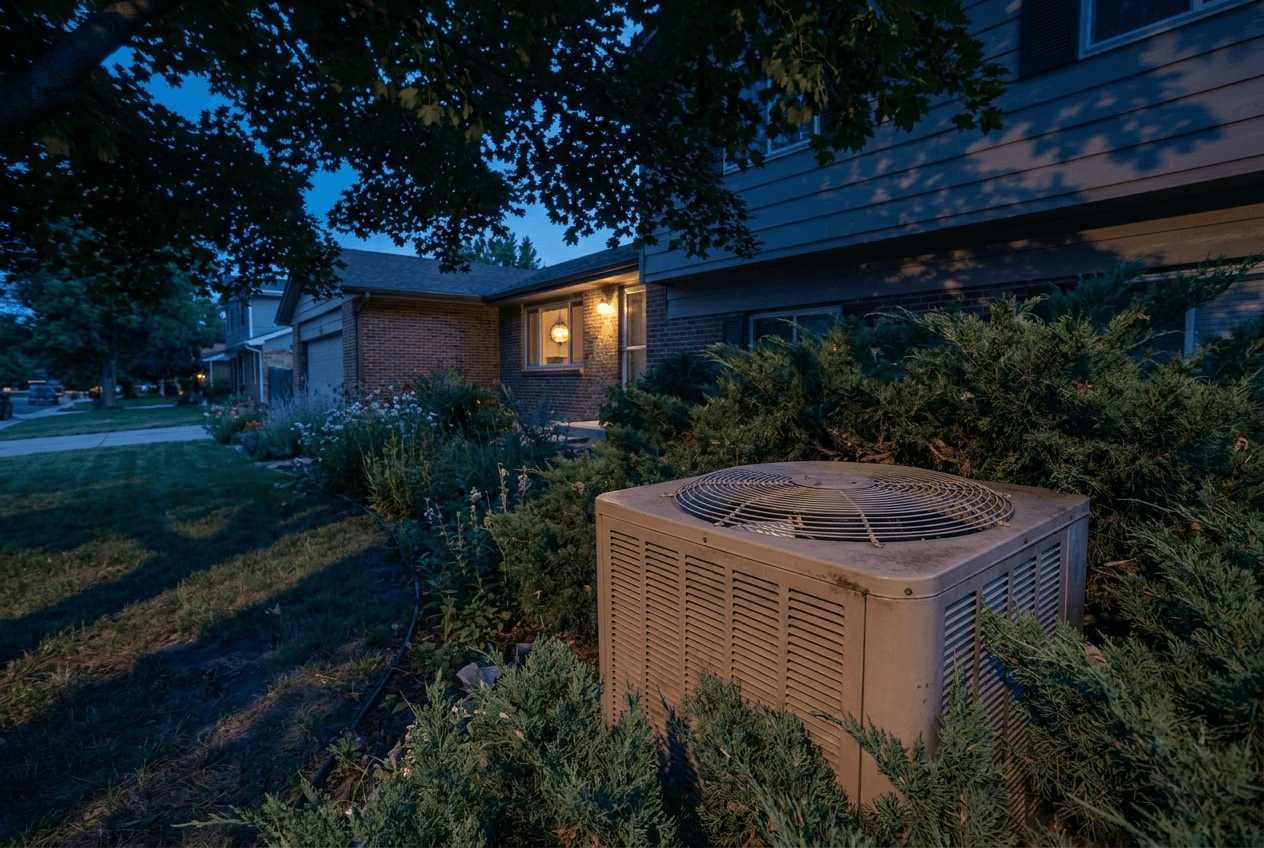
The Front Range from Fort Collins to Pueblo sits inside the most active hail corridor in the continental U.S. A single severe storm can flatten the aluminum fins on the outdoor coil, permanently dropping cooling capacity. Worse, repeated minor hail events compound, a unit that looks fine from 10 feet away may have measurable fin damage that's been quietly cutting capacity for years.
Real numbers: in our service data, AC units in zip codes east of I-25 (Aurora, Centennial, Parker) average 1.5-2 years shorter lifespan than units west of I-25 (Lakewood, Wheat Ridge, Arvada), almost entirely from cumulative hail damage. Hail guards installed at the time of new equipment install reduce but don't eliminate damage.
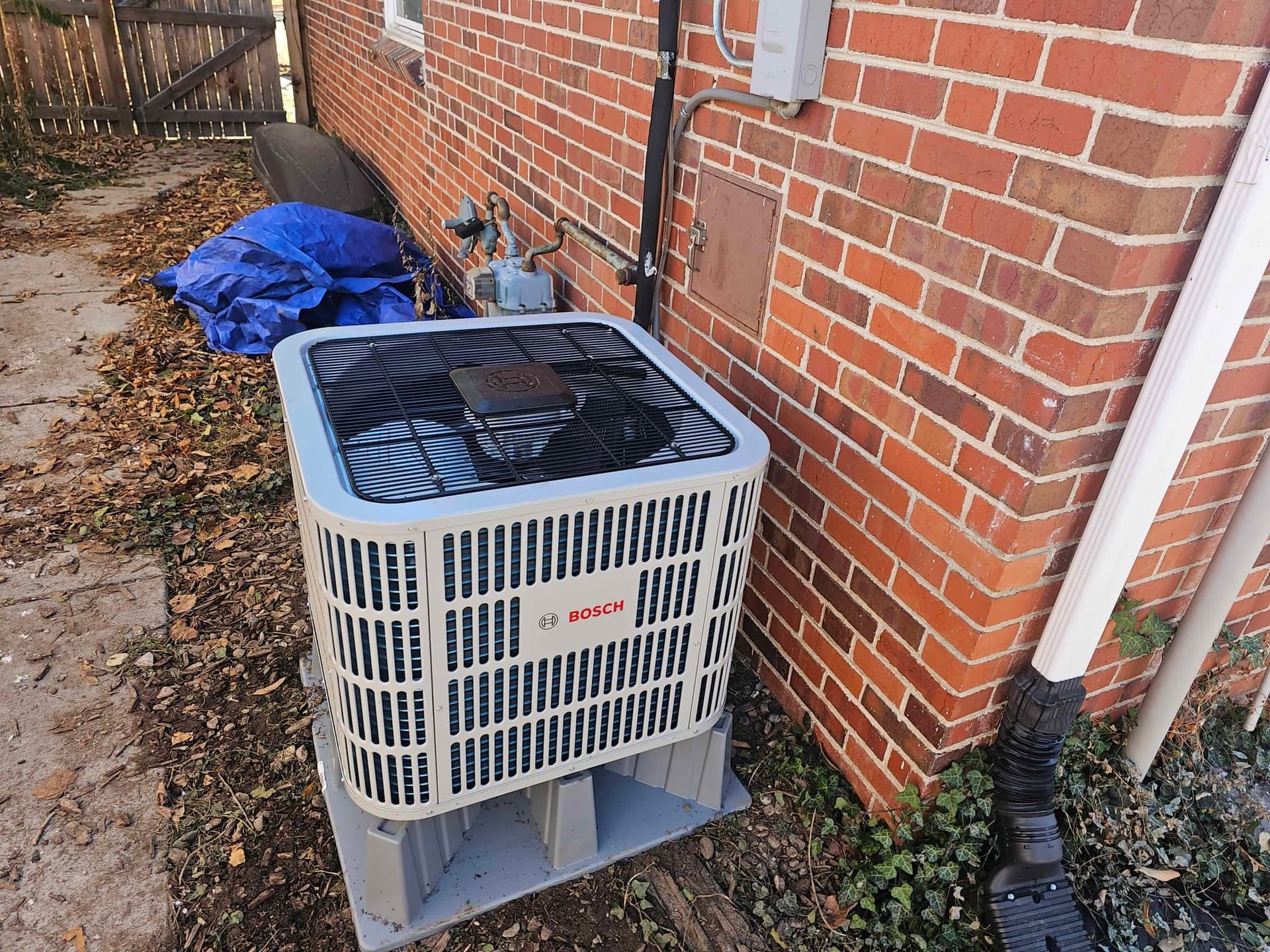
2. UV degradation at 5,280 feet
UV exposure at altitude is roughly 20-25% more intense than at sea level. South and west-facing outdoor units fade visibly within 5-7 years, cabinet paint, plastic fan blades, and rubber grommets all break down faster. The cosmetic damage is the visible part; the bigger issue is that UV degrades the rubber seals around refrigerant service ports, which slowly increases the probability of refrigerant leaks.
3. Cottonwood and dust loading
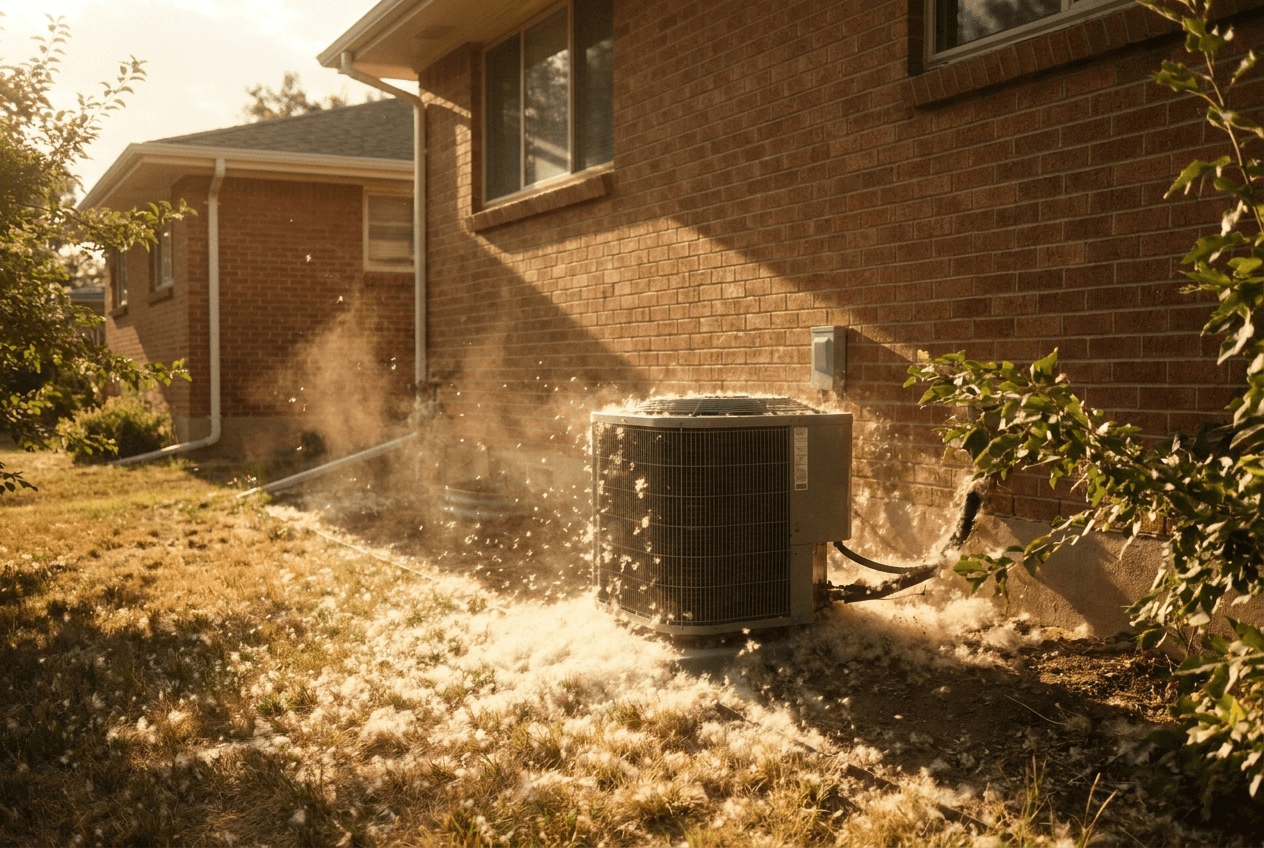
Cottonwood season (mid-May to late June) layers sticky, resin-coated seeds on outdoor coils. Add the year-round dust load from Colorado's arid climate and outdoor coils get a chronic performance hit unless homeowners rinse them weekly during cottonwood season. A coil that's never been cleaned will lose 15-25% of its heat rejection capacity by year 8, forcing the compressor to work harder to make the same cooling, which shortens compressor life.
4. 40-50°F daily temperature swings
Denver summers swing from 95°F afternoons to 55°F overnight lows. AC systems that don't have low-ambient lockouts can run inappropriately in cool overnight conditions, which can freeze the outdoor coil and stress the compressor. Modern equipment (post-2015) handles this automatically but pre-2010 units don't, if your AC is older than that and you've been running it overnight during cool spells, that's shortening its life.
What Actually Helps AC Life Here
Denver does have a few climate advantages that extend AC life compared to humid or coastal regions. They don't fully offset the hail and UV issues but they're worth knowing about.
Low humidity protects indoor coils
Indoor evaporator coils corrode faster in humid climates because moisture sits on the aluminum fins between cooling cycles. Denver's 30-40% summer humidity means coils dry out between cycles, which slows corrosion dramatically. Indoor coils in Colorado typically last the full life of the system; in humid climates they often need replacement at year 8-10 from formicary corrosion.
Shorter cooling season = fewer total run hours
Denver's cooling season runs from roughly May 15 to September 15, about 4 months of active cooling. Most of those days are mild enough that the AC runs only 4-6 hours. Compare that to Phoenix (8-10 months, 12+ hours/day) or Houston (7 months, 10+ hours/day, much more humid). Total run-time over a unit's life is meaningfully lower here, which reduces compressor wear.
Bug and rodent damage is rare
Outdoor units in humid climates routinely host insect nests, mouse infestations, and snake damage to wiring. The dry Colorado climate plus shorter spring growing season means we see far fewer pest-related failures. The exception is rodent damage during the first cold snap in October-November, when mice look for warm enclosures, but that's easily prevented with quick inspection in late fall.
Annual maintenance pays off more here than elsewhere
Because cottonwood and dust loading is the biggest variable in lifespan, the homes that get annual coil cleaning in early summer consistently see 2-3 extra years of useful life out of the outdoor unit. A $250-$400 annual service visit recovers itself many times over by deferring replacement.
Signs Your AC Is Near the End
Most AC failures don't happen suddenly. The system gives you 12-18 months of warning signs before it dies, and the signs are consistent across brands.
- Cooling output drops noticeably year over year. If your AC kept the house at 74°F on a 95°F day three years ago and now struggles to hold 78°F, you've lost compressor or refrigerant capacity that won't come back without major repair.
- Electric bills creep up at the same usage. A degrading AC takes longer to do the same cooling work, drawing more kWh. If your July bill is $40-$60 higher than three years ago for the same thermostat setting, the efficiency loss is real.
- Loud start-up and shutdown. Compressor mounting bushings degrade over time. Loud thunks when the unit starts or stops indicate worn vibration dampers, common in years 10-15 and often the precursor to compressor failure.
- Multiple capacitor failures. The first capacitor lasts 8-12 years. If you're replacing the second one in three years, the compressor is drawing more current than spec, which means the compressor is on its way out.
- Refrigerant recharges every season or two. A properly sealed system holds refrigerant for 15+ years. If you've recharged twice in five years, there's a leak that isn't getting fixed, and you're pouring R-410A into the system at $400-$700 a recharge.
- Major hail damage. If a hailstorm flattened the outdoor coil and your insurance didn't cover replacement, the unit is operating at 70-85% of capacity until you replace it. That capacity loss compounds with normal aging.
If you're seeing two or more of these, you're in the replacement decision window. Our breakdown on AC repair vs. replacement cost walks through the 50% rule and the R-410A factor in more detail.
Lifespan by Equipment Tier
Brand reputation matters less for lifespan than people think. Build quality varies more across an individual manufacturer's product lines than between major manufacturers. A bottom-tier Carrier and a bottom-tier Mitsubishi are similar; a top-tier Bosch IDS Ultra and a top-tier Carrier Infinity are similar. The bigger factors are sizing, installation quality, and maintenance.
| Equipment tier | Typical lifespan | Details |
|---|---|---|
| Builder-grade (Goodman, Amana base, etc.) | 10-14 years | |
| Mid-tier (Carrier Comfort, Bosch BOVA, mid Mitsubishi) | 13-17 years | |
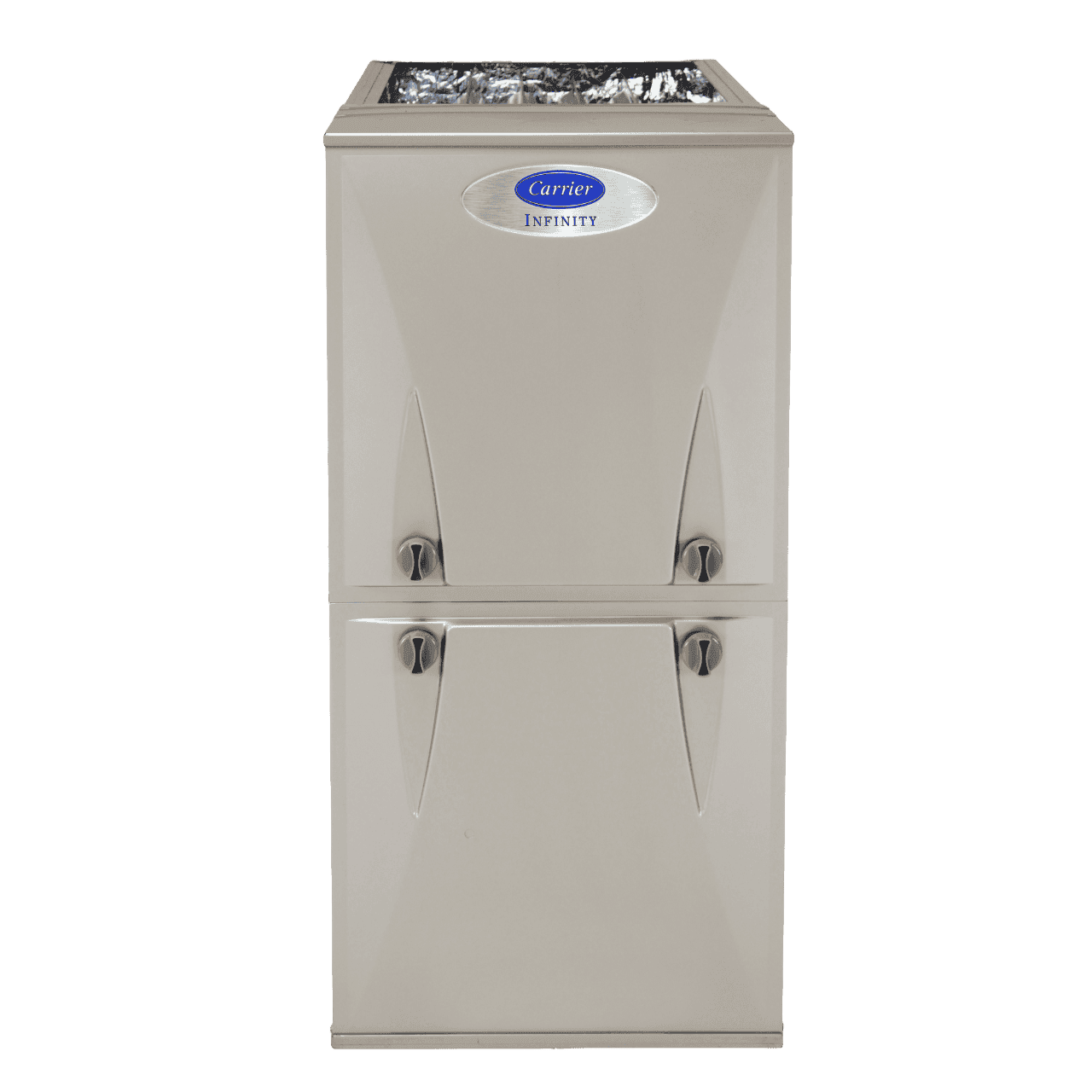
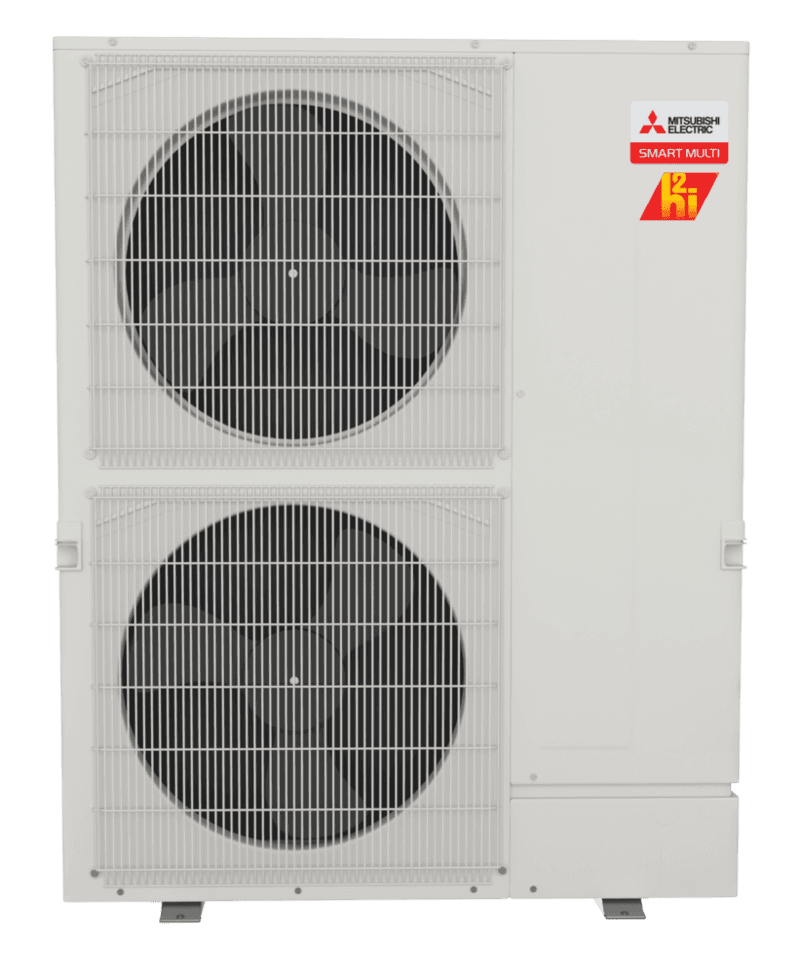
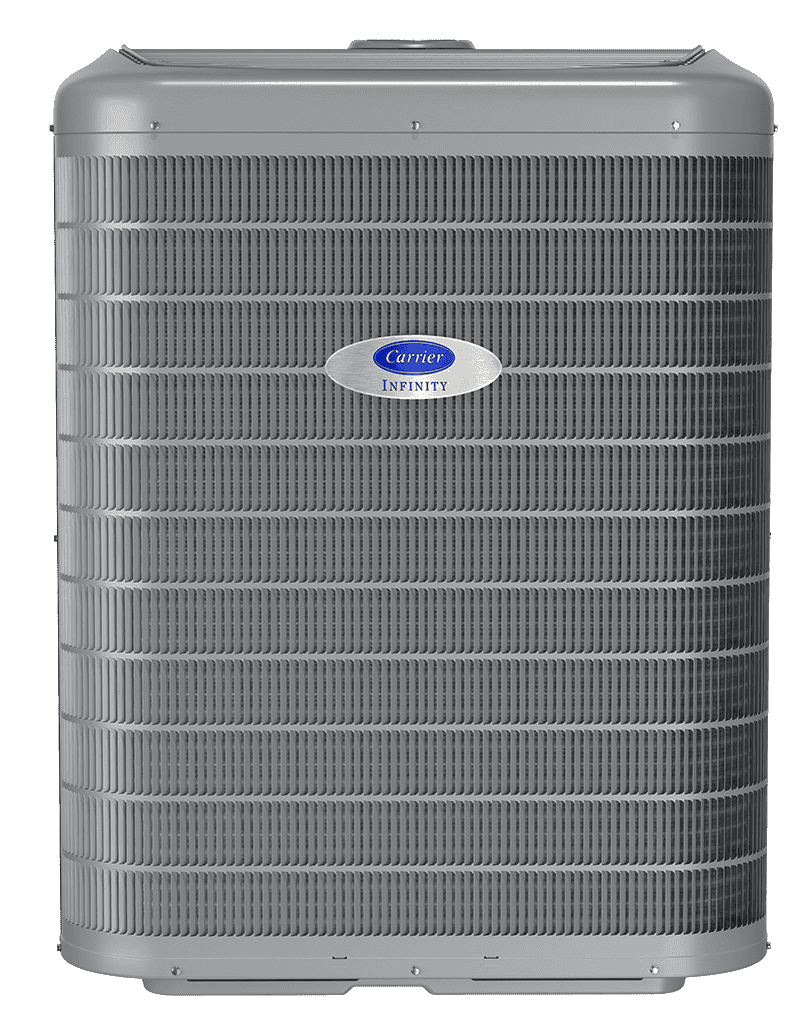
| Premium (Carrier Infinity, Bosch IDS Ultra, Mitsubishi H2i Plus) | 15-20 years |
UniColorado works primarily with Carrier, Mitsubishi, and Bosch. We don't install Lennox (though we'll service existing systems). The choice between the three major lines we carry is more about feature priorities than lifespan, all three have premium tiers that hit the 15-20 year range with proper sizing and care.
For brand-specific deep dives, see our reviews of the Bosch IDS Ultra, Carrier Infinity, and direct comparisons between the three.
Related Guides
The heat pump-specific lifespan question, including year-round run-time factors
When the 50% rule applies and when R-410A makes the math harder
Diagnosing capacity loss before assuming end-of-life
What a new system actually costs in 2026, with rebates