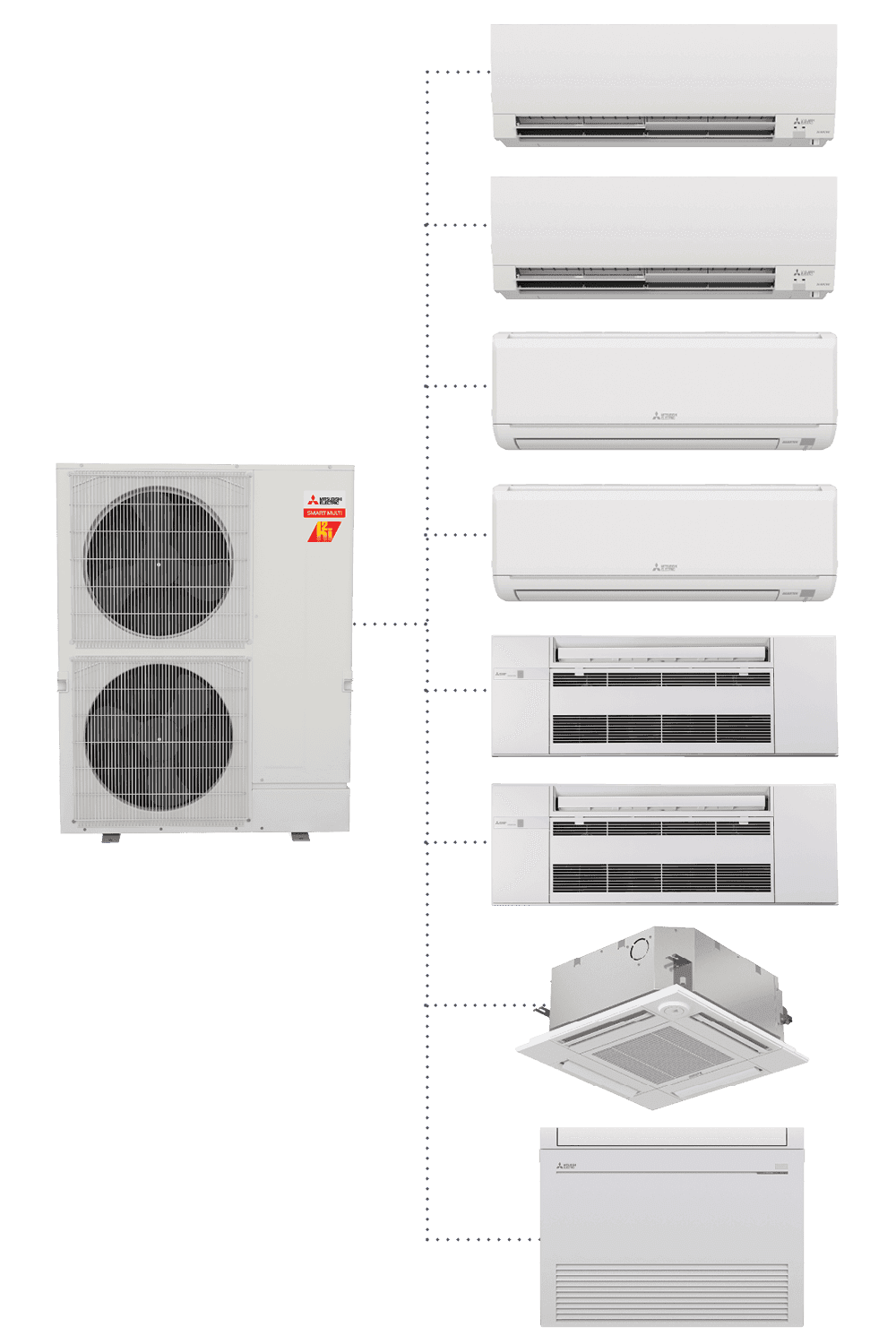

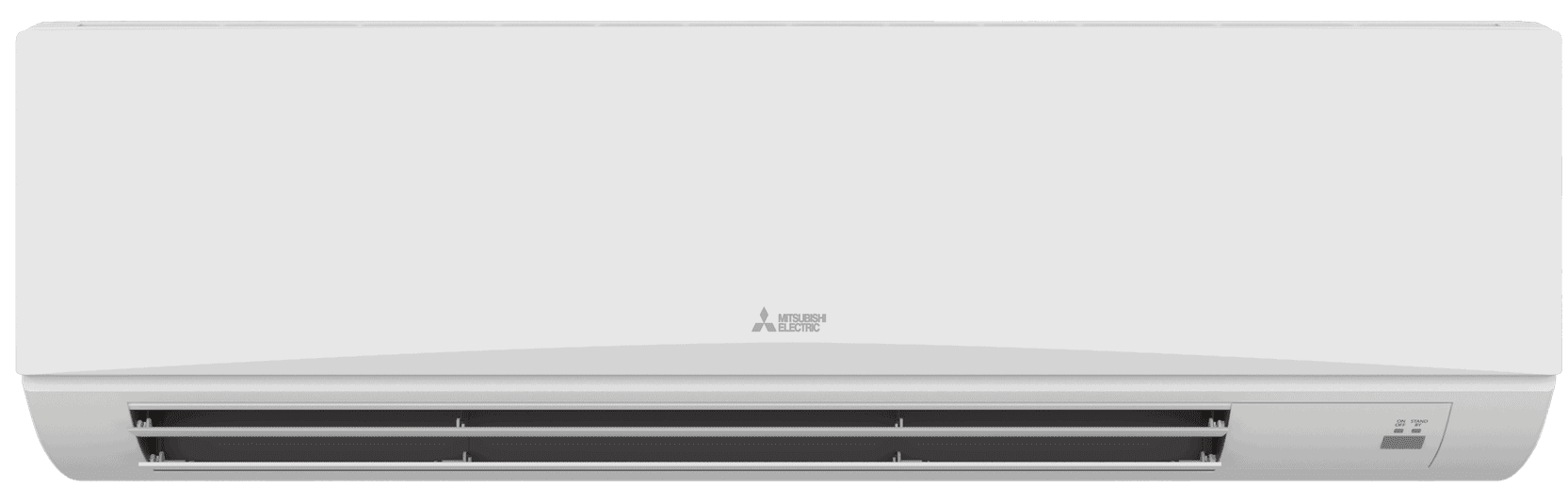










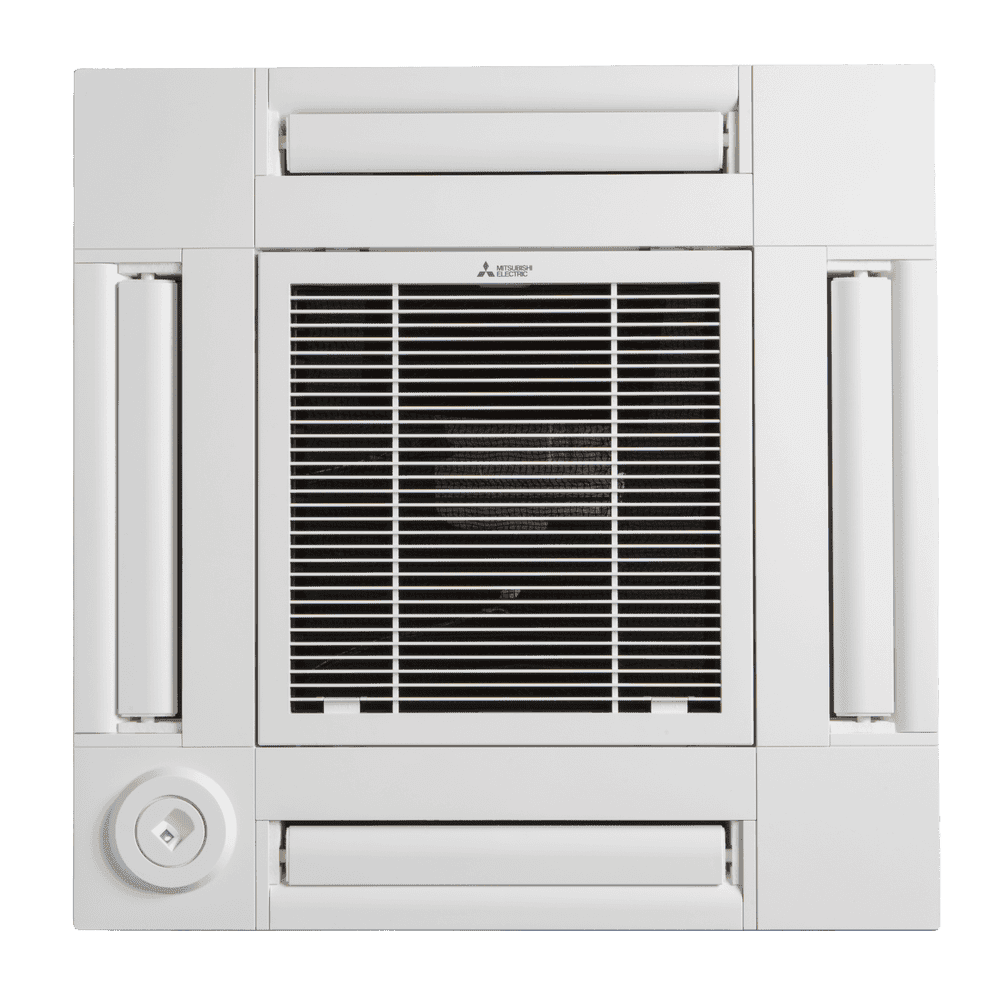
Some version of this comes up at most mini split estimates: "Can we do the ceiling one instead? I do not want a box on my wall." Fair. The cassette look is clean, and manufacturer photos make it seem like an easy swap.
Here is what we say in person: you can have one, but we will probably try to talk you out of it. At the same capacity, a wall unit costs less, runs quieter, holds temperature better, and causes fewer problems over its life. The cassette is the most requested unit we almost never recommend.
A cassette is not a light fixture
The picture in most people's heads: the cassette sits flush in the ceiling, so it must go wherever a light fixture goes. That is the biggest misconception we deal with on these.
A cassette is a full indoor unit that happens to be recessed. It needs refrigerant lines run to it, condensate drainage, power, framing that accepts the chassis, and enough space above it to physically install and later service the thing. None of that is visible in the brochure photo, and all of it decides whether your ceiling can actually take one.
What a cassette actually needs
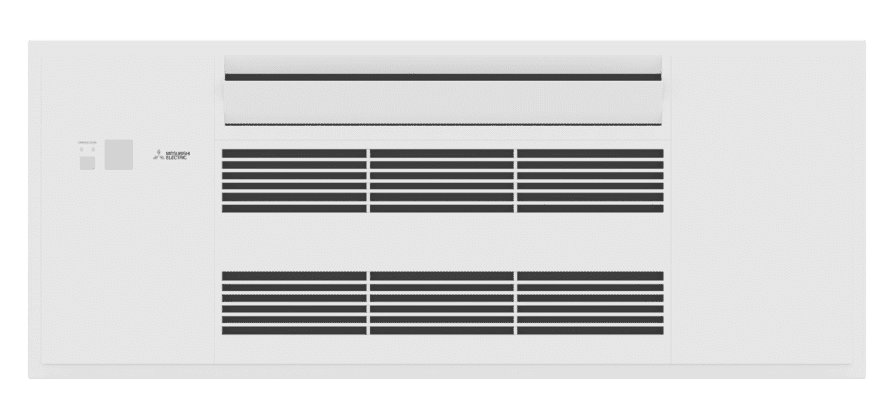
- Framing that fits the chassis. The cassette everyone pictures is the 24x24 four-way unit. Most houses cannot take one unless the ceiling is framed for it. Mitsubishi builds the slim one-way MLZ-KX specifically because it fits within standard 16-inch joist bays; that unit exists precisely because the four-way usually does not fit.
- Access above the unit. Installing and servicing a cassette needs roughly 3 feet of working space above it. No access above means no unit, and it means every future service visit is somebody working blind.
- Which usually rules out the first floor. On a two-story home, the space above a first-floor ceiling is your second floor. Cassettes are realistic under an attic or another accessible space, and that is a small fraction of the rooms people want them in.
Louder and less precise, by design
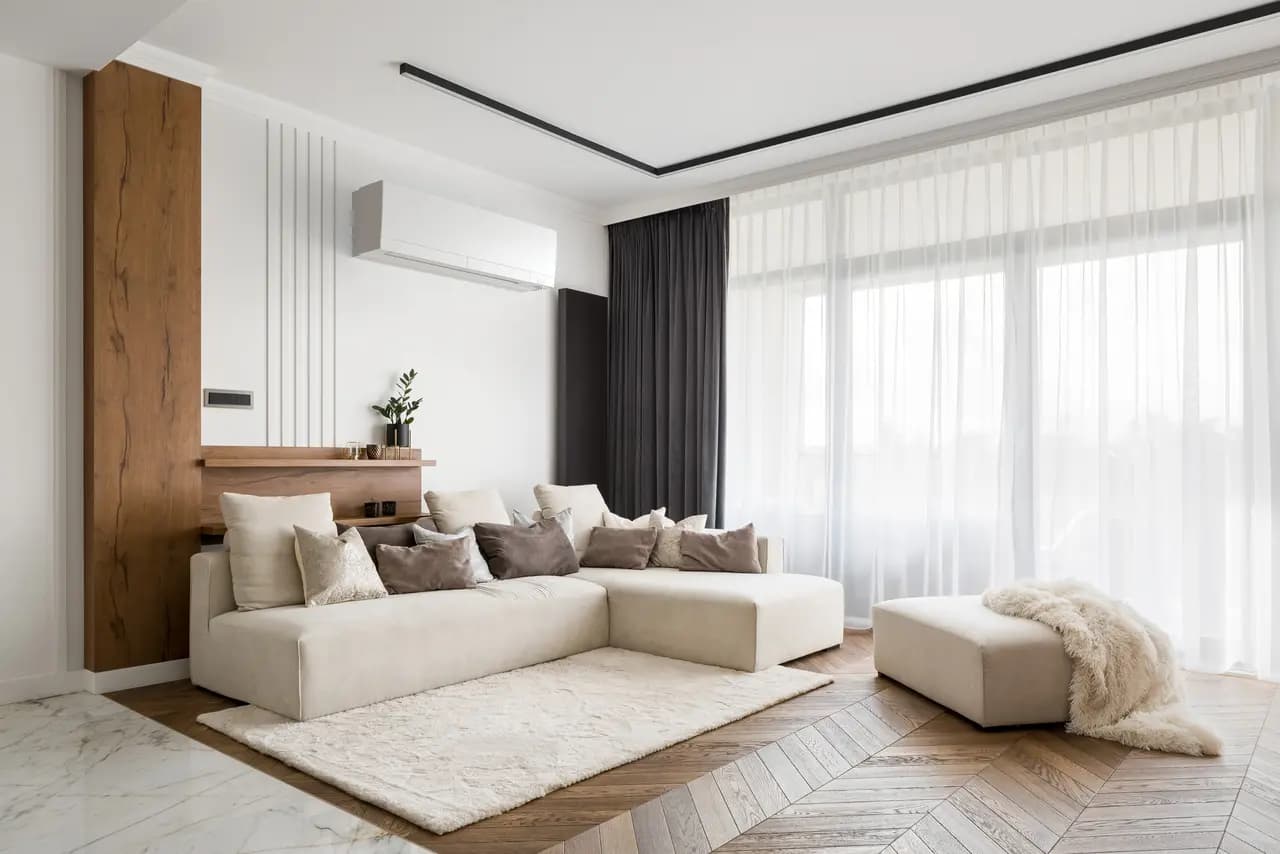
Recessing a unit into a ceiling forces design compromises that a wall unit does not have to make. The result, comparing like for like: cassettes typically run louder and hold room temperature less precisely than a wall unit of the same capacity. This is not an installation quality issue. It is what the form factor costs, even when the install is done right.
They are also more expensive. You are paying for the framing work, the ceiling cutting, and the harder install, and getting a unit that performs worse for it. On our quotes, the same room done with a wall unit is consistently the cheaper line item. See our mini split installation pricing for current Denver ranges.
The attic problem
Getting a cassette into a ceiling below an attic means real time spent working up there, on the install and on every service visit after it. Walking in an attic causes ceiling cracks. Not might: does. Trusses flex, drywall moves, and hairline cracks show up in the finished ceiling below. That cost never appears on anyone's quote, and nobody warns you about it in the showroom.
Add it up and cassettes tend to be more problematic overall than wall units, even when the installation itself is done correctly. More constraints, more access issues, more things that can go wrong above your drywall instead of on it.
Where we land
We almost never spec cassettes anymore. When a design calls for a mini split, the default on our quotes is a wall unit, and rooms that genuinely cannot take one usually get solved a different way. See the indoor unit rundown in our mini split sizing guide for how the options compare room by room.
And if you have read all of this and still want the cassette look? We will install it, and we will do it right. We just will not sell it to you without this conversation first. That is the difference between speccing what fits your house and speccing what looked good in a photo.
Get an estimate and we will tell you what your rooms can actually take, framing and access included.