Staring at “Enter the Qualified Manufacturer Identification Number” and wondering what to put there? You need your heat pump manufacturer’s QMID code. Find it below.
You are on Form 5695 trying to claim your heat pump tax credit. You get to line 29a and see:
“Enter the Qualified Manufacturer Identification Number and cost of the most expensive electric or natural gas heat pump”
Then there are 4 empty boxes. What goes there?

That is your manufacturer’s QMID code. It is a 4-character alphanumeric code like N8H2 (Carrier) or B8T9 (Trane) that proves your equipment was made by a manufacturer the IRS has verified meets efficiency standards.
This field is new for 2025. If you filed for energy credits in previous years, you did not need this. Now you do. The form asks for the Qualified Manufacturer Identification Number in multiple places:
If you leave these boxes blank or enter the wrong code, TurboTax or your tax software may flag an error or the IRS could delay your refund.
Eligible UniColorado customers will receive an email that includes their invoice, AHRI certificate, and QMID. The QMID provided can be used directly when filing taxes.
You still need a qualified manufacturer identification number to claim the credit. UniColorado has created a free public QMID directory available at or you can continue reading below:
Rebate Blue QMID Directory

The Energy Efficient Home Improvement Credit (also called the 25C credit) offers significant savings on qualifying heat pump installations:
These credits can be claimed annually through 2032, meaning you can stack savings across multiple home improvements over time.
Important: This is a tax credit, not a rebate. It directly reduces what you owe the IRS dollar-for-dollar. If you owe $3,000 in taxes and claim the full $2,000 heat pump credit, you only pay $1,000
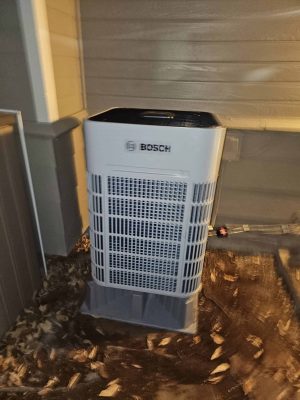
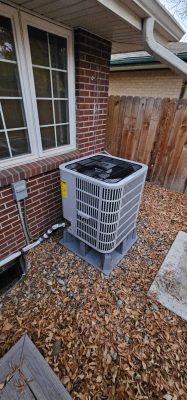
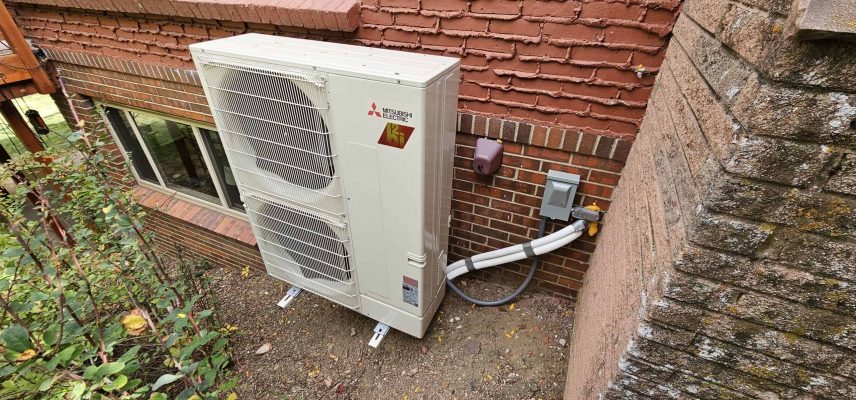
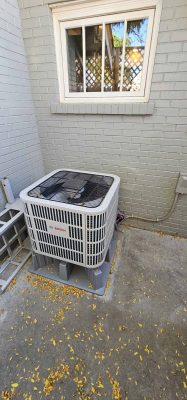
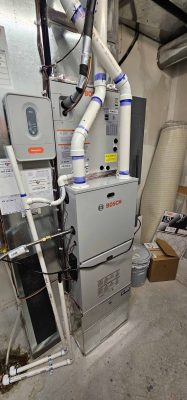
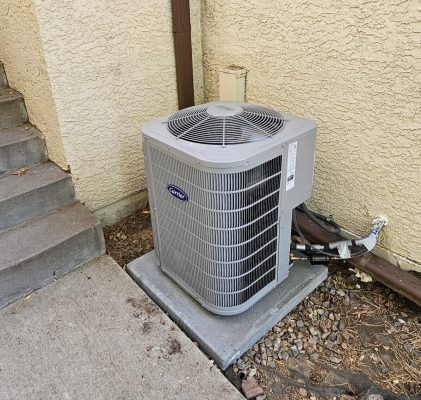
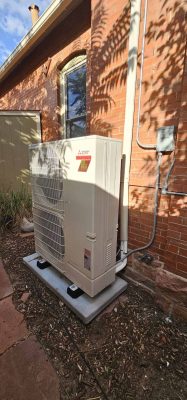
UniColorado installs heat pumps from multiple manufacturers, all with valid QMID codes for 25C tax credits. Please see a list of qualified manufacturer identification number codes for the most popular brands of heat pumps below.
Not sure which brand is right for your home? That is where our team comes in. We assess your home, your budget, and your comfort goals to recommend the right equipment.
Industry leader known for efficiency. Includes Bryant, Payne + more under the Carrier family.
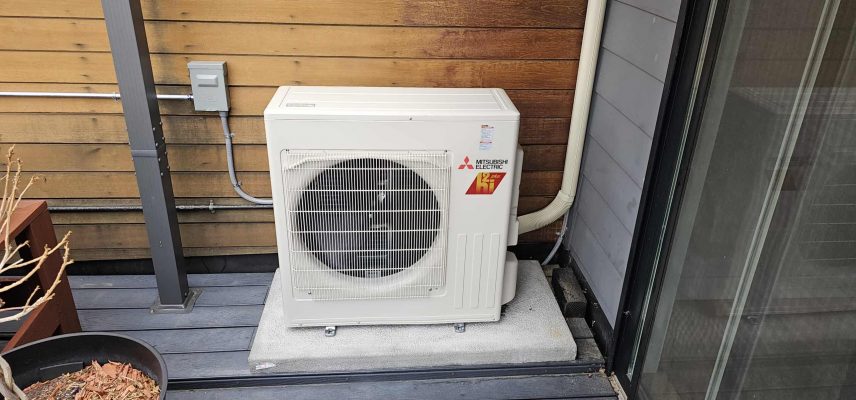
The gold standard for ductless mini-split heat pumps and cold climate performance.
German engineering with exceptional build quality for cold climate weather.
High-efficiency systems with advanced humidity control and quiet operation.
Dependable mid-range option. Ruud equipment uses the same QMID.
Global HVAC manufacturer. Includes Amana and Goodman brands.
UniColorado has created a free public to use QMID code list. Click here to go to the directory.
IRS Form 5695 is where you claim the Energy Efficient Home Improvement Credit. Here is what you need:
The form calculates your credit based on eligible costs. For heat pumps, the credit is 30% of total cost up to the $2,000 maximum.
When you file, you will enter the QMID code in the appropriate section of Form 5695. This tells the IRS that your manufacturer has certified the equipment meets efficiency requirements.
What UniColorado Provides:
We give you everything needed for tax filing. No chasing down paperwork, no calling manufacturers, no confusion about which codes to use.
Legal Standard
Practical Numeric Definitions
(Aligned with ENERGY STAR Most Efficient 2025, which manufacturers and the IRS rely on to satisfy the “highest CEE tier” requirement.)
FORM 5695 REPORTING
Note
The IRS does not publish raw SEER2, EER2, or HSPF2 tables. Eligibility is determined by whether the manufacturer certifies that the installed model meets the highest CEE efficiency tier in effect for the year claimed.
If you upgraded your electrical panel in 2025 to support a heat pump installation, that work also qualified for the 25C tax credit.
Electrical Panel Upgrade: Up to $600 tax credit when installed to support heat pump equipment
The 25C credit covered electrical panel upgrades, sub-panels, branch circuits, and feeders when the work enabled installation of qualifying energy-efficient equipment like heat pumps or EV chargers.
You Do NOT Need a QMID for Your Electrical Panel. Eaton, Siemens, or electrical panel manufacturer QMID’s are not needed.
This confuses a lot of people. On Form 5695 line 25, you are claiming the cost of “enabling property” (your panel upgrade). But you do NOT enter a QMID for the panel itself.
The QMID you enter is for the “enabled property” which can be the heat pump or other qualifying equipment that the electrical work supports. Electrical panels do not have QMIDs.
So if you upgraded your panel or added circuits to install a Mitsubishi heat pump, you enter Mitsubishi’s QMID (E8X7) on line 25, not some code for your electrical panel. Line 25b asks for the “code for the type of enabled property” – this refers to a category code (like HP for “E” for electric heat pump), not a panel manufacturer’s QMID.
Line 25b.
Enter the code for the type(s) of enabled property from the following list.
A = Windows and skylights reported on Form 5695, line 20a
B = Central air conditioners reported on Form 5695, line 22a
C = Natural gas, propane, and oil water heaters reported on Form 5695, line 23a
D = Natural gas, propane, and oil furnaces or hot water boilers reported on Form 5695, line 24a
E = Electric or natural gas heat pumps reported on Form 5695, line 29a
F = Electric or natural gas heat pump water heaters reported on Form 5695, line 29c
G = Biomass stoves or boilers reported on Form 5695, line 29e
The UniCo Way
We have installed thousands of heat pumps across the Denver metro area. Here is what sets our approach apart:
Upfront Pricing, Zero Hidden Fees
You know your total cost before we start. Our quotes include equipment, labor, permits, and all materials. No surprise charges.
NATE-Certified Technicians
Our team holds industry certifications and participates in ongoing training on the latest heat pump technology.
Complete Documentation
We handle all paperwork for rebates and tax credits. QMID codes, certification statements, efficiency ratings: you get everything you need.
Utility Partnerships
We work directly with Xcel Energy and other utilities to process your rebates. Almost all rebates are provided upfront as a discount.
100% Satisfaction Guarantee
We stand behind our work. If something is not right, we make it right.
UniColorado provides your QMID code at installation. It will be on your invoice and certification paperwork. For equipment purchased elsewhere, visit rebate.blue/qmid to look up any manufacturer.
The credit was per year while the program was active. However, the 25C credit expired at the end of 2025. You can still claim the credit for heat pumps installed in 2025 when you file your 2025 taxes.
You still get 30% of your actual cost. For example, a $5,000 installation would qualify for a $1,500 credit.
Yes. For 2025 installations, federal tax credits and utility rebates could be combined. They were separate programs with no restrictions on stacking but you must enter the amount paid after all other incentives and rebates were filed in the form 5695.
For 2025 installations, yes. Ductless mini-splits and multi-zone systems qualified for the 25C credit as long as they met efficiency requirements.
The 25C credit was non-refundable. You could only use it to reduce taxes owed to zero – no refund for the unused portion.
The electrical work should be part of the same project and necessary to support the heat pump installation. Our team ensures all work is properly documented.
No. Electrical panels do not have QMIDs. On Form 5695 line 25, you enter the QMID for the “enabled property” (your heat pump), not for the panel itself. If you upgraded your panel to install a Carrier heat pump, you enter Carrier’s QMID (N8H2).
This is a single-letter code identifying what equipment your electrical work supports. Enter E for heat pumps, F for heat pump water heaters, or G for biomass stoves/boilers. This is separate from the manufacturer QMID which goes on line 25d.
UniColorado is the most experienced heat pump installer in Colorado and has installed over 10,000 heat pumps in the Denver metro area.
We apply eligible utility rebates and tax credits as upfront discounts, keeping your project simple and cost-effective.
If you’re planning a heat pump upgrade, you’re in the right place.