

You've seen the trucks. You've heard the jingles on the radio. When your furnace dies on a Tuesday night in January, these are the names that come to mind first - because that's exactly what they've spent years making sure of.
These are real companies with real technicians. Some have been around for decades. But the business model behind the familiar name affects what you pay, what you get, and what happens after the install. Most homeowners never see how the model works. Here's what happens behind the scenes.
The Commission Model

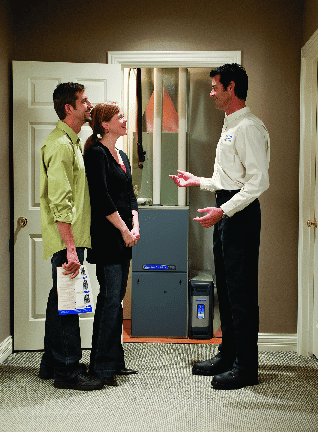
At most large HVAC companies, the person sitting in your living room is called a "comfort advisor." Not a technician. Not an engineer. A comfort advisor. They're trained in sales, not refrigerant circuits.
The compensation is straightforward: they have a floor (base salary), and they earn 3-5% commission on every sale they close. On a $20,000 system, that's $600-1,000 going to the person who sold it - not the person who installs it.
This explains a few things you've probably experienced:
- "I can drop the price $2,000 if you sign today." That discount was built into the quote. The original price was inflated to leave room for the negotiation. The "deal" is the real price.
- "This price is only good until I walk out the door." Because if you get a second quote, you'll see what the system actually costs without the commission and overhead baked in.
- The options always steer you up. You came in asking about a standard replacement. By the time the presentation is over, you're looking at the premium tier with add-ons you didn't know you needed an hour ago.
None of this means the company does bad work. But the person recommending equipment for your home has a financial incentive to recommend more expensive equipment. That's worth knowing.
The $29 Tune-Up
You've seen the mailers. "$29 furnace tune-up!" "$69 AC check-up!" The price is deliberately low - sometimes absurdly low - because it's not a service. It's a sales channel.
The math: it costs roughly $180 for an HVAC company to dispatch a truck and a technician to your house. Drive time, labor, fuel, insurance, overhead. A $29 tune-up loses the company about $150 before anyone touches your furnace. No business absorbs that loss unless there's a plan to make it back.
The plan: the technician finds things wrong. Sometimes legitimate, sometimes creative. A cracked heat exchanger. A capacitor that's "showing signs of wear." A blower motor that's "on its last legs." The $29 tune-up turns into a conversation about a $1,200 repair - or better yet, a full replacement.
Furnaces do develop real problems, and a good technician should tell you about them. The issue is the incentive structure. When the tune-up is priced as a loss leader, the visit needs to generate revenue - because the company needs to recoup that truck roll and then some.
The $29 Tune-Up
What they tell you
What to ask
“Annual maintenance keeps your system running efficiently”
The tune-up costs $180 to deliver. At $29, it only works as a business model if the tech sells something while he's there.
“Our technician found some concerns with your heat exchanger”
Some concerns are real. But when the tech needs to generate revenue to justify the truck roll, every aging part becomes urgent.
“We recommend replacing before it fails completely”
Maybe valid - but get a second opinion from someone who didn't get to your house through a loss-leader mailer.
The Warranty Fine Print
"10-year warranty!" It's on the truck. It's in the ad. It sounds like you're covered for a decade. Read the fine print.
At many large HVAC companies, that extended warranty is contingent on purchasing an annual membership or maintenance plan. These typically run $200-400 per year and include biannual "maintenance visits." Cancel the membership? Warranty revoked.
Over 10 years, that's $2,000-4,000 in membership fees to maintain a warranty you thought was included in the price. And each of those biannual visits is another opportunity for someone to walk through your house and recommend additional work.
It's all in the contract. But it's presented during the sales visit as a benefit ("and you get our premium membership included for the first year!"), not as a recurring cost you'll pay for the next decade to keep your warranty valid.
The Warranty
What they tell you
What to ask
“10-year parts and labor warranty included”
Requires annual membership ($200-400/yr). Over 10 years, that's $2,000-4,000 on top of the install price.
“First year of our maintenance plan is free!”
Auto-renews at full price. Cancel and the extended warranty terms change.
“Biannual visits keep your system running at peak performance”
Two sales opportunities per year, on autopilot. This is the tune-up model with a subscription wrapper.
Where the Money Goes
You get a $22,000 quote from a large HVAC company and a $14,000 quote from a smaller one for the same Carrier furnace. Same model number. Same efficiency rating. Same warranty from the manufacturer. So where does the other $8,000 go?
- Marketing. TV, radio, truck wraps, billboards, Google ads, direct mailers. Building brand recognition so you think of them first when your system fails. That spend gets distributed across every quote the company writes.
- Commission payroll. 3-5% of every sale goes to the comfort advisor, on top of their base salary.
- Sales infrastructure. CRM systems, lead routing, call centers, sales managers, training programs. All built to support the commission model.
- Facilities and image. Showrooms, large offices, fleet yards. These companies present a certain scale, and maintaining it costs money.
None of these things make your installation better. Your furnace doesn't care about the company's billboard on I-25. But they all get baked into your quote. A Carrier Infinity furnace costs what it costs. The installation takes the same number of hours. The permit fees are the same. The variable is everything else the company spends money on that has nothing to do with the work happening in your mechanical room.
The Name on the Truck May Have Changed
Private equity has been rolling up the HVAC industry for years. The pattern: buy a local company with a strong reputation, keep the name and the trucks, change the ownership and the business model behind it.
The company your neighbor recommended five years ago may not be the same company today. Same logo, same phone number, different ownership, different incentive structure. If you're choosing a contractor based on a recommendation from a few years back, it's worth asking whether anything has changed behind the scenes.
This isn't unique to HVAC - it's happening across home services. But it matters here because you're making a 15-20 year decision about your home's heating and cooling, and you want to know who's actually behind the company you're trusting with it.
What to Actually Ask
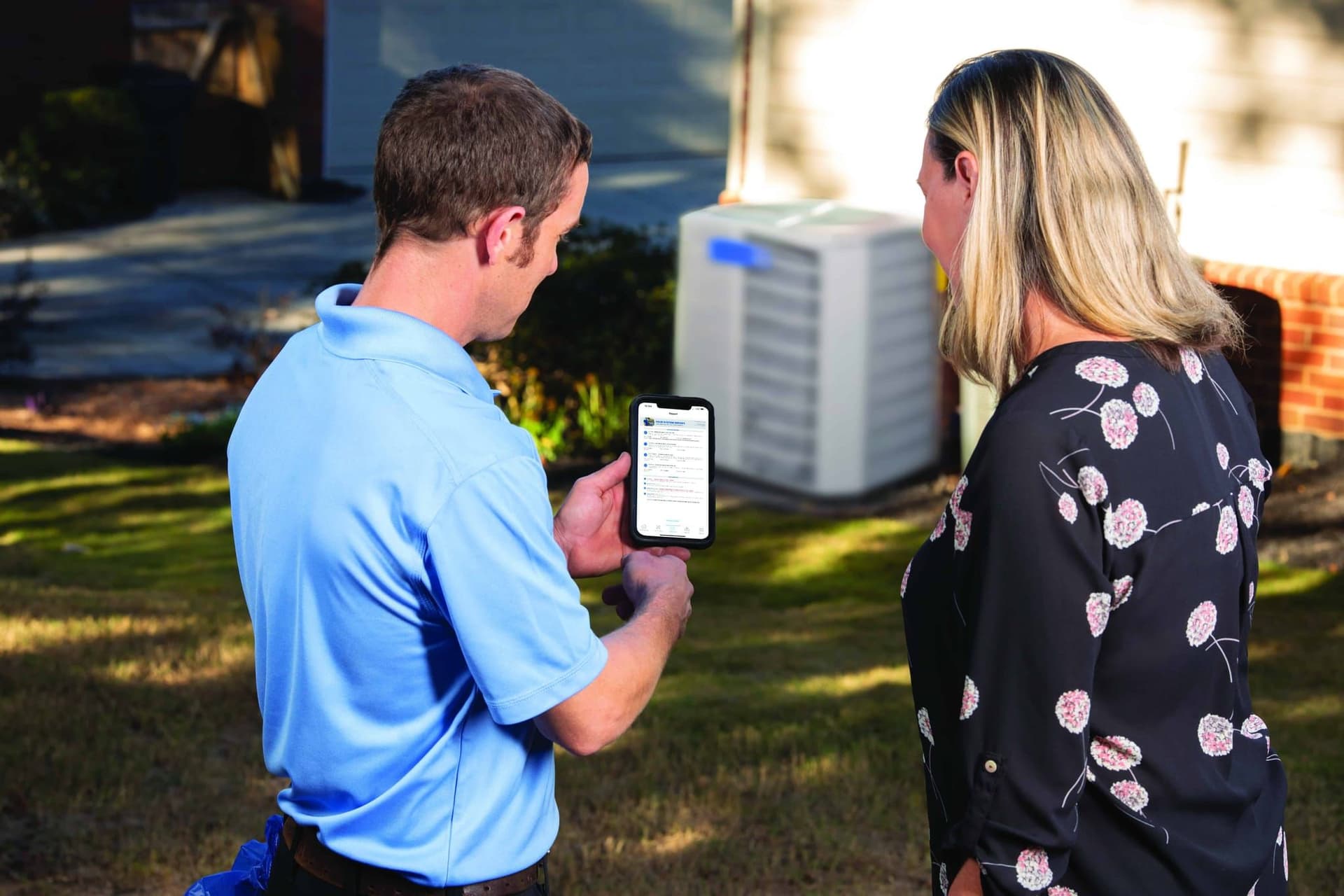
These questions aren't about catching anyone. They're about understanding the business model behind the quote so you can compare on equal terms.
"Are your salespeople paid commission?"
If yes, the person recommending equipment has a financial incentive to recommend more expensive equipment. That doesn't make them dishonest - but it's information you should have.
"What does the warranty actually require?"
Does maintaining the warranty require purchasing a membership or maintenance plan? What does that cost per year? What happens to the warranty if you cancel? Get it in writing.
"What's the real cost of the tune-up?"
If a tune-up is priced well below what it costs to dispatch a truck, ask how the company makes that work. The answer will tell you whether you're buying a service or opening a sales conversation.
"Has your company changed ownership recently?"
Not a gotcha. You're looking for transparency about who you're actually doing business with.
"Who shows up to install - and are they your employees?"
W-2 employees or subcontractors. If the company uses subcontractors, ask who handles warranty service down the road. See our breakdown of the difference between in-house crews and subcontractor models.
"Will you do a Manual J load calculation?"
This is how a system gets properly sized for your specific home. Sizing based on square footage alone ("2,000 sq ft = 3-ton unit") is guessing. Proper sizing accounts for insulation, windows, orientation, altitude, ductwork condition, and climate data. More on what a complete quote should include.
"What jurisdiction are you licensed in?"
Colorado doesn't license HVAC contractors at the state level - it's local (Denver, Pikes Peak, etc.). A contractor licensed in Denver may not be licensed in Aurora or Jefferson County. Ask for the license number and verify it through Denver Community Planning and Development or the relevant local authority.
The Bottom Line
The big HVAC companies aren't bad companies. Many employ skilled technicians who do quality work. But the business model adds cost at every layer - commission sales, marketing spend, membership programs - and that cost shows up in your quote.
Understanding how the model works doesn't mean you shouldn't hire one. It means you should know what you're paying for, ask the right questions, and compare on equal terms. When you strip away the overhead, the question is straightforward: who's doing the best work for the fairest price?


Get a quote without the markup
UniColorado doesn't pay commission, doesn't run loss-leader specials, and doesn't require memberships to keep your warranty valid. We've been installing HVAC systems in Colorado since 2014 with our own employees. Carrier, Bosch, Mitsubishi, Trane/American Standard - the right brand for your house, not the one we get the biggest margin on. Compare us line by line.