




Skip to content
UniColorado

Denver HVAC Contractor

Tankless Water Heater Installation

Gas tankless water heaters installed from $5,600: endless hot water and a 20+ year lifespan. Send photos of your current water heater and we quote it within one business day, then confirm it in person. Rinnai, Navien, and Bradford White.

Quote From Photos

Send Photos for a Quote

Send a few photos of your current water heater and we can quote from those.Quote within one business day. We confirm it in person before install.

Send Photos(303) 250-1000

BBB A+ RatingMitsubishi Diamond ContractorNATE CertifiedHomeAdvisor Top RatedYelp 5-Star Rating
Green Business Colorado
BPI CertifiedGoogle Guaranteed

Tankless Water Heater Installation

Tankless water heater installation in Denver

Tankless Water Heater Installation

On-demand hot water for Denver homes. Gas tankless units from Rinnai, Navien, and Bradford White.

Endless hot water20+ year lifespanEnergy efficient

How It Works

What is a Tankless Water Heater?

A tankless water heater heats water on demand, with no storage tank. When you turn on a hot water tap, cold water flows through the unit and a gas burner heats it instantly. Because there's no tank to maintain a temperature 24/7, tankless units use 24-34% less energy than a tank in homes that use 41 gallons of hot water a day or less, and 8-14% less in homes that use a lot more, according to the U.S. Department of Energy. We install gas tankless units only. For an all-electric home, a heat pump water heater is the better fit.

What Our Customers Say

5.0
Google Reviews (138)

Chastity O.

My mother debra was a customer of theirs. They did an amazing job. My mom feels they were so hood to her. They were professional and supportive even when problems did arise. She appreciates all you did for her. She would recommend yall to anyone!!

Google Review

Kyle M.

Aydin and team were absolutely fantastic. The install was efficient and smooth. By far the best value that we received quotes for.

Google Review

Michael M.

Afshin and Aydin were great to work with! The whole process from solution design through installation went smoothly, all at a fair price. They were always responsive and the job finished on time. Couldn't recommend more.

Google Review

Colorado's Most Experienced Heat Pump Installer

Tankless water heaters provide endless hot water by heating on demand rather than storing hot water in a tank. We install gas models from Rinnai, Navien, and Bradford White. Gas tankless units require proper gas line sizing (often 3/4" or 1" line) and direct vent or power vent systems. Annual descaling is required in Denver due to hard water. Properly maintained units last 20+ years.
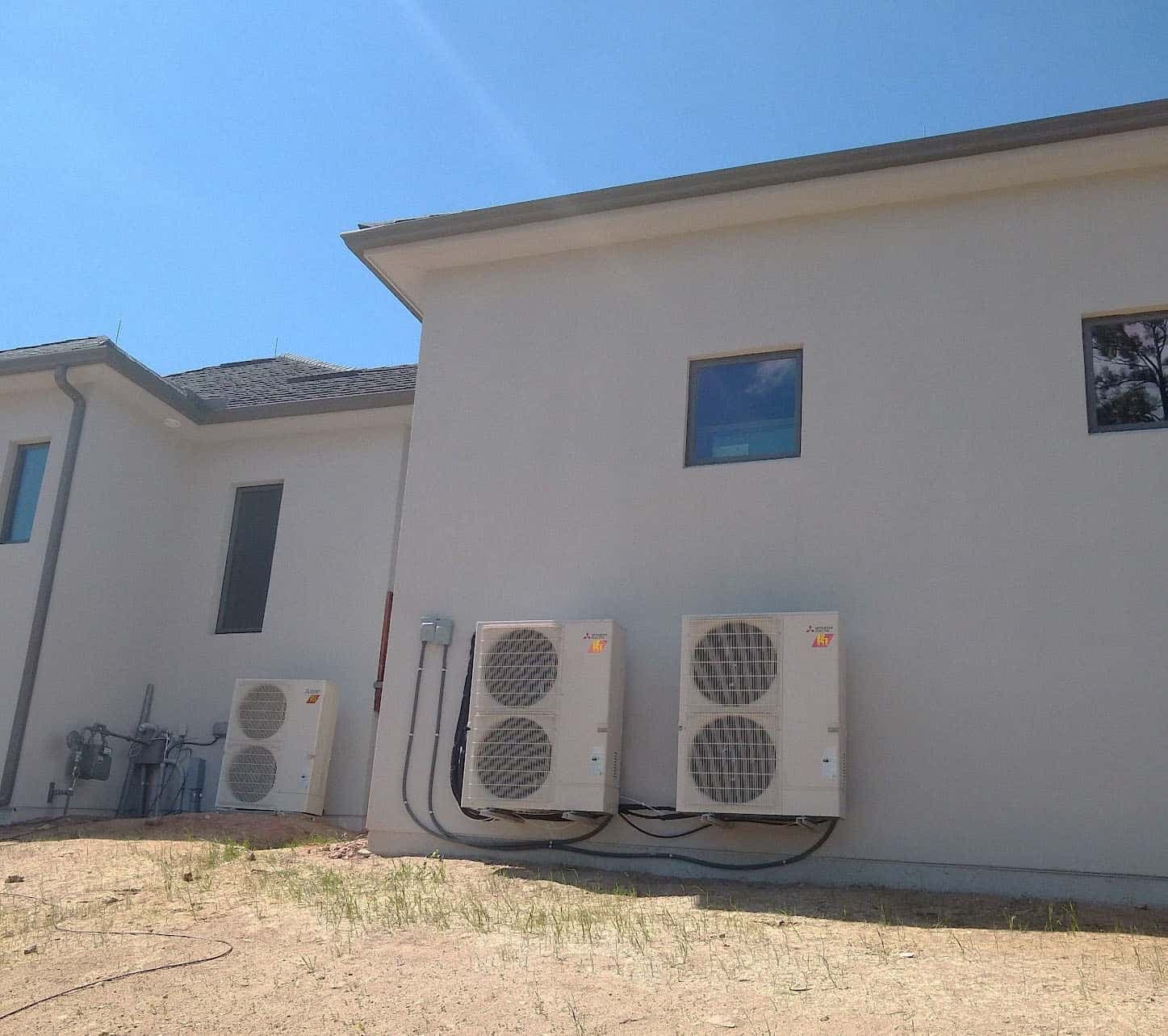
Mitsubishi hyper-heat install, Colorado 2014
2014

Our first hyper-heat install

Lennox heat pump install 2016
2016

Early Lennox cold-climate adoption

Bosch IDS Ultra heat pump install
2024

Bosch IDS Ultra install

Latest cold-climate heat pump installation 2026
2026

Latest cold-climate tech

30+

Municipalities

Master

Licensed & Certified

12,000+

Installations

Water Heater Certified

Technicians

Quality Install

Guarantee

Up Front Pricing

No hidden fees

$5M+

Saved for homeowners in 2025

$7,000

Average savings

5,000+

Rebate applications submitted

HVAC installation photo

Pricing

Tankless Water Heater Installation Cost in Denver

A gas tankless water heater installed in Denver starts at $5,600 for a typical home. Gas line upsizing and new venting, when needed, add to that. Send photos and we quote it within one business day, then confirm it in person. The tankless units we install are condensing ENERGY STAR models, which meet Colorado's 2026 low-NOx rule for gas water heaters. Factors that affect cost: • Gas line sizing: Tankless units require higher BTU input than tank water heaters. If your existing gas line is undersized (common in older Denver homes), expect $800 to $2,800 for gas line work. • Venting: Gas tankless units require direct vent or power vent systems. If your existing water heater uses a chimney flue, you'll need new PVC or stainless steel venting ($600 to $1,350). • Electrical: gas tankless units need a 120V outlet for the control board. • Permits: Denver requires permits for gas and electrical work. UniColorado handles all permit applications. Competing Denver contractors quote $6,800 to $8,900+ for gas tankless installation according to plumblineservices.com. Floworksplumbing.com quotes $1,250 to $7,900+, though the lower end of that range is unit-only pricing without installation labor.

Tankless vs. Tank Water Heater

Choosing between tankless and tank water heaters depends on upfront budget, hot water demand, and long-term operating costs. **Tank water heaters:** • Lower upfront cost: from $2,900 installed in Denver • 8-12 year lifespan • Simple installation with existing gas line and venting • Finite hot water (40-80 gallons depending on tank size) • Lower efficiency, standby heat loss **Tankless water heaters:** • Higher upfront cost: from $5,600 installed in Denver • 20+ year lifespan • Endless hot water (as long as flow rate stays below unit capacity) • Space saving (no 60-gallon tank in the mechanical room) • 24-34% more energy efficient (no standby heat loss) • Lower operating costs long-term In Denver, natural gas rates from Xcel Energy make gas tankless units economical for most homes. A typical household saves $100 to $200 per year on gas costs compared to a tank water heater. Over the 20+ year lifespan, that's $2,000 to $4,000 in savings, offsetting the higher upfront cost.

Tankless Water Heater Pros and Cons

**Pros:** • Endless hot water: No recovery time between showers. As long as flow rate stays below unit capacity, hot water is continuous. • 20+ year lifespan: Twice the lifespan of tank water heaters (8-12 years). Rinnai and Navien units routinely exceed 20 years with annual descaling. • More efficient: the U.S. Department of Energy puts tankless at 24-34% more efficient than a tank for homes that use 41 gallons of hot water a day or less, and 8-14% for homes that use around 86 gallons a day. • Space saving: Wall-mounted units free up floor space. A tank water heater occupies 16 square feet of floor space, while a tankless unit occupies less than 1 square foot. • Lower operating costs: Natural gas tankless units cost $100 to $200 less per year to operate compared to gas tank water heaters in Denver. **Cons:** • Higher upfront cost: from $5,600 installed in Denver, compared to from $2,900 for a gas tank. • May require gas line upgrade: Tankless units need 150,000 to 200,000 BTU/hr input, which often exceeds the capacity of existing 1/2" gas lines. Upgrading to 3/4" or 1" gas line adds $800 to $2,800. • 10-15 second hot water delay: Cold water sandwich effect. When you turn on a hot water tap, it takes 10-15 seconds for the burner to ignite and hot water to arrive (longer if the fixture is far from the unit). • Limited simultaneous flow rate: A tankless unit sized for 2 simultaneous showers (5 GPM) will struggle if someone starts the dishwasher or washing machine at the same time. Oversized units or multiple units solve this but increase cost. • Requires annual descaling: Colorado has hard water (7-12 grains per gallon in Denver according to Denver Water). Mineral buildup reduces efficiency and can damage the heat exchanger. Annual descaling costs $150 to $250.

Sizing a Tankless Water Heater

Tankless water heaters are sized by flow rate (gallons per minute, GPM), not tank capacity. To size a unit, calculate peak simultaneous hot water demand: • 1 shower: ~2.5 GPM • 1 bathroom sink: ~1.0 GPM • 1 kitchen sink: ~1.5 GPM • 1 dishwasher: ~1.5 GPM • 1 washing machine: ~2.0 GPM For example, if your household runs 2 showers simultaneously during morning rush hour, you need 5 GPM minimum. Denver's cold incoming water temperature (40-50°F in winter) requires higher BTU output to achieve the desired hot water temperature (120°F). A unit rated for 5 GPM in warm climates may only deliver 4 GPM in Denver during winter. **Recommended units for Denver:** • Rinnai RU199iN: 11 GPM, 199,000 BTU, handles 4 simultaneous showers in Denver winter conditions. Most popular choice for large families. • Navien NPE-240A: 11.2 GPM, 199,900 BTU, condensing efficiency (96% AFUE), built-in recirculation pump for instant hot water. • Bradford White AeroTherm: 10 GPM, 180,000 BTU, traditional reliability, lower upfront cost. For a typical Denver household (2-3 people, 2 bathrooms), a 7-9 GPM unit handles most scenarios. For larger families (4+ people, 3+ bathrooms), a 10-11 GPM unit prevents flow rate bottlenecks during peak demand.

Brands We Install

UniColorado installs tankless water heaters from Rinnai, Navien, and Bradford White. These are the three most reliable brands for Denver's climate and water conditions. **Rinnai:** The most popular tankless brand in the U.S., with a 25+ year track record. Rinnai units are known for longevity and parts availability. The RU199iN model is our most common installation for whole-home Denver applications. Rinnai's ControlR smartphone app allows remote temperature adjustment and diagnostics. **Navien:** Excellent condensing efficiency (96% AFUE) and built-in recirculation pumps for instant hot water. The NPE-240A model is the best choice for households that want near-instant hot water at every fixture. Navien units cost $200 to $500 more than comparable Rinnai models but save $30 to $50 per year in gas costs. **Bradford White:** Traditional reliability with lower upfront cost. Bradford White AeroTherm units are a good choice for budget-conscious homeowners who want proven performance without the premium features of Rinnai or Navien. Parts availability is excellent, and local plumbing supply houses stock Bradford White replacement parts. All three brands handle Denver's hard water well with annual descaling. We do not recommend off-brand tankless units (EcoSmart, Titan, Stiebel Eltron) due to parts availability issues and shorter lifespans.

Was this page helpful?

Frequently Asked Questions