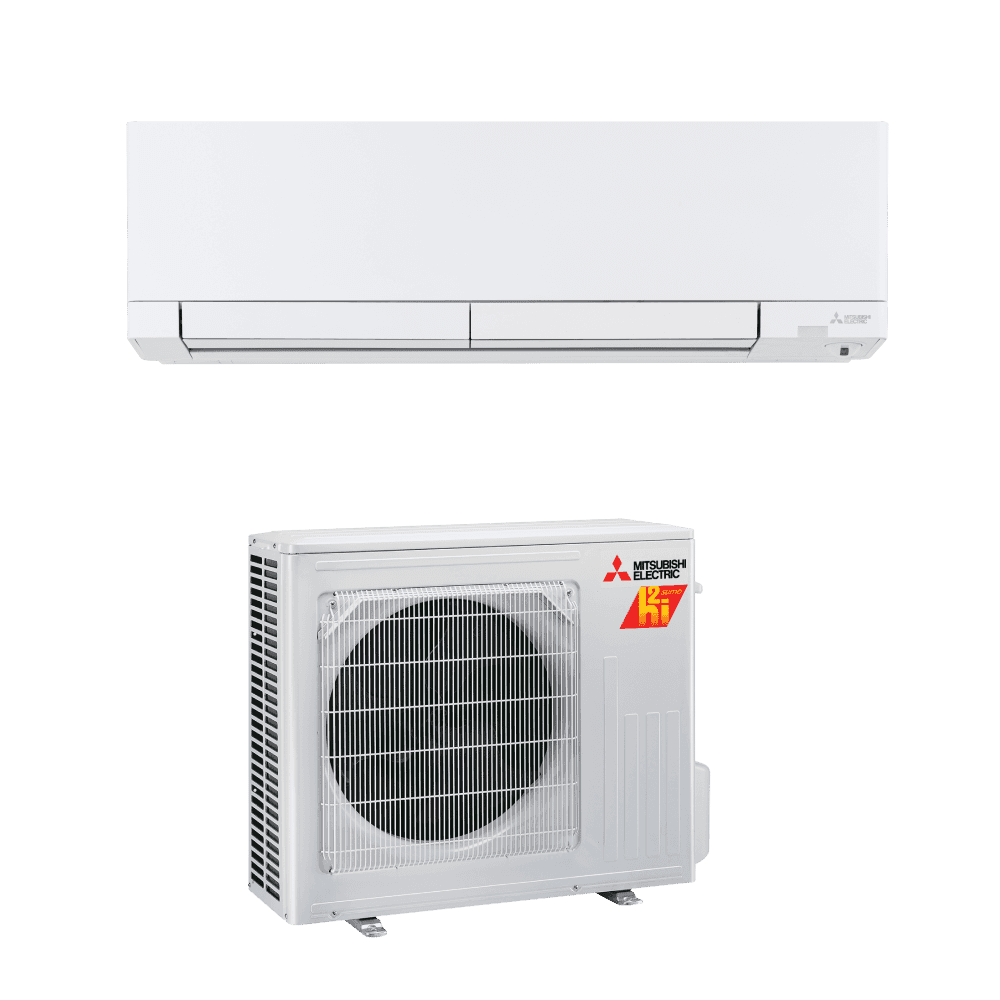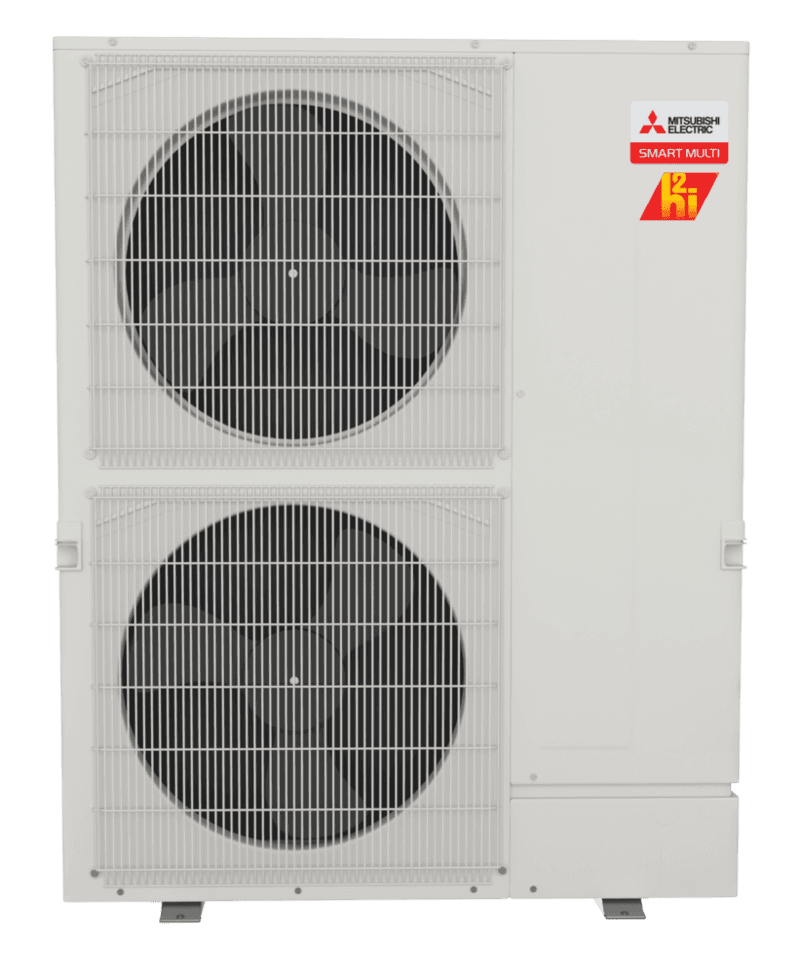


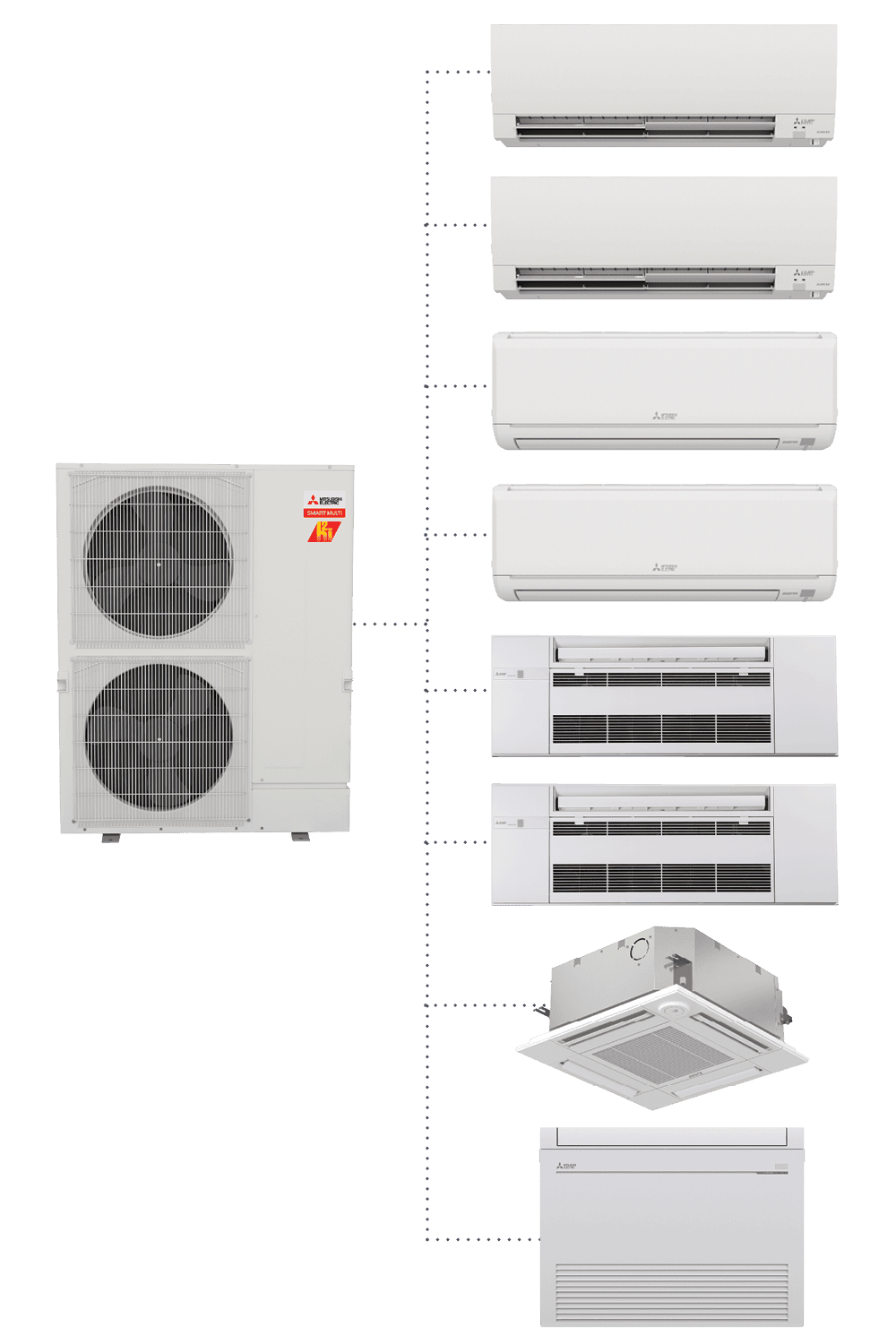
How Mini-Split Sizing Works
Mini-split sizing starts with one number: heating load in BTU per hour. In Colorado, you size for heating, not cooling. Denver's summer highs rarely exceed 95°F, but winter design temperatures hit 5°F. A system sized for cooling will be undersized for heating, and that means cold rooms in January.
Three inputs determine your heating load per room:
Heating Load Inputs
- Square footage: floor area of the room. A 200 sq ft bedroom has a very different load than a 600 sq ft basement.
- Insulation quality: pre-1980 homes with single-pane windows need 40 BTU/sq ft. New construction with spray foam and triple-pane needs only 20 BTU/sq ft.
- Climate zone: Denver metro (design temp 5°F) is the baseline. Mountain communities need 25% more capacity. Eastern plains are slightly milder.
Once you know each room's heating BTU, round up to the next standard indoor head size. Mitsubishi makes heads in 6,000, 9,000, 12,000, 15,000, 18,000, and 24,000 BTU. Sum all heads to get your outdoor unit tonnage (12,000 BTU = 1 ton).
Quick Reference: BTU by Room Size (Average Insulation, Denver)
- Room Size
- 150 sq ft (office)
- Heating BTU
- 4,500
- Recommended Head
- 6,000 BTU
- Room Size
- 200 sq ft (bedroom)
- Heating BTU
- 6,000
- Recommended Head
- 6,000 BTU
- Room Size
- 300 sq ft (large bedroom)
- Heating BTU
- 9,000
- Recommended Head
- 9,000 BTU
- Room Size
- 400 sq ft (living room)
- Heating BTU
- 12,000
- Recommended Head
- 12,000 BTU
- Room Size
- 600 sq ft (basement)
- Heating BTU
- 18,000
- Recommended Head
- 18,000 BTU
- Room Size
- 800+ sq ft (great room)
- Heating BTU
- 24,000+
- Recommended Head
- 24,000 BTU
Plan Your Zones
Add your rooms below and our zone planner calculates the right indoor head size for each one, recommends an outdoor unit, and estimates your total system cost.
Plan Your Mini-Split System
Add your rooms and see exactly what system you need
Add your rooms below. We'll calculate the right indoor head size for each and recommend an outdoor unit.
Add rooms above to start planning your mini-split system
One head per room is the standard approach: each room with a door gets its own indoor unit for independent temperature control. Open floor plans are different: a kitchen/living/dining area that flows together can often be served by a single larger head positioned centrally.
Common Denver Layouts
Ranch (1,200-1,800 sq ft)
→2-3 zones
Living area + master bedroom, optional third zone for a secondary bedroom or basement.
Two-story (1,800-2,500 sq ft)
→3-4 zones
Living area + master + 1-2 secondary bedrooms. Upper floors run warmer, so prioritize those rooms.
Split-level (1,500-2,000 sq ft)
→3 zones
Upper level + main level + lower level. Each level has distinct heating needs.
Open floor plan
→1 larger head
Kitchen/living/dining that flows together can share one centrally positioned unit rather than multiple smaller heads.
When One Zone Covers Multiple Rooms
In homes with a hallway connecting bedrooms, a wall-mount in the hallway can condition adjacent rooms if doors stay open. This works best for secondary bedrooms that don't need precise temperature control.
Standard vs Cold Climate: Which Do You Need in Colorado?
Denver's ASHRAE design temperature is 5°F. Standard mini-split heat pumps lose significant heating capacity below 30°F and effectively stop heating around 15-20°F. At Denver's design conditions, a standard unit delivers maybe 40-60% of its rated capacity.
Standard Mini-Split
Cooling-only or mild climates
- Lower upfront cost
- Fine for cooling-only applications (garages, server rooms, sunrooms)
- Loses 40-60% capacity at 5°F (Denver design temp)
- May require electric backup heat strips in Colorado winters
- Does not qualify for Xcel cold-climate rebates
Cold Climate Mini-Split
Required for Colorado heating
- Retains 75-85% capacity at 5°F via vapor injection compressor
- Rated to -13°F (Mitsubishi Hyper-Heat, Bosch Climate 5000)
- No electric backup strips needed
- Qualifies for higher Xcel cold-climate rebate tier
- Higher upfront cost than standard models
For Colorado, cold climate is almost always the right choice if you're using the mini-split for heating. The exceptions: cooling-only applications, or mild-climate vacation properties along the Front Range corridor where you have separate heating.
Cold climate models also qualify for larger rebates. Xcel Energy's heat pump incentives require cold climate certification, and the per-ton rebate amounts are higher for cold-climate-rated equipment.
See Real Wattage at Denver Temperatures
Compare cold climate mini-split models by actual power consumption
Power Consumption by Temperature
How many watts does this heat pump use?
The MITSUBISHI MUZ-FX06NLHZ*** uses approximately 480 watts at 47°F (rated conditions), increasing to 1,552 watts at 5°F (extreme cold). For a typical Denver winter, expect average consumption around 319 watts during heating operation.
Actual consumption varies based on insulation, thermostat settings, and runtime.
Ducted, Ductless, or Mixed?
Mini-splits come in several form factors, and you can mix types on a single outdoor unit:
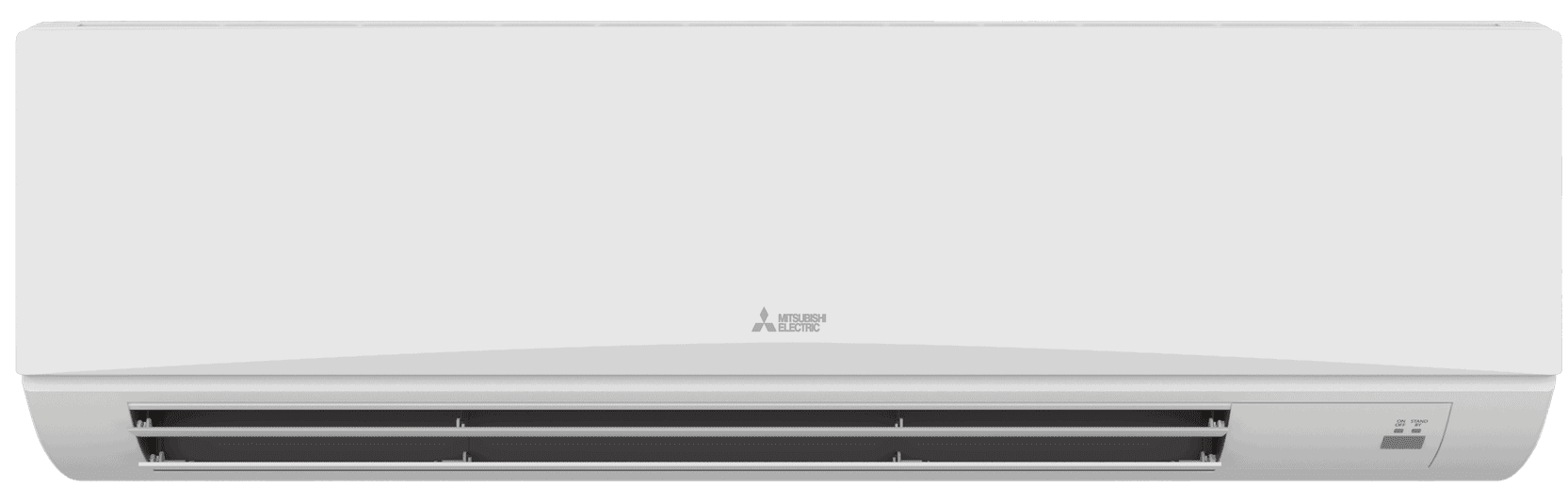
Wall-mount (ductless)
Most common · $$ · Visible
- Mounts high on an interior wall. Modern units are sleek (Mitsubishi MSZ-FH is 11" tall).
- Best for bedrooms, offices, and living rooms.
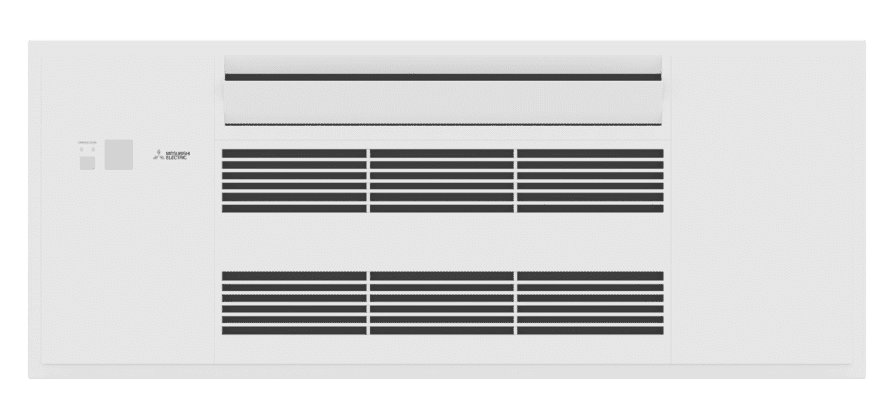
Ceiling cassette
Commercial look · $$$ · Flush
- Flush-mounts into a drop ceiling with 360° airflow. Requires ceiling space.
- Best for kitchens, open-plan areas, and commercial-style homes.
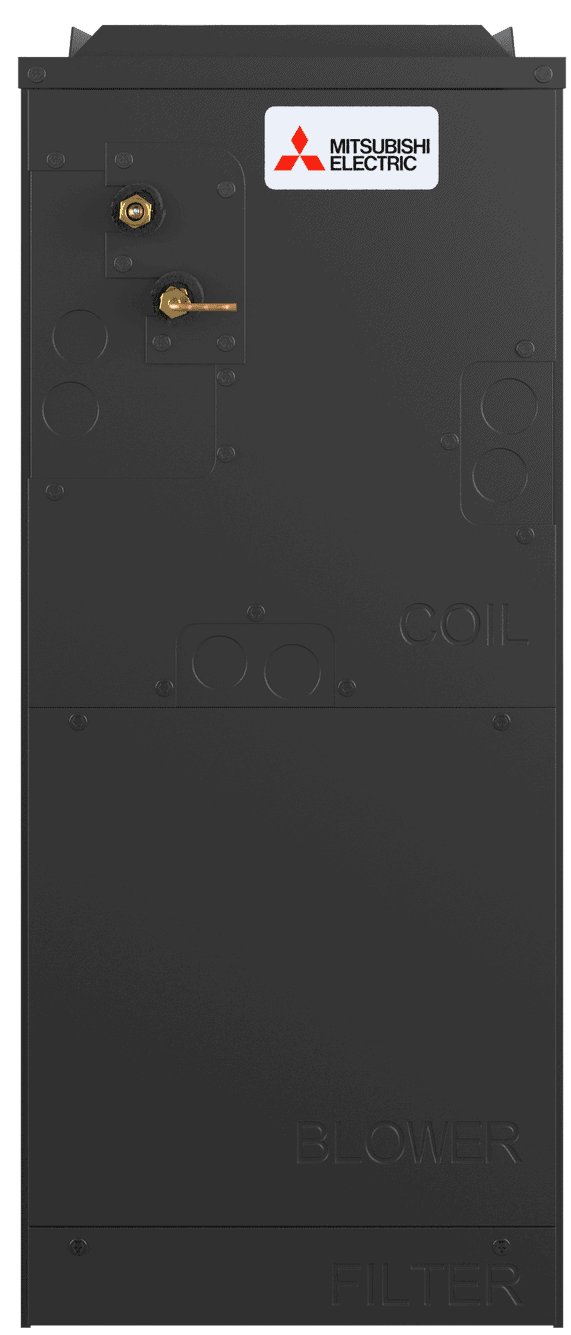
Ducted (concealed)
Invisible · $$$$ · Hidden
- Air handler hides in a closet, attic, or above a ceiling. Only supply grilles are visible.
- Costs $1,000-$2,000 more per zone for duct fabrication. Best for aesthetics-first homes.
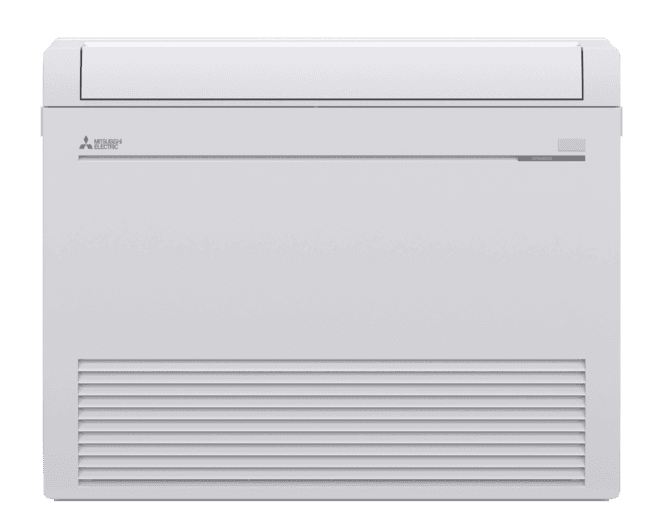
Floor-mount
Low profile · $$ · Baseboard height
- Good for rooms with limited wall space, large windows, or low ceilings.
- Delivers warm air low. Natural convection helps distribute heat.
Mixed/hybrid systems combine different head types on one outdoor unit: ducted in the hallway, wall-mount in the master, cassette in the kitchen. Mitsubishi MXZ outdoor units support up to 8 mixed heads.
Decision Matrix
- Type
- Wall-mount
- Cost
- $$
- Aesthetics
- Visible
- Best For
- Most rooms
- Type
- Ceiling cassette
- Cost
- $$$
- Aesthetics
- Flush
- Best For
- Open plans, kitchens
- Type
- Ducted
- Cost
- $$$$
- Aesthetics
- Hidden
- Best For
- Aesthetics-first homes
- Type
- Floor-mount
- Cost
- $$
- Aesthetics
- Low profile
- Best For
- Large windows, basements
- Type
- Mixed
- Cost
- Varies
- Aesthetics
- Varies
- Best For
- Whole-home, custom
Common Mini-Split Sizing Mistakes
Both oversizing and undersizing create problems. The wrong choice for Colorado's climate can leave you uncomfortable and overpaying.
1. Oversizing
An oversized mini-split short-cycles: it reaches the set temperature too quickly, shuts off, then turns on again minutes later. This causes temperature swings, poor humidity control, and premature compressor wear. Variable-speed inverter systems handle mild oversizing better than single-speed units, but a 24,000 BTU head in a 150 sq ft bedroom is still too much.
2. Sizing for Cooling Instead of Heating
This is the most common mistake in Colorado. Online BTU calculators default to cooling-load assumptions (20 BTU/sq ft). Denver needs 30-40 BTU/sq ft for heating. If you size a system based on cooling load, it'll handle summer fine but leave you cold in winter. Xcel Energy's Quality Installation requirements specifically mandate sizing for the heating load.
3. Ignoring Altitude
Denver sits at 5,280 feet. Air is 17% less dense than at sea level, which slightly reduces both heating and cooling capacity. The effect is minor (3-5% derating), but it compounds with other factors. Manufacturer specifications are rated at sea level. A professional load calculation accounts for altitude.
4. Not Accounting for Solar Gain
West-facing rooms in Denver take a beating from afternoon sun, especially in summer. Large west-facing windows can add 20-30% to a room's cooling load. Conversely, south-facing rooms benefit from passive solar gain in winter, reducing heating needs. A good load calculation accounts for window orientation.
5. Using Generic Online Calculators
Most online BTU calculators use national averages. They don't account for Denver's altitude, dry climate, intense solar radiation, or the 30°F daily temperature swings that are normal here. Our zone planner above uses Colorado-specific BTU factors, but a professional Manual J load calculation is the gold standard.
What to Expect from a Professional Load Calculation
A Manual J load calculation is the industry standard for HVAC sizing. It accounts for every factor: square footage, insulation R-values, window types and orientation, air infiltration rates, occupancy, and local climate data. Our comfort advisors perform a simplified version during every free estimate.
During a UniColorado estimate, your comfort advisor will:
What We Check During Your Estimate
- Measure each room and note ceiling heights
- Assess insulation quality and window types
- Check for air leaks and drafts
- Note sun exposure and shading patterns
- Discuss your comfort priorities (which rooms matter most?)
- Recommend specific equipment with transparent pricing
- Identify all eligible rebates and calculate net cost
The estimate is free, takes 15-30 minutes, and comes with zero pressure. We email you the options afterward so you can review at your own pace. Many homeowners schedule estimates in multiple rooms to compare targeted-zone vs whole-home approaches.


Get a Free Mini-Split Estimate
Free load calculation, honest sizing, no pressure. We email you the options.