

No: for most Denver homes, a more expensive filter is not better
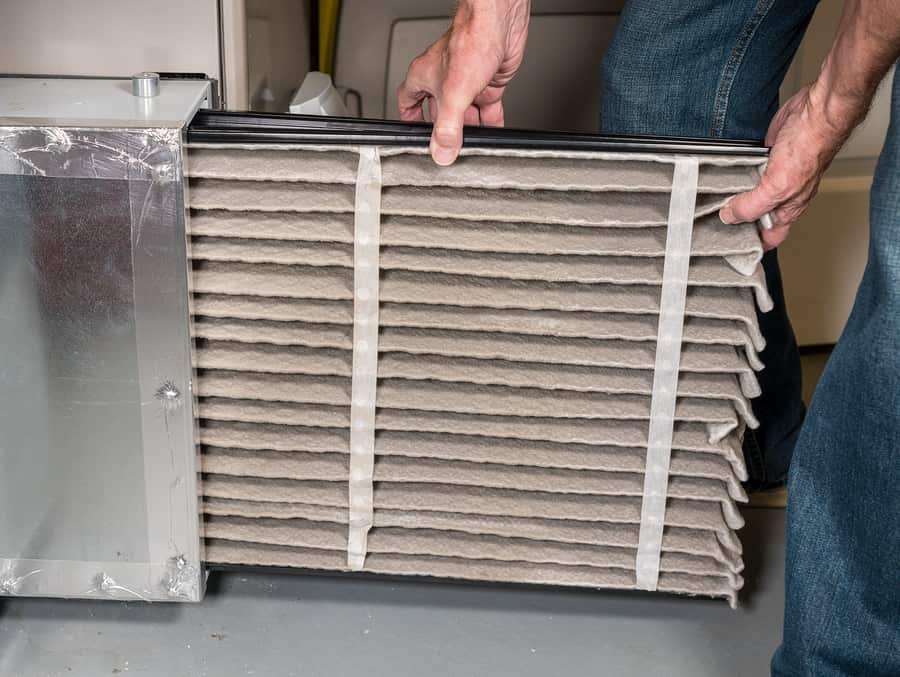
HVAC filters with higher MERV ratings (MERV 13+) cost more and catch smaller particles, but they restrict airflow in systems not designed for them. This restriction can freeze coils, damage compressors, and reduce efficiency.
For most residential HVAC systems in Colorado, MERV 8 filters changed every 30-60 days outperform MERV 13+ filters changed quarterly. You get better air quality, lower risk of system damage, and lower annual cost.
Across 12,000+ installations, we've seen the damage caused by well-meaning homeowners who installed expensive filters their systems couldn't handle. Here's what you actually need to know.
What MERV ratings actually mean
MERV stands for Minimum Efficiency Reporting Value. It's a scale from 1-20 that measures how well a filter catches particles. Higher numbers catch smaller particles, but also restrict more airflow.
The scale works like this:
- MERV 1-4: Catches large particles like dust, pollen, carpet fibers (3-10 microns). Fiberglass filters.
- MERV 5-8: Catches mold spores, pet dander, dust mite debris (1-3 microns). Pleated filters.
- MERV 9-12: Catches finer dust, auto emissions (0.3-1 microns). High-efficiency pleated filters.
- MERV 13-16: Catches bacteria, smoke, virus carriers (0.3 microns). Hospital-grade filters.
- MERV 17-20: HEPA and ULPA filters. Used in cleanrooms and surgical suites.
The problem: most residential HVAC systems were designed for MERV 1-8. Installing a MERV 13+ filter is like putting a screen door in front of your intake vent; your system has to work harder to pull air through.
MERV filter comparison: airflow vs. filtration
| MERV Rating | Best For | Details |
|---|---|---|
| MERV 1-4 | Equipment protection | |
| MERV 5-8 | Most homes (recommended) | |
| MERV 9-12 | Newer systems, light allergies | |
| MERV 13-16 | New construction, medical needs |
Notice the cost paradox: MERV 5-8 filters changed monthly cost about the same annually as MERV 13-16 changed quarterly ; but the MERV 5-8 approach gives you consistently clean filters without risking system damage.
Why higher MERV can damage your system
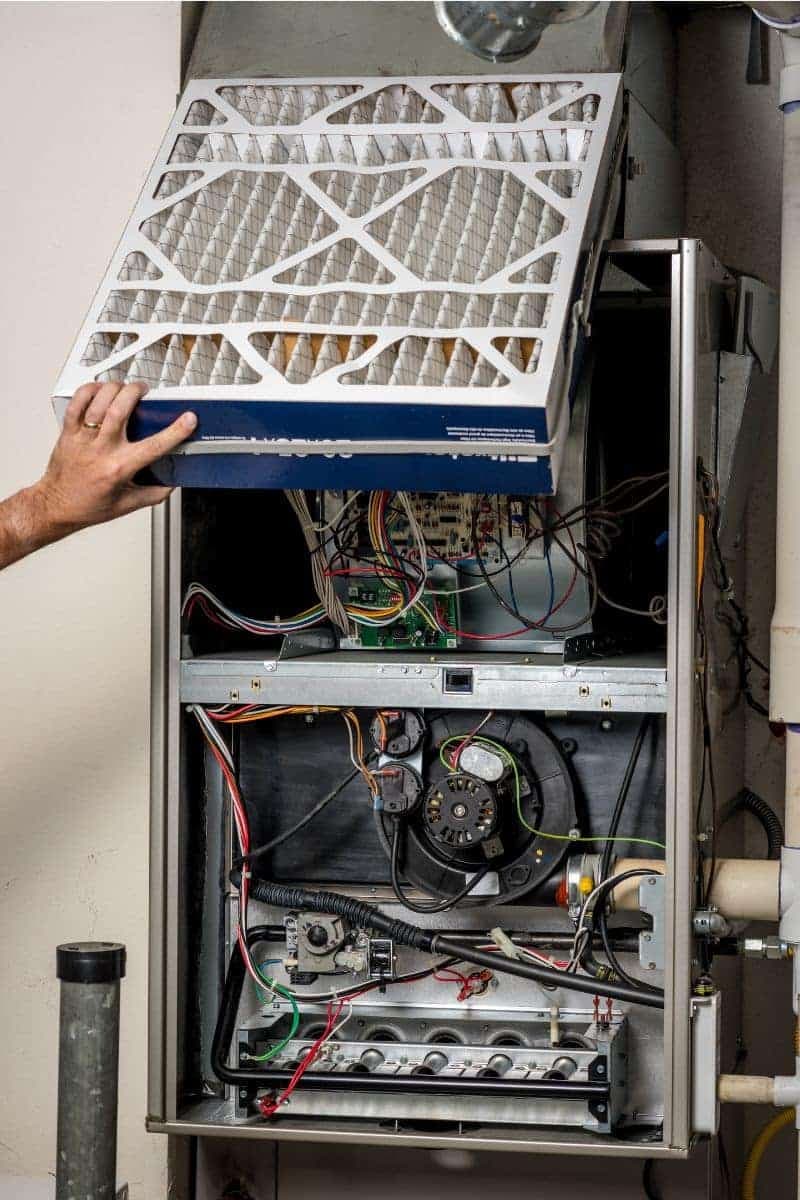
When you restrict airflow through your HVAC system, several problems cascade:
- Reduced airflow across the evaporator coil: Less air means the coil gets colder. If it drops below 32°F, condensation freezes. Ice blocks airflow further, creating a feedback loop.
- Increased static pressure: Your blower motor works harder to pull air through the dense filter media. This increases energy use and shortens motor life.
- Compressor strain: Low airflow starves the compressor of heat to absorb. It runs longer cycles trying to meet the thermostat setpoint, increasing wear.
- Reduced efficiency: Your system uses more energy to move less air. In cooling mode, you might see a 5-15% efficiency drop. In heating mode (heat pumps), capacity drops at exactly the time you need it most.
We've replaced compressors damaged by owners who "upgraded" to MERV 13 filters without upgrading their ductwork or blower. The filter cost $30. The compressor replacement cost $3,500.
How to tell if your filter is too restrictive:
- Longer run times to reach temperature
- Ice buildup on the indoor coil or refrigerant lines
- Reduced airflow from vents (weak air output)
- Blower motor running louder than normal
- Higher-than-normal electric bills
What UniColorado recommends for Denver homes
For most residential HVAC systems in Colorado (built before 2020, standard ductwork, no special filtration upgrades):
MERV 8 changed monthly beats MERV 13 changed quarterly. Here's why:
- Consistent filtration: A clean MERV 8 catches particles efficiently. A clogged MERV 13 (common after 60+ days) allows bypass around the filter frame.
- Lower airflow restriction: Even a new MERV 8 has half the static pressure drop of a new MERV 13. Your system breathes easier year-round.
- Better for Colorado dust: Denver's high desert climate means fine dust and pollen. MERV 8 catches this effectively without choking your system.
- Similar annual cost: 12 MERV 8 filters/year ≈ 4 MERV 13 filters/year in total cost, but with better performance and zero risk of system damage.
If you have a newer home (2020+) or your HVAC system was specifically designed for high-efficiency filtration, MERV 11-13 may be appropriate. Check your installation manual or ask your HVAC contractor.
EPA guidance on residential HVAC filters
The EPA's official guidance on residential air filters acknowledges the trade-off between filtration and system compatibility:
"Upgrade air filters to the highest efficiency possible that is compatible with the system and check the filter fit to minimize filter air bypass."
The EPA and ASHRAE recommend MERV 13 or higher for managing COVID-19 and other airborne viruses; but only if your system can handle it. The guidance explicitly warns: "Consult your HVAC manual or an HVAC professional, as not all systems can accommodate higher efficiency filters."
Key EPA points for homeowners:
- The most effective way to improve indoor air quality is to reduce or remove pollution sources and ventilate with clean outdoor air. Filtration is a supplement, not the primary solution.
- MERV 13+ filters trap smaller particles (including virus carriers), but effectiveness depends on proper system fit and airflow.
- EPA does not certify or recommend specific filter brands; focus on MERV rating and system compatibility.
Bottom line from EPA: Higher MERV is better for particle capture, but only if your system supports it without compromising airflow. For most existing homes, that means MERV 8-11.
Sources: EPA COVID-19 Filter Guidance, EPA MERV Rating Explanation, EPA Guide to Air Cleaners in the Home
When higher MERV filters make sense
There are legitimate cases where MERV 11-16 filters are appropriate for residential systems:
- New construction (2020+): Newer homes often have HVAC systems designed for MERV 13+ from the factory. Check your installation manual for the maximum rated MERV.
- Systems upgraded for high-efficiency filtration: If your HVAC contractor installed a larger return plenum, upgraded blower motor, or added a whole-home air cleaner cabinet, your system may handle MERV 13-16 without issue.
- Medical needs: Severe allergies, asthma, COPD, or immune system conditions may warrant MERV 13+ if paired with proper system upgrades. Talk to your HVAC contractor about upgrading your return ductwork to handle the increased static pressure.
- Wildfire smoke events: During Colorado's wildfire season, temporary use of MERV 13 can help with smoke particulates; but monitor your system for reduced airflow and change the filter more frequently (every 30 days during smoke events).
If you're unsure whether your system can handle higher MERV, measure the airflow from your vents before and after installing a new filter. A 15%+ drop in airflow means the filter is too restrictive.
The real air quality solution (it's not just filters)
If you want hospital-grade air quality in your Denver home, don't rely on furnace filters alone. The filter in your return duct is designed to protect your equipment, not purify your air.
For true air quality improvement, consider these proven solutions:
- Whole-home air purifiers: Installed in the return duct with their own bypass cabinet and blower. These systems use MERV 16 or HEPA filters without restricting your HVAC airflow. Examples: AprilAire 5000, Trane CleanEffects, Carrier Infinity Air Purifier.
- UV-C germicidal lights: Installed in the ductwork near the coil. Kill mold, bacteria, and viruses on contact. Don't restrict airflow.
- Dedicated outdoor air systems (DOAS): Bring filtered fresh air into your home continuously. Reduce CO₂ and VOCs. Common in newer high-performance homes.
- Portable HEPA units: For bedrooms or high-use rooms. Supplement your HVAC system without modifying ductwork. Look for CADR ratings appropriate for your room size.
At UniColorado, we install whole-home air quality systems alongside heat pumps and furnaces. If you're serious about air quality, not just equipment protection, a dedicated purification system is the right approach. A whole-home purifier costs $1,200-$2,500 installed, and delivers MERV 16 or HEPA filtration without any risk to your HVAC system.
Want to discuss air quality options for your Denver home? Learn about our other HVAC services or request a free estimate. If your furnace sounds louder than usual or is whistling (a common sign of filter restriction), our noisy furnace guide explains what you're hearing. For Denver's dry winter air, a whole-home humidifier pairs well with any filtration strategy.