

The two biggest energy wasters aren't what you think
Your summer electric bill in Denver just hit $250, and you're wondering where it all went. Most homeowners assume it's the thermostat setting or an oversized AC unit. It's not.
The two biggest culprits are dirty air filters and air leaks around ducts and windows. A clogged filter makes your AC work 5-15% harder. Air leaks waste 20-30% of cooled air before it even reaches your living space. Combined, these two issues can add $40-$80 to your monthly bill during Denver's hottest months.
In over a decade of servicing Denver HVAC systems, we've seen homeowners spend hundreds on smart thermostats and UV window film while ignoring a $15 filter change that would save them more money. This guide ranks every common energy-saving action by actual impact: no guessing, no generic advice.
The two biggest energy wasters in your home
1. Dirty air filters
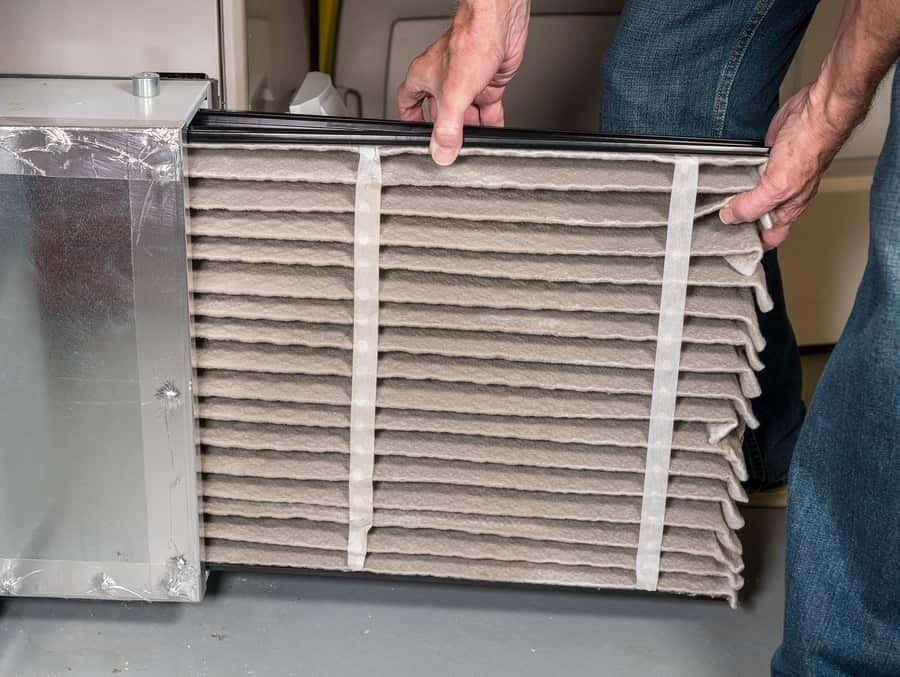
A clean filter allows air to flow freely through your system. A dirty filter chokes airflow, forcing the blower motor to work harder and run longer to move the same amount of air. This increases runtime by 5-15%, which translates directly to higher electric bills.
In Denver's dusty summer climate, change your filter monthly, not every 3 months. Pollen, construction dust from Front Range development, and dry soil particles clog filters faster here than in humid climates. For more on filter types and which performs best for Colorado homes, see our HVAC filter guide.
2. Air leaks (ducts and envelope)
Air sealing issues fall into two categories: duct leaks and building envelope leaks. Duct leaks occur at joints, seams, and connections in your ductwork, especially in unconditioned spaces like attics and crawl spaces. Building envelope leaks happen around windows, doors, electrical outlets, and anywhere conditioned air escapes to the outside.
The EPA estimates that 20-30% of conditioned air is lost through duct leaks alone. In a Denver home cooling 1,800 square feet, that's $40-$60/month in wasted electricity during summer.
DIY sealing (weatherstripping, caulk) costs $50-$150 in materials. Professional duct sealing costs $800-$2,000. Both pay for themselves in 1-3 cooling seasons.
Energy-saving actions ranked by impact
These six actions are ranked by typical savings for a 1,800 sq ft Denver home with a 3-ton AC system. Your results will vary based on home age, insulation, and current system condition.
Impact: 5-15% reduction in cooling costs
Denver's dry, dusty climate clogs filters faster than the national average. Pollen from cottonwood trees, construction dust, and soil particles accumulate quickly. A MERV 8-11 filter costs $5-$15 and takes 2 minutes to change. Do this first.
Monthly cost: $5-$15 | Savings: $12-$35/month
Cost vs. savings comparison
This table shows the cost to implement each action and estimated monthly savings during Denver's cooling season (May-September). Annual savings assume 5 months of use.
| Action | Estimated Monthly Savings | Details |
|---|---|---|
| Change filter monthly | $12-$35 | |
| Seal air leaks | $25-$50 | |
| Thermostat programming | $12-$25 | |
| Annual tune-up | $10-$25 | |
| Shade outdoor unit | $7-$12 | |
| Close blinds (S/W windows) | $5-$10 |
Stack these actions for maximum savings. A homeowner who does all six can reduce summer cooling costs by 30-50%: that's $80-$150/month or $400-$750 per cooling season.
Denver-specific cooling tips (altitude and dry heat)
Denver's climate differs from most of the U.S. in two critical ways: altitude (5,280 feet) and low humidity (average 30-40% in summer). These factors change how your AC operates and which efficiency strategies work best.
1. Lower air density at altitude
Air is 17% less dense at 5,280 feet than at sea level. This means your AC blower has to move more volume to deliver the same mass of cooled air. Keeping filters clean and ducts sealed is more important here than in coastal cities.
2. Dry heat means faster recovery
Denver's low humidity means no latent cooling load; your AC only removes sensible heat (temperature), not moisture. When you set your thermostat back, your home cools down 30-40% faster than in Houston or Atlanta. This makes programmable setbacks more effective.
3. Evaporative cooling still works
Swamp coolers (evaporative coolers) are still common in Denver because low humidity allows water to evaporate efficiently. If you have a swamp cooler, use it on days below 90°F and switch to AC only when temperatures exceed 95°F or humidity climbs above 50%. Operating cost: swamp coolers use 75% less electricity than central AC.
4. Xcel Energy peak hours
Xcel Energy's residential rates don't have time-of-use pricing (yet), but peak demand occurs 2pm-7pm on weekdays. If Xcel introduces TOU rates, pre-cooling your home 11am-2pm and coasting 2pm-7pm could save 15-20% on summer bills.
When to upgrade your AC for efficiency
Sometimes the most cost-effective action is replacing an old, inefficient system. Here's when an upgrade makes financial sense:
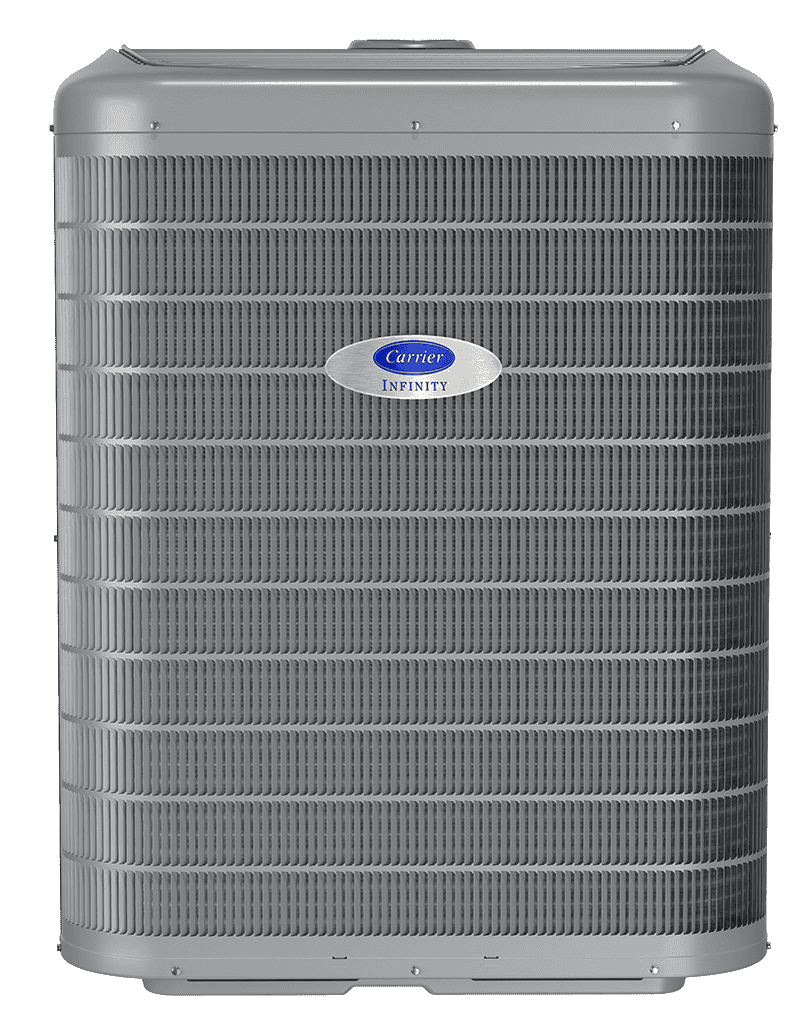
- Your system is 15+ years old. Pre-2010 systems are 30-40% less efficient than modern units. A 10 SEER system from 2005 costs $200-$300/month to run in Denver summers. A 16 SEER system costs $125-$188/month, a $75-$112/month savings. See current AC repair vs replacement cost to decide which makes financial sense.
- Repair costs exceed $1,500. If your compressor or evaporator coil fails, replacement costs $1,500-$3,500. At that point, invest the money in a new system with a 10-year warranty instead of limping along on a dying unit. See our AC installation page for replacement options and current pricing.
- Your system is oversized. Oversized ACs short-cycle (turn on/off frequently), wasting energy and failing to dehumidify properly. A right-sized system with proper airflow saves 10-20% on operating costs.
- You're eligible for rebates. Xcel Energy offers rebates up to $800 for high-efficiency AC replacements (16+ SEER). Income-qualified homeowners may also qualify for Colorado state tax credits or HEAR rebates. Note: the federal 25C tax credit ended December 31, 2025. If you also need heating, a heat pump replaces both systems and qualifies for Xcel rebates up to $9,000 for a 4-ton system.
What you're actually paying with Xcel Energy
Understanding your electric rate helps you calculate real savings. Xcel Energy's residential rates in Denver (as of 2026) break down as follows:
- Summer rate (June-September): ~14.0¢/kWh (includes energy charge, transmission, distribution, and fees)
- Winter rate (October-May): ~12.8¢/kWh
- Fixed monthly charge: $10-$12 (regardless of usage)
How much does AC cost to run per month?
A typical 3-ton (36,000 BTU) AC system in Denver:
- Draws 3,000-4,000 watts when running (depending on efficiency)
- Runs 6-10 hours/day during peak summer (June-August)
- Monthly usage: 540-1,200 kWh (6 hrs/day × 30 days × 3 kW = 540 kWh minimum)
- Monthly cost: $75-$168 at 14¢/kWh
If you reduce consumption by 30% through the actions in this guide, you save $22-$50/month, or $110-$250 per cooling season. Over 10 years, that's $1,100-$2,500 in avoided costs.
Related Guides
What causes AC ice buildup and how to fix it fast
Troubleshooting when your condenser won't start
What common repairs cost and when to replace instead
Total installed cost for AC or heat pump systems in 2026
Rebates available for high-efficiency AC and heat pump upgrades