

15 cents of every heating dollar saved
A 95% AFUE furnace captures 95 cents of every dollar you spend on natural gas and converts it into heat for your home. An old 80% AFUE furnace wastes 20 cents of every dollar as exhaust.
That 15-point efficiency gap means significant savings over a Colorado winter; but AFUE isn't the only factor to consider. Starting January 1, 2026, Colorado's HB23-1161 requires all new furnaces to meet Ultra-Low NOX emission standards or be rated at 95%+ AFUE with ENERGY STAR certification. This changes the cost calculation for anyone buying a furnace this year.
Here's what high-efficiency furnaces actually deliver, how the numbers translate to real savings in Denver, and when upgrading makes financial sense.
What AFUE Means (In Simple Terms)
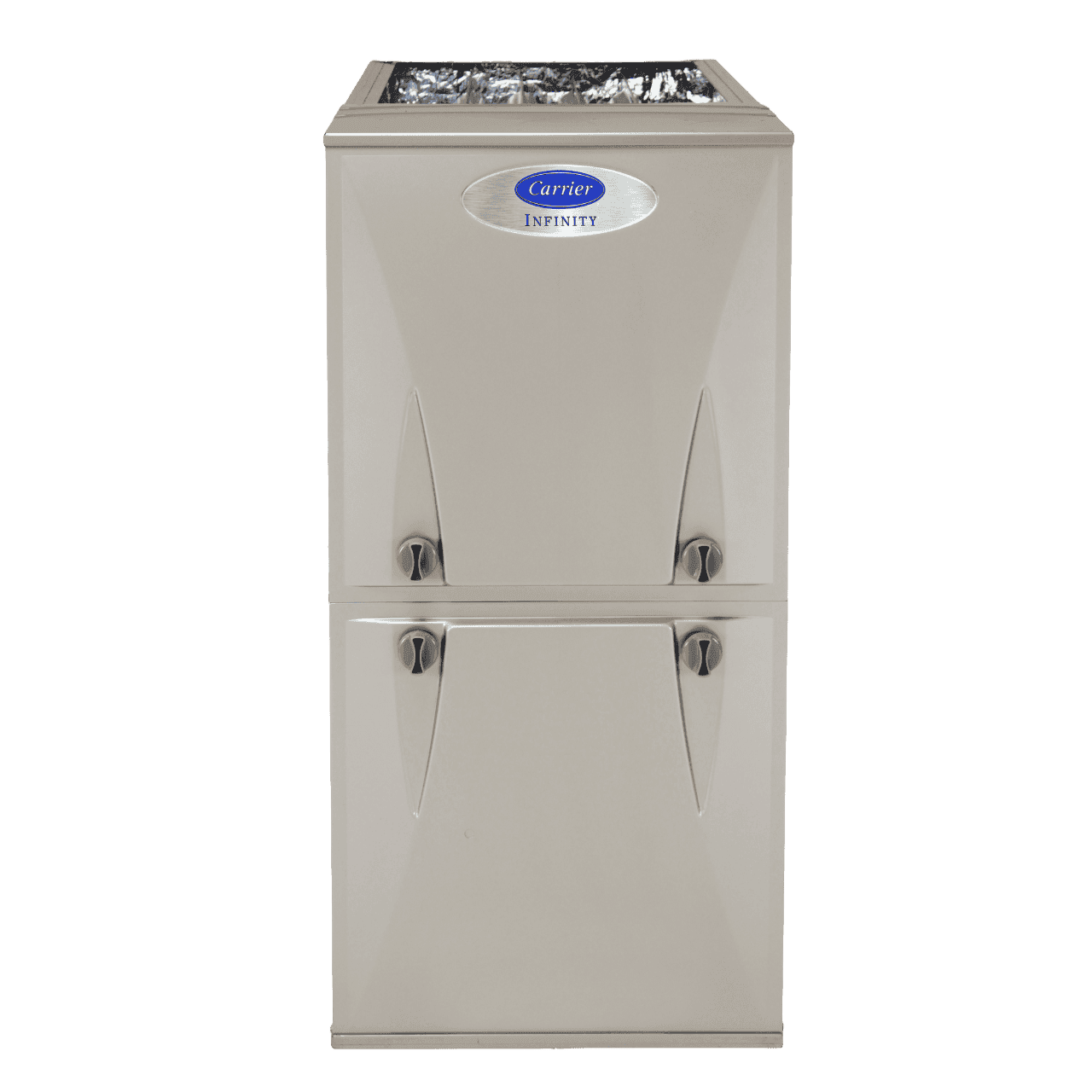
AFUE stands for Annual Fuel Utilization Efficiency. It measures how much of the fuel your furnace burns is converted into usable heat versus how much is wasted as exhaust.
AFUE Ratings at a Glance
- 80% AFUE: 80 cents of every gas dollar becomes heat. 20 cents exits through the exhaust pipe.
- 95% AFUE: 95 cents of every gas dollar becomes heat. 5 cents exits as exhaust.
- 98% AFUE: 98 cents become heat. 2 cents exit as exhaust (highest efficiency available in residential furnaces).
High-efficiency furnaces (90%+ AFUE) are also called condensing furnaces because they extract so much heat from combustion gases that water vapor condenses inside the heat exchanger. This requires a second heat exchanger and a drain line for condensate, which is why high-efficiency models cost more to install.
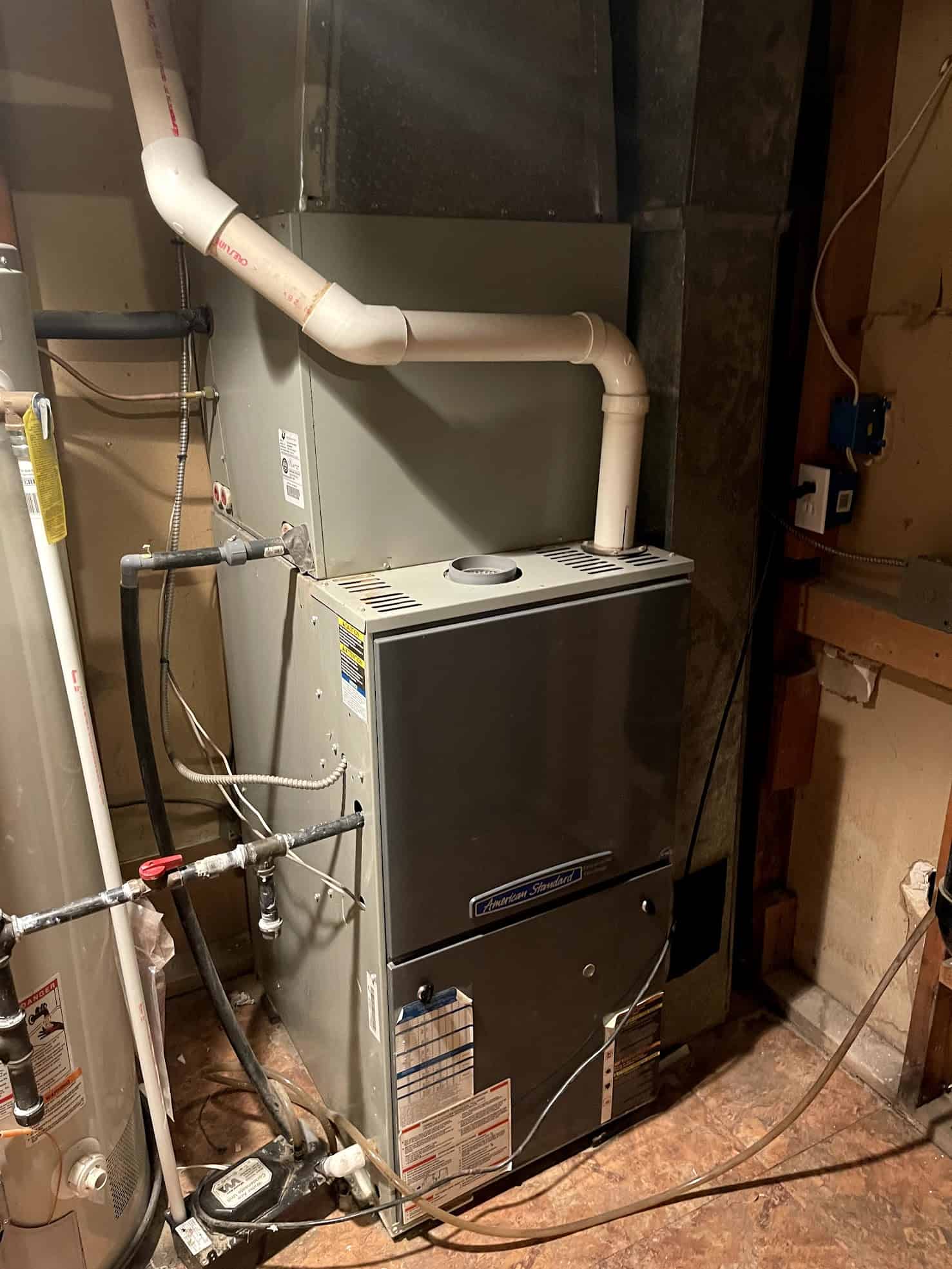
Standard-efficiency furnaces (80% AFUE) vent hot exhaust gases directly out of your home through a metal flue. High-efficiency models cool exhaust gases so much that they can use PVC vent pipes; you'll see white PVC pipes exiting through the side of a home rather than a chimney.
80% AFUE vs 95% AFUE: Side-by-Side
| Factor | High-Efficiency (95%+ AFUE) | Details |
|---|---|---|
| Heat Output (per $1 gas) | 95 cents → heat | |
| Waste (per $1 gas) | 5 cents → exhaust | |
| Venting | PVC side-wall vent | |
| Heat Exchanger | Two-stage (condensing) | |
| Typical Equipment Cost | $3,800 - $5,500 | |
| Annual Gas Savings (1,500 sq ft home) | $225 - $300/year | |
| Colorado 2026 Compliance | Meets new standards | |
| Condensate Drain Required | Yes (PVC drain line) |
The cost difference between 80% and 95% AFUE furnaces has widened since Colorado's new regulations took effect. As of January 2026, all new furnace installations must meet Ultra-Low NOX limits or be ENERGY STAR certified at 95%+ AFUE. This effectively eliminates 80% AFUE models from the Colorado market.
Colorado's New NOX Emission Standards
The regulation was passed in 2023 as HB23-1161, giving manufacturers and contractors three years to prepare. Most major furnace manufacturers now offer ULN-compliant models, but equipment costs have increased 30-40% compared to pre-2026 pricing due to advanced burner technology and tighter manufacturing tolerances required to meet the new limits.
For homeowners, this means the decision between standard and high-efficiency furnaces has been made for you. High-efficiency models are now the baseline requirement for new installations in Colorado.
Real-World Savings in Denver
Efficiency percentages are abstract. Here's how they translate to actual dollar savings for a typical 1,500 sq ft Denver-area home.
Assumptions:
- Home: 1,500 sq ft, average insulation
- Heating load: ~600 therms/year (typical for Denver metro)
- Natural gas rate: $0.68/therm (Xcel Energy winter 2025 average)
- Heating season: October - April
Annual heating cost with 80% AFUE furnace:
600 therms ÷ 0.80 efficiency = 750 therms purchased
750 therms × $0.68 = $510/year
Annual heating cost with 95% AFUE furnace:
600 therms ÷ 0.95 efficiency = 632 therms purchased
632 therms × $0.68 = $430/year
Annual savings: $80 for this smaller home. For a 2,500 sq ft home with higher heating demand (1,000 therms/year), annual savings jump to $225-$300.
At $1,200-$1,700 equipment cost difference between 80% and 95% AFUE furnaces, payback period is typically 5-8 years on energy savings alone. But with Colorado's new regulations eliminating 80% models, the comparison is now between 95% AFUE and heat pumps, not between standard and high-efficiency gas furnaces.
As of 2026, no utility rebates are available for gas furnaces. Heat pumps, by contrast, qualify for $10,000+ in combined rebates that can make them cheaper than a furnace after incentives. See our furnace installation cost guide for current installed pricing, and the Xcel HVAC rebates page for heat pump incentive details.
When Upgrading Makes Financial Sense
Not every homeowner benefits equally from upgrading to a high-efficiency furnace. Here's when it makes sense:
Good Candidates for Upgrading
- Furnace is 15+ years old - older furnaces are typically 60-80% AFUE with rising failure risk
- Current furnace is failing - major repairs ($800-$1,500) on older units often make replacement the better call
- High heating bills - spending $600+ per winter on gas heat means efficiency gains translate to real savings
- Existing chimney issues - switching to PVC side-wall venting eliminates chimney dependency
- Qualifying for rebates - Xcel Energy and local utility rebates can cover up to $800 of upgrade costs
Not Ideal Candidates
- Furnace under 10 years old and working well - payback period likely exceeds remaining furnace lifespan
- Home will be sold within 3-5 years - you won't recoup the upgrade cost from energy savings alone
- Low heating demand - well-insulated homes under 1,200 sq ft may only save $50-$80 annually
With Colorado's new regulations, the decision shifts from "should I upgrade?" to "what should I upgrade to?" Standard-efficiency furnaces are no longer an option for new installations after January 1, 2026.
The Heat Pump Alternative
Related Guides
Side-by-side cost comparison for Denver metro homes.
Real usage numbers for Colorado homes in winter.
Which systems hold capacity at Colorado's sub-zero temperatures.
When a gas backup makes sense vs. going all-electric.


Get a Free Furnace or Heat Pump Estimate
We'll run the numbers for both options so you can make the call with real data.