


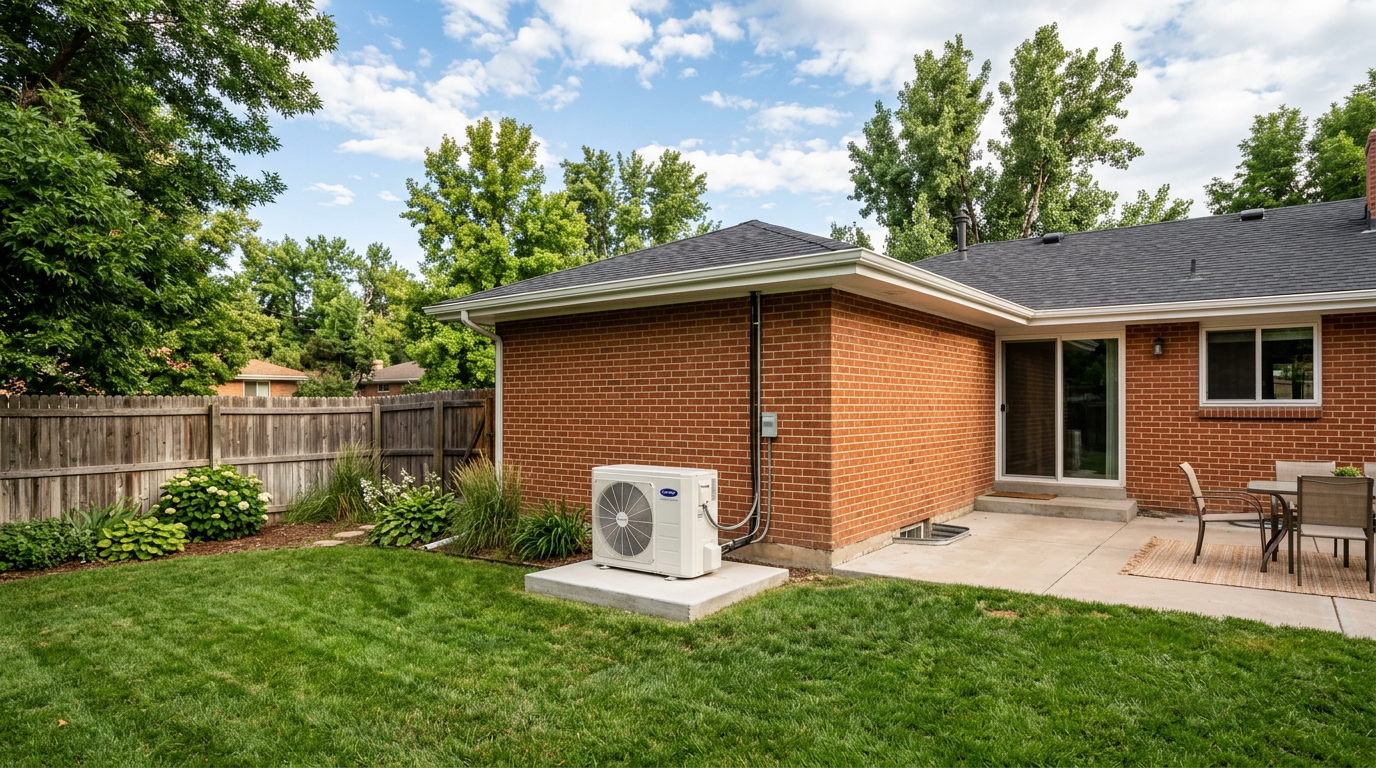
Older homes present unique challenges for heat pump installation. Many were built before central air. Some have undersized electrical panels. Most have less insulation than modern codes require.
But heat pumps can work in older homes. The key is understanding what you have before choosing an approach - and not assuming the solution is the same as it would be for a newer house.
Common challenges in older Colorado homes
No existing ductwork
Many Colorado homes built before 1960 have no ductwork. They were designed for hot water radiators (boiler systems), floor furnaces, wall heaters, or space heaters.
Adding ductwork to a finished home costs $5,000-$15,000 and is disruptive. Ductless mini-splits are often the better path.
Undersized ductwork
Homes from the 1960s-1980s often have ductwork, but it was designed for lower-capacity systems. A 2-ton system from 1970 used smaller ducts than a 3-ton system today.
Heat pumps need adequate airflow. Undersized ducts cause poor performance, noise, frozen coils, and premature equipment failure. Options: replace ductwork, modify duct runs, or switch to ductless.
Limited electrical capacity
Older homes often have 100-amp panels - sometimes 60-amp in very old homes - along with older wiring (aluminum or cloth-insulated) and fewer circuits than modern codes require.
Heat pumps need dedicated 240V circuits drawing 30-50 amps. Adding a heat pump may require a panel upgrade ($1,500-$3,000 for older panels, up to $7,000 in some cases), new wiring to outdoor and indoor units, and a permit and inspection. Note that HEAR rebates cover up to $4,000 for electrical panel upgrades for income-qualified households.
Poor insulation
Pre-1980 homes often have minimal wall insulation (R-6 to R-11), thin attic insulation (R-11 to R-19), single-pane windows, and air leaks around doors, windows, and penetrations.
A heat pump sized for a modern well-insulated home will be undersized for a poorly insulated older home. Either upgrade insulation first or size the heat pump for your actual conditions.
Historic preservation restrictions
Historic homes may have restrictions on exterior equipment placement, visible indoor units, or changes to windows and siding. Check with your local historic preservation board before planning installation.
Your options based on what you have
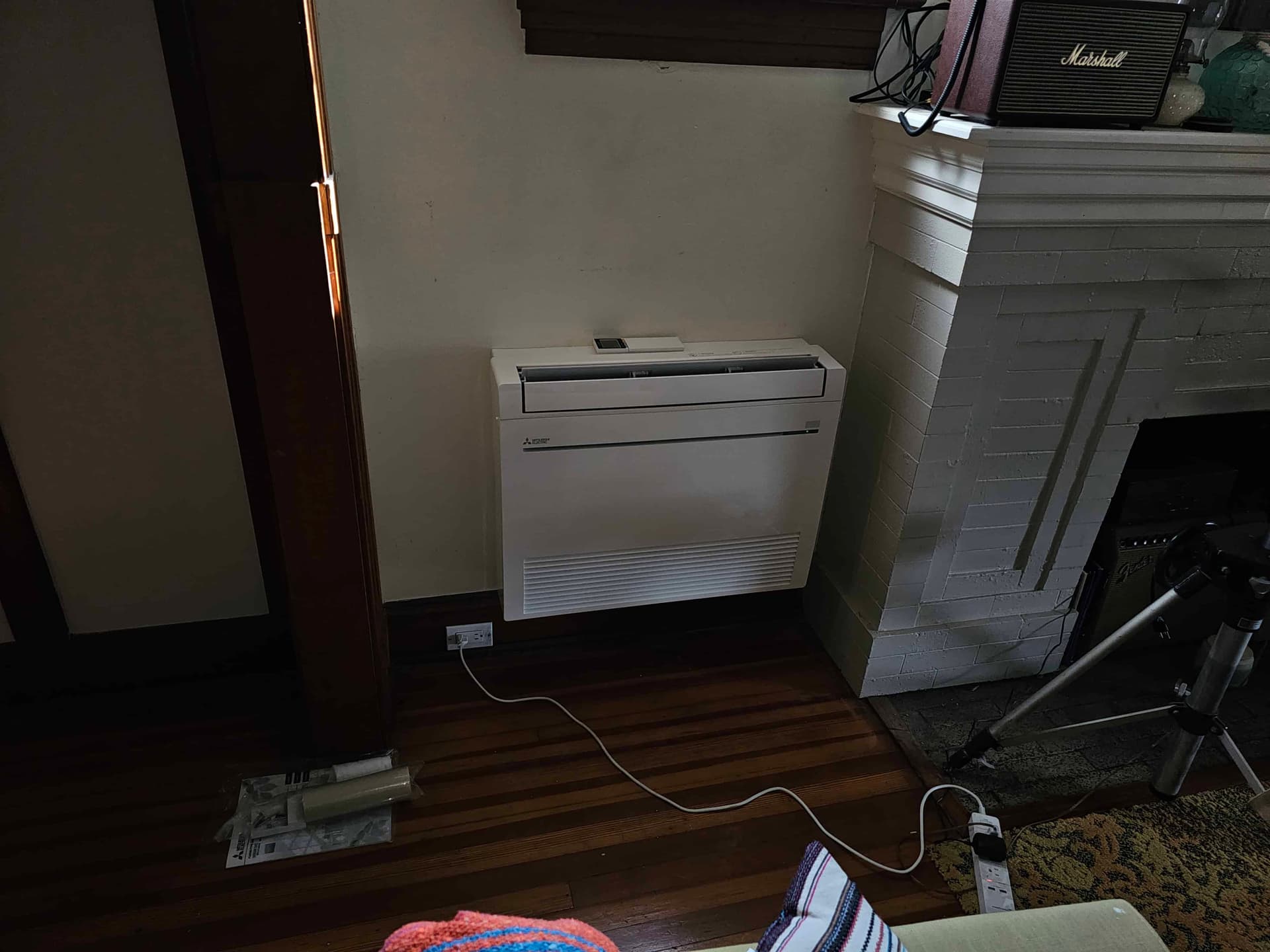
Option 1: Ductless mini-split
Best for: Homes without ductwork, historic homes, targeted zone control
Mini-splits need only a 3-inch hole for refrigerant lines, a dedicated electrical circuit, and space for an outdoor unit. No ductwork required. Each room or zone gets independent temperature control.
For historic homes: ceiling cassettes are less visually intrusive. Ducted concealed units hide completely above the ceiling.
Option 2: Ducted heat pump with ductwork modification
Best for: Homes with existing undersized ducts
If you have ducts but they are too small, you may be able to replace trunk lines with larger sizes, add return air paths, and seal existing ductwork. Less disruptive than installing new ductwork from scratch, though you still have duct losses.
Option 3: High-velocity mini-duct system
Best for: Homes where traditional ducts cannot fit
High-velocity systems (SpacePak, Unico) use 2-inch flexible tubing instead of traditional 6-8 inch ducts. Small tubes can be snaked through walls and ceilings with minimal construction. Higher equipment cost and fewer contractors with experience.
Option 4: Hybrid approach
Best for: Homes with partial ductwork or problem areas
Use existing ducts where possible. Add ductless zones for areas without duct access. For example: a ducted heat pump for the main floor, a ductless mini-split for a finished attic or basement. Lower cost than full ductless or full duct replacement, though two systems to maintain.
What to assess before installation
Before installing a heat pump in an older home, these four areas determine your approach and cost:
1. Electrical capacity
What is your panel size - 60, 100, 150, or 200 amps? How many open breaker spaces? Is the wiring in good condition and free of code violations?
If the panel is 100 amps or less and you are adding a cold-climate heat pump (30-50 amp draw), you likely need an upgrade before installation.
2. Ductwork condition (if present)
What size are the trunk lines? Are there air leaks? Is ductwork in conditioned or unconditioned space? Are there adequate returns?
Poor ductwork may need replacement regardless of which heating system you choose.
3. Insulation levels
What R-value is in the attic? Is there wall insulation? Are windows single or double-pane? Are there obvious air leaks?
Low insulation increases heating load. Either upgrade insulation or size the heat pump accordingly.
4. Access and placement
Where can equipment be placed? Can refrigerant lines be routed cleanly? Are there structural obstacles? Any historic preservation restrictions?
Insulation: upgrade before or after?
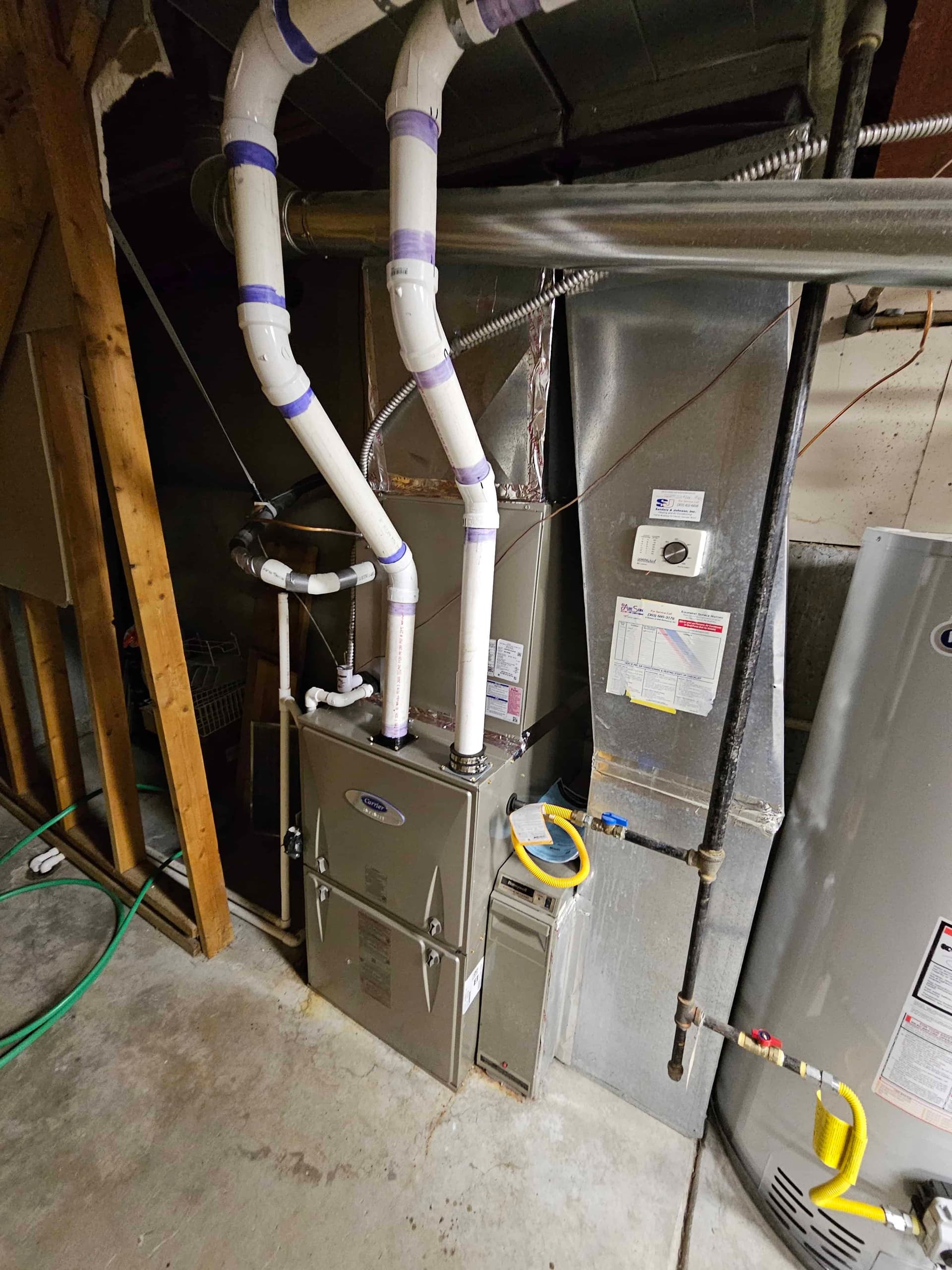
Two practical philosophies here:
Upgrade insulation first, then size heat pump. Upgrading insulation reduces heating load, so a smaller heat pump handles the reduced load. Total cost may be similar, but ongoing energy costs are lower. This is the better long-term approach when budget allows.
Size heat pump for current conditions, upgrade insulation later. Practical when budget is limited. The heat pump handles the house as-is. Later insulation upgrades reduce operating costs. Downside: you may end up with an oversized system after improvements.
Our recommendation: At minimum, air seal and add attic insulation before heat pump installation. These are high-return improvements that meaningfully reduce heating load and are relatively inexpensive compared to the overall project cost.
Colorado-specific considerations
Altitude. Equipment needs to be adjusted for thinner air at higher elevations. Verify that your contractor understands high-altitude commissioning - it affects both performance ratings and refrigerant charge.
Dry climate. Colorado's low humidity means older homes often have less moisture damage to insulation and framing than in humid climates. However, air leakage tends to be significant.
Temperature range. Colorado's swings from near 0°F to 90°F+ mean both heating and cooling matter. A heat pump handles both, which older heating-only systems cannot.
Rebates. Xcel Energy and HEAR rebates are available regardless of home age. Older homes may also qualify for additional weatherization assistance programs.
Cost expectations
Older home installations typically run 20-40% more than a straightforward replacement in a newer home, due to electrical work, access challenges, and duct modifications. These ranges reflect Denver-area pricing before rebates. For baseline numbers, see our heat pump installation cost guide.
Ductless mini-split in older home
| Zones | Equipment + Install | Electrical Work | Total |
|---|---|---|---|
| 1 | $4,000-$7,000 | $500-$1,500 | $4,500-$8,500 |
| 3 | $12,000-$18,000 | $1,000-$2,000 | $13,000-$20,000 |
| 5 | $18,000-$28,000 | $1,500-$3,000 | $19,500-$31,000 |
Ducted heat pump with duct modification
| Scope | Equipment + Install | Duct Work | Total |
|---|---|---|---|
| Minor duct work | $12,000-$18,000 | $1,000-$3,000 | $13,000-$21,000 |
| Major duct work | $12,000-$18,000 | $5,000-$10,000 | $17,000-$28,000 |
| New ductwork | $12,000-$18,000 | $8,000-$15,000 | $20,000-$33,000 |
Common add-on costs
- Panel upgrade (100A to 200A): $2,500-$7,000
- New wiring to equipment: $500-$2,000
- Attic insulation: $1,500-$4,000
- Air sealing: $500-$2,000
- Window replacement (if applicable): $5,000-$20,000
Every older home is different
There is no single answer for older home installations. The right approach depends on your specific ductwork situation, panel capacity, insulation levels, and what you are trying to accomplish.
UniColorado has been installing heat pumps in Colorado since 2014. We assess all three areas - electrical, ductwork, and building envelope - before recommending a system. That process takes 30-60 minutes and prevents mid-project surprises.
Schedule an assessment to explore heat pump installation options for your older Colorado home.