


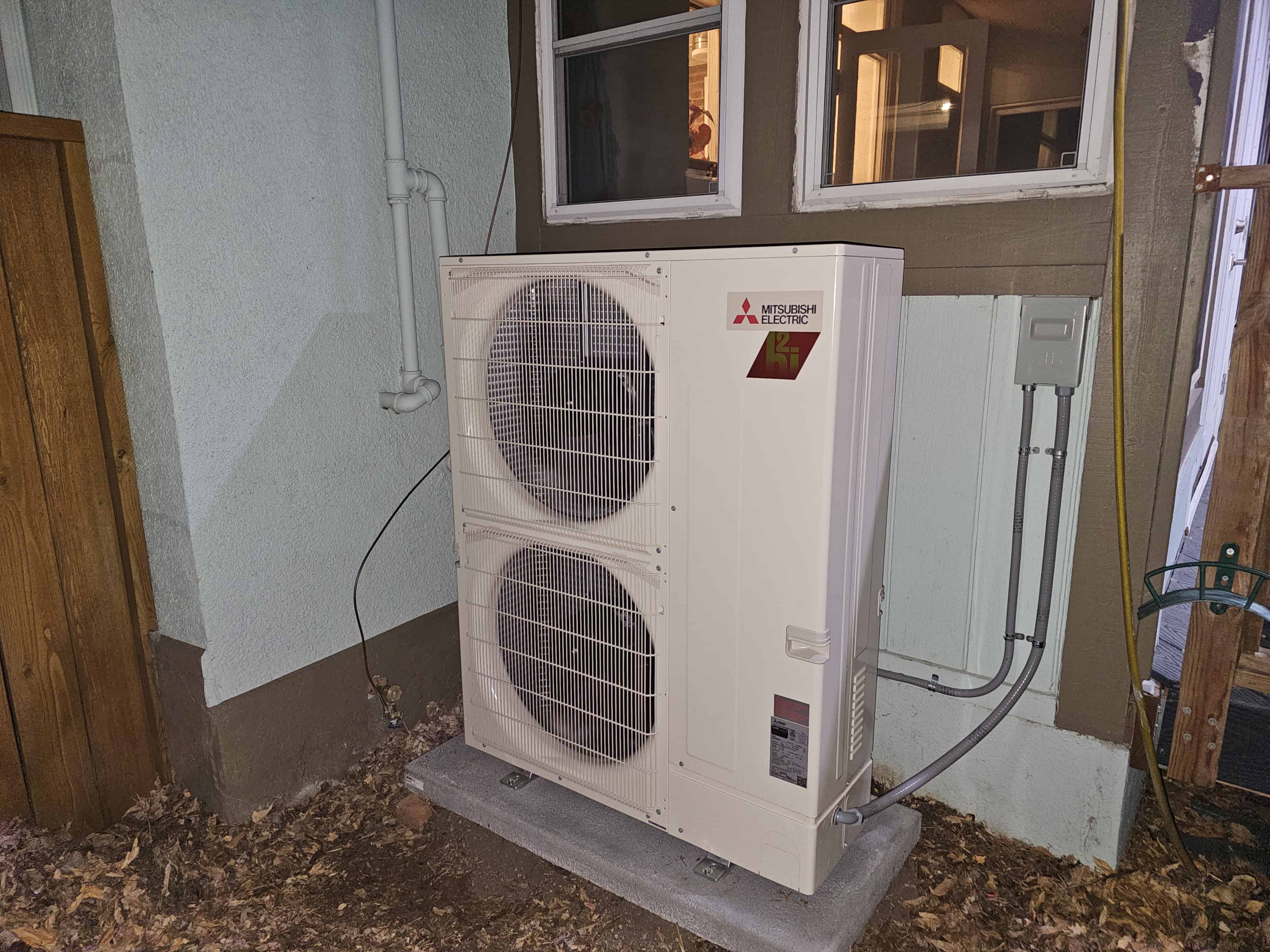
If you are picturing the loud, clanking air conditioners from the 1990s, modern heat pumps will surprise you. Today's inverter-driven systems are rated at 45-56 dB outdoors - roughly the volume of moderate rainfall. That said, those are spec-sheet numbers at rated conditions. During peak heating demand or defrost cycles, outdoor units can ramp up to 65-70 dB - closer to vacuum cleaner territory.
Here is how heat pump noise compares to everyday sounds:
| Sound Level | Example |
|---|---|
| 20 dB | Whisper, rustling leaves |
| 30 dB | Quiet library |
| 40 dB | Quiet office, refrigerator hum |
| 50 dB | Moderate rainfall, quiet conversation |
| 60 dB | Normal conversation |
| 70 dB | Vacuum cleaner, older AC units |
Most modern heat pumps are rated in the 45-56 dB range at nominal capacity. At partial load (which is most of the time with inverter systems), they run quieter. But at peak demand - cold nights in Colorado where the compressor is running flat out - outdoor units can push into the low-to-mid 60s. Defrost cycles can spike even higher, briefly.
Actual decibel ratings by brand
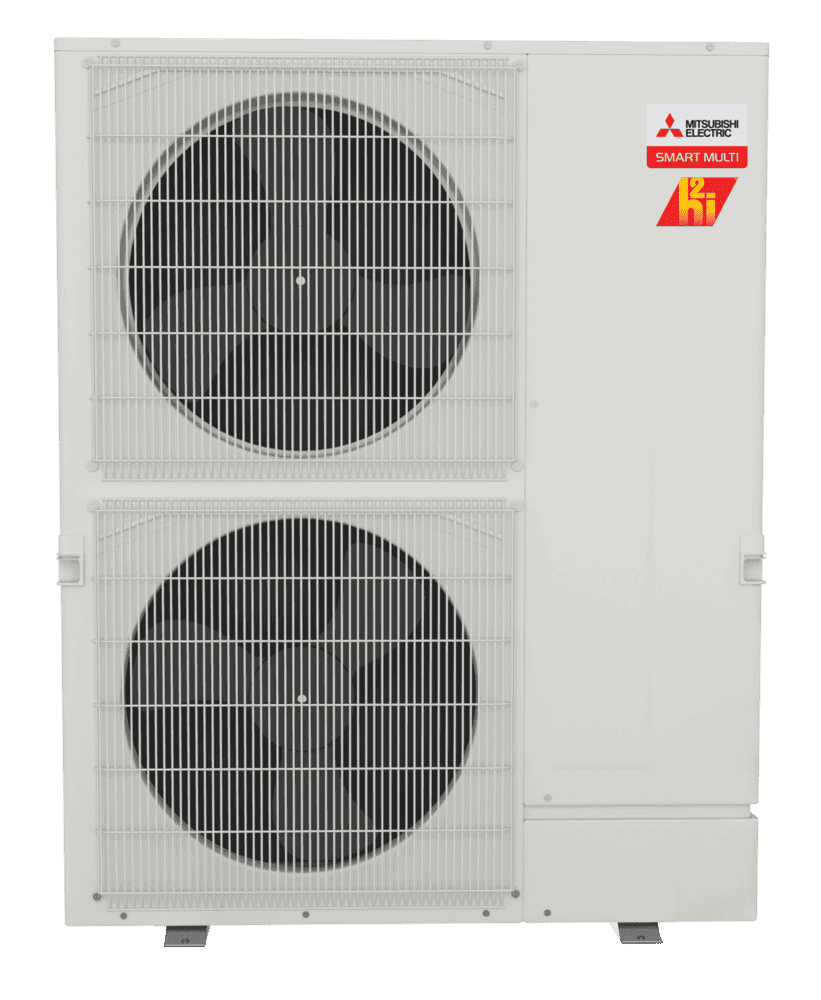
Outdoor units (condensers)
| Brand | dB Range | Notes |
|---|---|---|
| Mitsubishi | 47-56 dB | Slim profile design, among the quietest |
| Carrier Infinity | 51-56 dB | 10-20 dB quieter than standard units |
| Bosch | 52-58 dB | Mid-range, solid performance |
| Daikin / LG | ~45 dB | Select models among quietest available |
These are manufacturer ratings at nominal (rated) capacity under test conditions. During normal inverter operation, systems modulate down and run quieter. However, during peak heating demand or defrost cycles, real-world noise can exceed these ratings by 8-12 dB.
Indoor units - fan speed breakdown
| Fan Speed | Typical dB Range |
|---|---|
| Whisper/Quiet mode | 19-25 dB |
| Low | 25-34 dB |
| Medium | 35-42 dB |
| High | 40-50 dB |
For light sleepers: look for indoor unit specs showing 32 dB or lower at the medium setting. Anything above 40 dB on high may be noticeable in bedrooms.
Real specs from equipment we install in Colorado
Mitsubishi outdoor units (condensers)
| Model | Capacity | Cooling | Heating |
|---|---|---|---|
| MUZ-FX12NLHZ | 12k BTU | 49 dB | 51 dB |
| MXZ-3D30NLHZ | 30k BTU (2-3 zone) | 56 dB | 58 dB |
| MXZ-SM36NLHZ | 36k BTU (2-4 zone) | 49 dB | 53 dB |
The MXZ-SM36 is quieter than the smaller MXZ-3D30 despite higher capacity - newer compressor technology at work.
Mitsubishi indoor units
| Model | Type | Range (Low to High) | Quietest |
|---|---|---|---|
| MSZ-FX12NL | Wall Mount | 20-44 dB (cooling) | 20 dB |
| MLZ-KX12NL | Ceiling Cassette | 26 dB+ | 26 dB |
| MFZ-KX12NL | Floor Mount | 21 dB+ | 21 dB |
The MSZ-FX12 wall mount at 20 dB in whisper mode is quieter than a ticking watch. On medium (29 dB), it is quieter than a library. Even on high (44 dB), still quieter than normal conversation.
What normal heat pump sound is like
Heat pumps are machines with compressors, fans, and refrigerant. Here is what to expect:
Normal outdoor unit sounds
- Steady humming or whirring - The compressor and fan running. This is your baseline sound and should be consistent.
- Clicking at startup/shutdown - The compressor engaging or disengaging. Brief clicking when the system cycles is normal.
- Defrost cycles (the loudest normal operation) - In winter, frost builds on the outdoor coil and the system periodically reverses to melt it off. This happens every 30-90 minutes and is the noisiest thing a heat pump does during normal operation. Here is the sequence: the outdoor fan stops, the reversing valve makes a distinct loud thunk or clunk, the compressor ramps up to push hot refrigerant through the outdoor coil, and you will hear hissing and steaming as the ice melts off. The overall noise during defrost can spike to 65-70 dB - noticeably louder than normal running. The cycle lasts 2-10 minutes. This is completely normal. New heat pump owners are often caught off guard by defrost noise, especially at night.
- Slight vibration - Some vibration is normal, though proper installation with vibration isolation pads minimizes this.
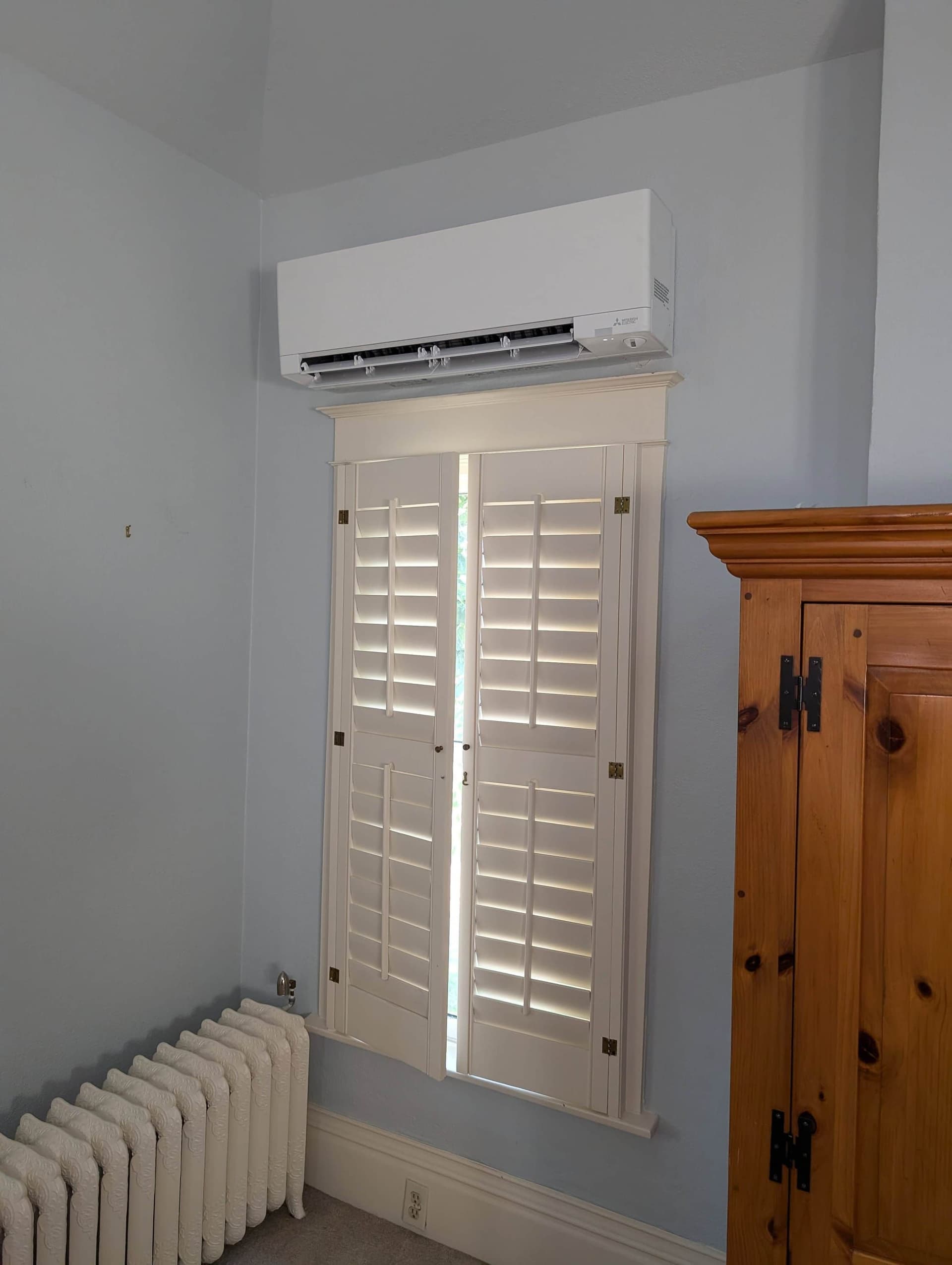
Normal indoor unit sounds
- Air movement - You will hear air flowing, especially on higher fan speeds.
- Plastic popping or cracking - Thermal expansion. As the unit heats up or cools down, the plastic housing expands and contracts. This sounds alarming the first few times but is completely normal. Ductless units experience this more noticeably because they are inside your living space.
- Slight gurgling - Refrigerant flowing through the lines, especially right after the system starts.
- Water dripping - During cooling mode, condensate drains from the unit. You may hear occasional dripping into the drain pan.
Sounds that warrant a service call
- Grinding or scraping - Could indicate a fan blade issue or debris in the unit.
- Loud banging - May indicate a failing compressor or loose component.
- Constant high-pitched squealing - Belt issues or bearing problems.
- Hissing that does not stop - Possible refrigerant leak.
- Rattling that gets worse - Loose parts that need tightening.
Defrost cycles: the noise nobody warns you about
Defrost is the single biggest source of heat pump noise complaints, and most sales literature glosses over it. Here is what actually happens and why.
Why defrost happens
When a heat pump heats your home, the outdoor coil gets cold - cold enough to collect frost and ice from the air. If left unchecked, ice insulates the coil and kills efficiency. So the system periodically reverses itself to melt the ice off. In Colorado's dry climate, defrost is less frequent than in humid regions, but it still happens - especially on damp mornings, during snowfall, or on nights below 30 degrees F.
What you hear during defrost
- The outdoor fan stops. Sudden silence from the unit, which can itself be noticeable if you are used to the steady hum.
- Loud thunk or clunk. The reversing valve shifts the refrigerant flow direction. This is a mechanical solenoid and it is not subtle - it sounds like someone hitting the unit with a wrench. Normal.
- Compressor ramps up. The system pushes hot refrigerant through the outdoor coil at high speed. The compressor runs harder than normal - this is when noise can spike to 65-70 dB.
- Hissing and steaming. Ice melting off the coil produces visible steam and an audible hiss. On cold mornings this can look like the unit is on fire - it is not.
- Water dripping or splashing. Meltwater runs off the coil and drains away.
- Another thunk. The reversing valve shifts back. The outdoor fan restarts and normal operation resumes.
What happens inside during defrost
When the system reverses to defrost, it is temporarily running in cooling mode - pushing cold air into your home instead of warm. To prevent you from feeling a cold blast, the system activates backup heat. On ducted systems, that means electric heat strips in the air handler kick on. On dual-fuel setups, the gas furnace fires. Either way, you may hear additional noise from the backup source: the click of heat strip relays engaging, or the furnace igniter and blower starting up. This is normal and automatic - the system is keeping you comfortable while it clears the outdoor coil.
How often and how long
Defrost cycles run every 30-90 minutes during heating season, depending on conditions. Each cycle lasts 2-10 minutes. During a cold, damp night you might hear four to six cycles. On a dry 30-degree day, maybe one or two. The system manages this automatically - there is nothing you need to do.
The key takeaway: defrost noise is temporary, periodic, and completely normal. But if you have never owned a heat pump before, the first time you hear that reversing valve thunk at 2 AM, you will think something broke. It did not.
Why some units are louder than others
System type
Ductless mini-splits are typically the quietest option. The indoor units run 19-35 dB, and because there is no ductwork, there is no air noise traveling through your house.
Ducted systems can seem louder because you hear airflow through the ducts. In our experience, customer feedback is that newer ducted systems are actually quieter than old ones. The airflow can usually be adjusted if it is noticeable.
Ceiling cassettes tend to be the noisiest option, particularly in Colorado. They are often installed in attics, which reach extreme temperatures in summer and cold in winter. The temperature differential causes more thermal expansion noise. Plus, the fan runs continuously to measure room temperature, so there is no quiet mode.
Installation quality
A heat pump is only as quiet as its installation. Poor installation causes vibration transfer to walls or decks, ductwork noise from improper sizing or connections, and refrigerant line noise from improper routing. Proper installation includes vibration isolation pads, correct refrigerant charge, and appropriately sized ductwork.
Capacity and load matching
Oversized systems short-cycle, turning on and off frequently. Each startup is noisier than steady operation. Properly sized systems run longer at lower capacity - and quieter. This is another reason proper Manual J sizing matters.
Tips for minimizing heat pump noise
Outdoor unit placement
- Sound drops 6 dB every time you double the distance. A 56 dB unit at 3 feet becomes 44 dB at 12 feet.
- Avoid corners - sound reflects off walls and amplifies
- Keep outdoor units away from bedroom windows when possible
Indoor unit selection
- Choose lower-capacity heads for bedrooms - a 9,000 BTU unit runs quieter than a 15,000 BTU unit
- Avoid ceiling cassettes in noise-sensitive areas
- Look for units with dedicated quiet or sleep mode
Ductwork considerations (ducted systems)
- Insulated ductwork reduces airflow noise
- Properly sized ducts prevent velocity noise from undersized runs
- Flexible connections at the air handler prevent vibration transfer
Questions about equipment for a specific room or situation? Contact us or schedule a consultation - we can recommend the right system for noise-sensitive areas.