

Quick Answer: Why ACs Freeze
In 90% of Denver AC freeze-up cases, the root cause is either a dirty air filter or low refrigerant from a slow leak. When airflow drops below the threshold needed to keep the evaporator coil warm enough, moisture in the air freezes on contact. When refrigerant levels drop, the coil temperature plummets even further.
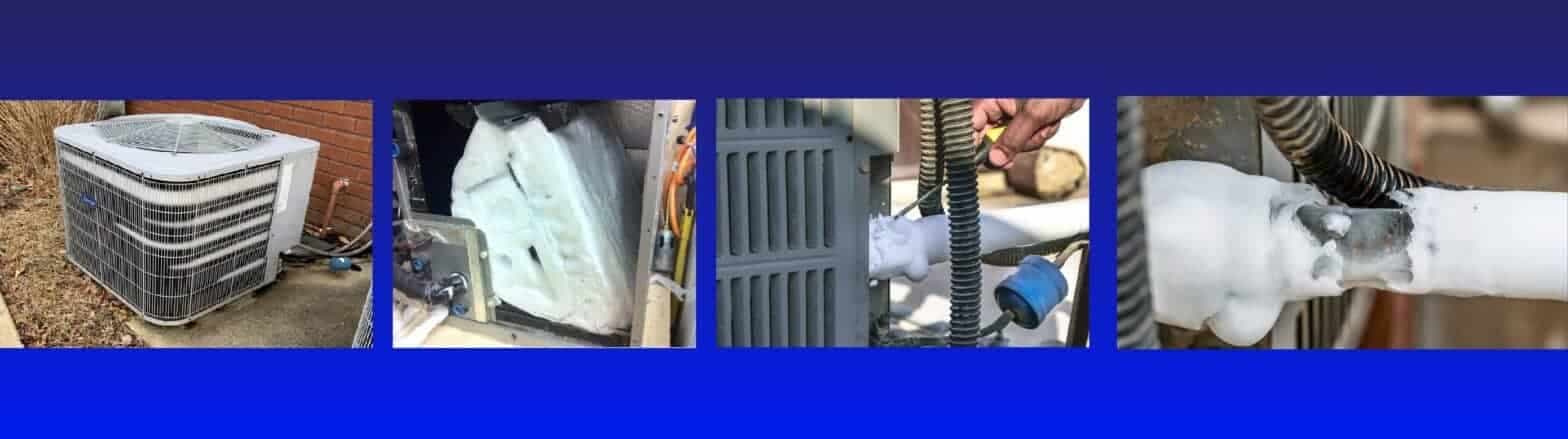
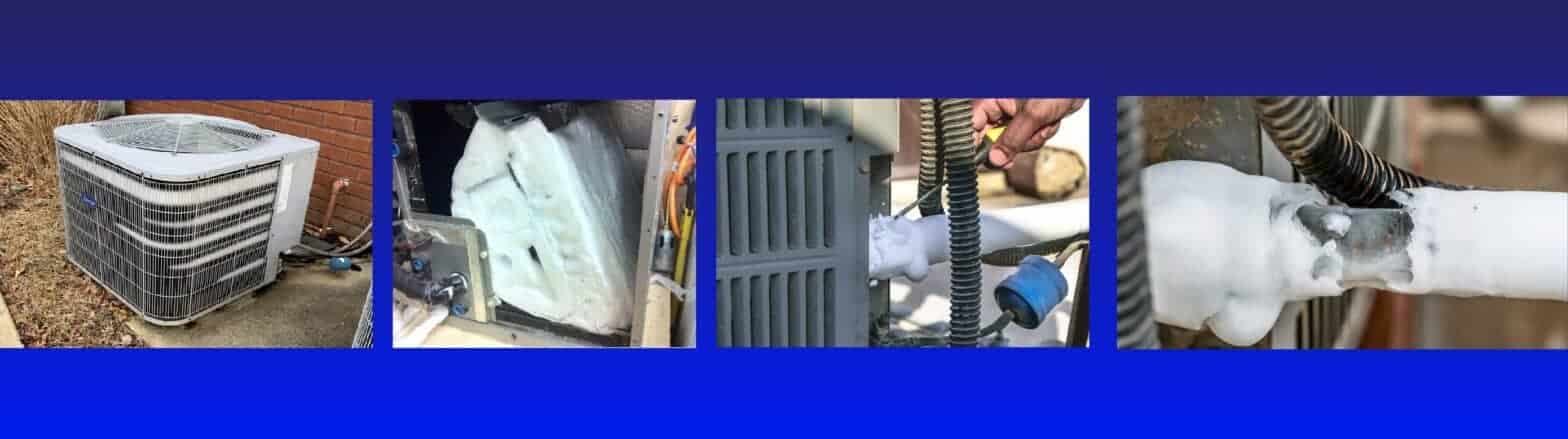
The homeowner mistake we see most often: blasting the AC harder when it's not cooling well. This makes the freeze-up worse. Instead, check your filter first, let the unit thaw completely, and if the problem comes back within 24 hours, call for service.
Here's what you need to know:
- Immediate action: Turn off cooling, switch thermostat to "fan only" mode, let ice melt completely (2-8 hours depending on buildup)
- DIY check: Replace air filter, verify all supply vents are open, check return grille isn't blocked
- Call a pro if: Ice returns after thawing, you see ice on the outdoor unit, you hear hissing sounds, or you smell something unusual. If your outdoor unit won't turn on at all, see our outdoor AC unit not turning on troubleshooting guide.
- Never do this: Add refrigerant without finding and fixing the leak; you're just delaying a bigger repair
Common Causes of AC Freezing
AC freeze-ups happen when the evaporator coil temperature drops below 32°F. Under normal operation, warm indoor air flowing over the coil keeps it above freezing even as refrigerant absorbs heat. When that balance breaks, ice forms.
| Cause | DIY or Pro? | Details |
|---|---|---|
| Dirty air filter (40% of cases) | DIY | |
| Low refrigerant from leak (35% of cases) | Professional | |
| Blocked return air grille (10% of cases) | DIY | |
| Dirty evaporator coil (8% of cases) | Professional | |
| Failed blower motor or capacitor (5% of cases) | Professional | |
| Closed or blocked supply vents (2% of cases) | DIY |
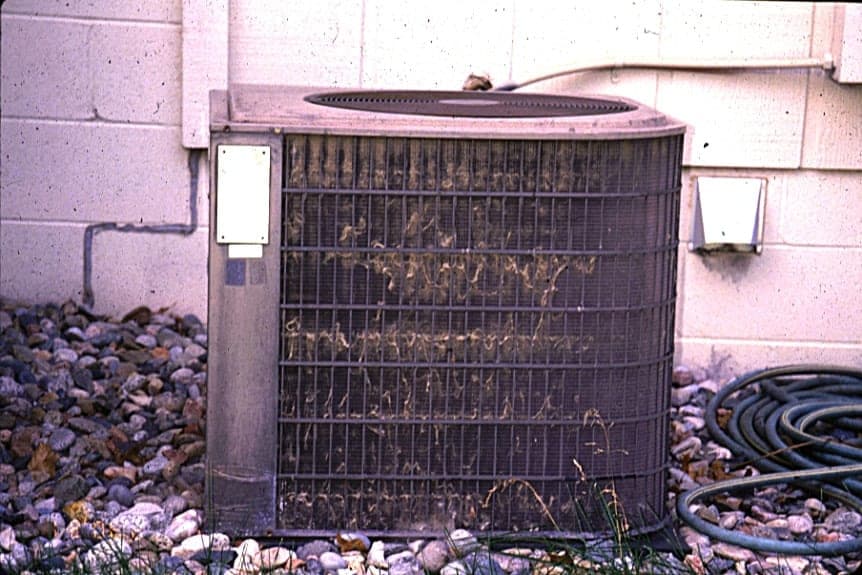
Denver-specific note: Low humidity in Colorado means less moisture in the air, but when freeze-ups do occur, ice buildup happens faster because the dry air pulls more moisture out of the system during the thaw cycle. You'll see heavier frost in shorter time periods compared to humid climates.
Step-by-Step Troubleshooting
Follow these steps in order. If step 1 doesn't resolve the issue within 24 hours, move to step 2, and so on. Don't skip ahead; the most common fixes are also the simplest.
Action: Set thermostat to "off" or "fan only" mode. Do not turn off the entire system at the breaker; you want the fan running to speed up thawing.
Why: Ice must melt completely before you can diagnose the root cause. Running cooling mode with ice on the coil will make the problem worse and can damage the compressor.
Timeline: Light frost = 2-3 hours. Heavy ice buildup = 6-8 hours. Check periodically. You'll know it's done when you see water draining from the condensate line and no visible ice on the refrigerant lines.
Denver tip: At 5,280 ft elevation, lower air pressure means ice sublimates (turns directly to vapor) faster than at sea level. You may see less water drainage than expected.
DIY Fix vs. Professional Service
The line between DIY and professional service is simple: if it involves refrigerant, ductwork, or electrical components, call a pro. If it involves changing filters or moving furniture, do it yourself.
What homeowners get wrong about refrigerant: Adding refrigerant without fixing the leak is not a repair; it's a temporary band-aid that costs $400-$700 each time you recharge. The leak will continue, you'll lose cooling capacity again, and you're venting refrigerant into the atmosphere (illegal under EPA Section 608 regulations).
Proper refrigerant service means: locate leak (when possible) → repair or replace the leaking component → evacuate system to remove moisture and air → recharge to manufacturer specs → verify with superheat/subcooling measurements. This costs $800-$2,400+ depending on leak location. The caveat: some slow leaks (especially in evaporator coils) can't be pinpointed with sniffer or UV dye. When a leak can't be found or brazing repair isn't feasible, coil or system replacement is often the only option.
How to Prevent AC Freeze-Ups
Most freeze-ups are preventable with routine maintenance. Here's what actually works in Denver's climate:
Filter Changes (Every 30-60 Days)
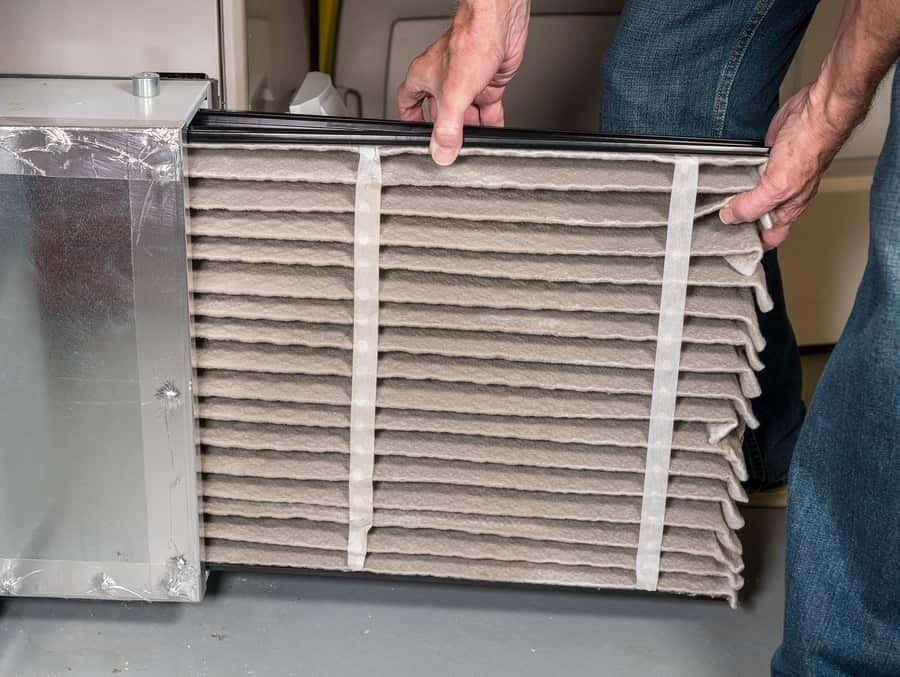
Denver's dry climate means more dust. Filters clog faster here than in humid regions. Set a phone reminder for the first of every month. Check the filter. If it looks dirty, replace it. Standard 1" pleated filters are $3-$8 each at hardware stores.
Annual Professional Maintenance ($250-$400)
Schedule AC maintenance in April or May before cooling season starts. A maintenance visit includes:
- Evaporator and condenser coil cleaning
- Refrigerant level check and pressure testing
- Blower motor inspection and lubrication
- Condensate drain line flush
- Electrical connection tightening
- Thermostat calibration
Systems with annual maintenance have 40% fewer mid-season failures and last 3-5 years longer than neglected systems. The $250-$400 annual cost is far less than a $600 emergency repair call in July.
Don't Over-Close Vents
Keep at least 80% of supply vents open. If you have rooms you don't use, partially close vents (50% open) instead of fully closing them. Your AC needs a minimum airflow volume to prevent freeze-ups.
Monitor Cooling Performance
Your AC should cool your home to the thermostat setpoint within 15-20 minutes on a 90°F day. If it runs constantly but never reaches setpoint, or if cooling degrades over the course of a week, check the filter first, then call for service. Don't wait for a complete failure.
Clear Outdoor Unit
Keep 24" of clearance around your outdoor condenser unit. Trim bushes, remove leaves and cottonwood seeds (major issue in Denver May-June), and don't store items against the unit. Blocked outdoor coils increase refrigerant pressure, which can lead to indoor coil freeze-ups.
Related Guides
Troubleshooting guide for when your outdoor condenser won't start
When repair makes sense and when to cut losses on an old system
What a full system replacement costs in 2026
Six actions that actually cut AC costs in Denver
Colorado-Specific Factors
Denver's 5,280 ft elevation and semi-arid climate create conditions that affect AC freeze-ups differently than at sea level or in humid regions.
Lower Air Density at Altitude
At 5,280 ft, air density is 17% lower than at sea level. This means your blower motor moves fewer air molecules per cubic foot of space. AC systems sized for sea level may be undersized in Denver; particularly older systems installed before manufacturers adjusted for altitude.
If you have an older AC (15+ years) that freezes frequently, it may be undersized for Colorado's altitude. Replacement systems from Carrier, Mitsubishi, and Bosch are now altitude-compensated in their factory settings.
Dry Air = Faster Ice Sublimation
Denver's average summer humidity is 30-40% (vs. 60-80% in the Midwest or Southeast). When your AC coil freezes, ice sublimates (turns directly to vapor) faster than it melts. You'll see less water drainage during thaw cycles, which can make it harder to tell when the coil is fully thawed.
Use the refrigerant line temperature test: touch the larger copper line entering your air handler. It should feel cool (like a cold soda can) but not icy. If it's icy, keep thawing.
Extreme Temperature Swings
Denver sees 40-50°F daily temperature swings in summer. A 95°F afternoon can drop to 55°F overnight. Homeowners who blast the AC during the day often forget to adjust the thermostat when temperatures drop in the evening. The AC keeps running in 60°F outdoor conditions, which can freeze the outdoor coil.
Most modern AC systems have low ambient lockouts that prevent operation below 60°F outdoor temp, but older systems don't. If you're running AC when outdoor temps drop below 65°F, you're creating freeze-up conditions. Open windows instead.
Cottonwood Season (May-June)
Cottonwood seeds clog outdoor condenser coils rapidly in Denver metro. A clean coil can be 80% blocked within 2-3 weeks during peak cottonwood season. Blocked outdoor coils reduce refrigerant heat rejection, which causes the indoor coil to over-cool and freeze.
Check and hose off your outdoor coil weekly during May and June. Use low water pressure (garden hose without nozzle) to avoid bending the fragile aluminum fins. Spray from inside-out to push debris away from the coil.