


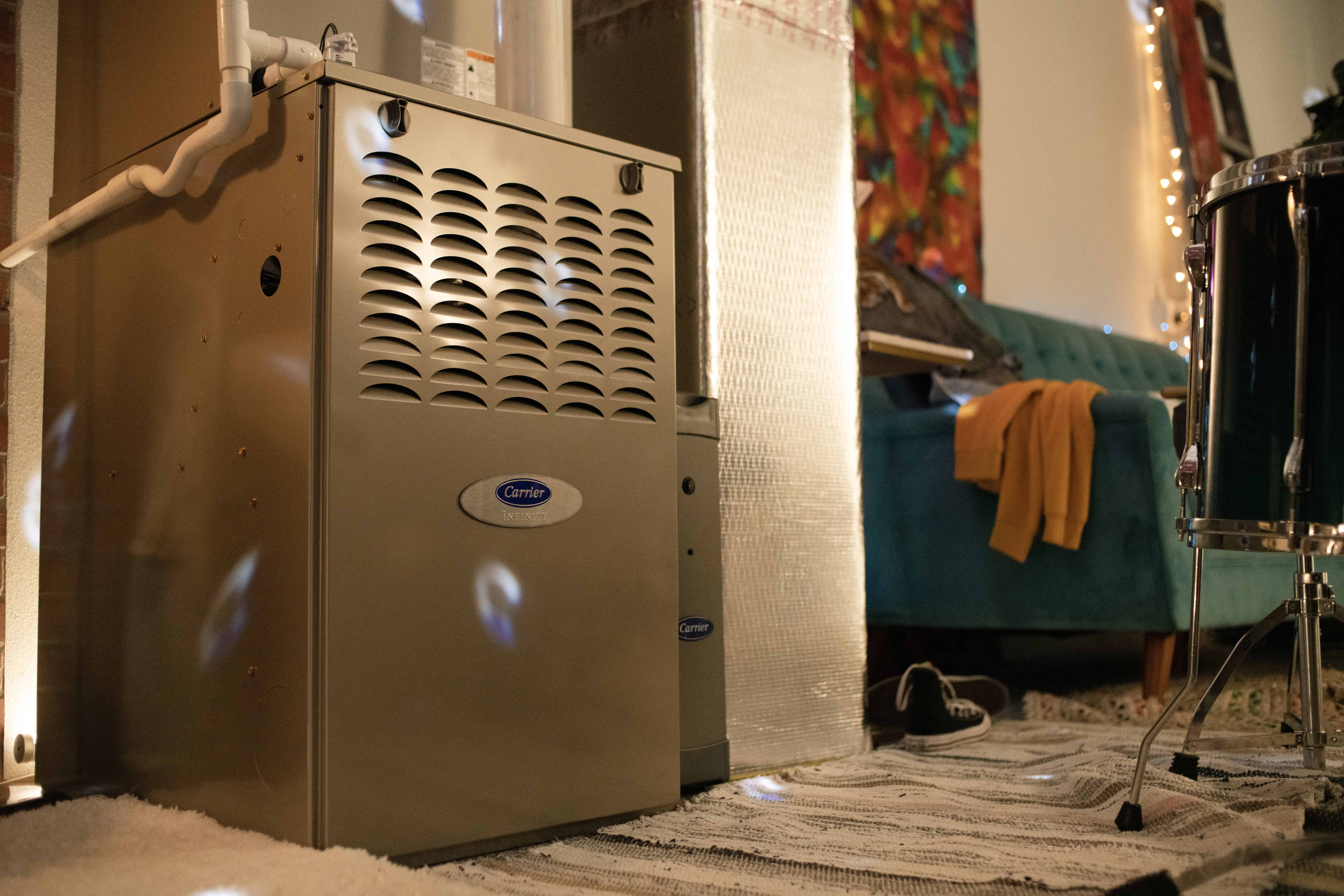
Furnace replacement is the most common HVAC job in the Denver metro. A like-for-like swap - same efficiency tier, same venting type, same location - typically runs 6-8 hours and finishes in one day. Upgrading from standard to high efficiency adds time because the venting system changes completely.
This article covers the actual sequence of work. If you're still deciding between furnace types or comparing a furnace to a heat pump, see our furnace installation cost guide.
Before the crew arrives
The night before your install, the new furnace and all associated components are loaded and staged at our Evans or Centennial warehouse. Equipment goes through a first QC check - model numbers verified, no shipping damage, all parts accounted for. Techs and helpers are assigned 1-2 weeks in advance.
Install day starts at the warehouse around 7 AM. Crew loads equipment, reviews the job, and heads out. You get a notification when the crew is on the way. Arrival is typically between 7:30 and 9 AM.
Before install day, we have already run a Manual J heat loss calculation for your home. This determines correct furnace sizing based on your home's insulation, layout, window area, and Denver-area climate data. The equipment being staged is already sized to that calculation. An oversized furnace short-cycles and wears out faster; an undersized one can't keep up on cold nights.
Installation day timeline
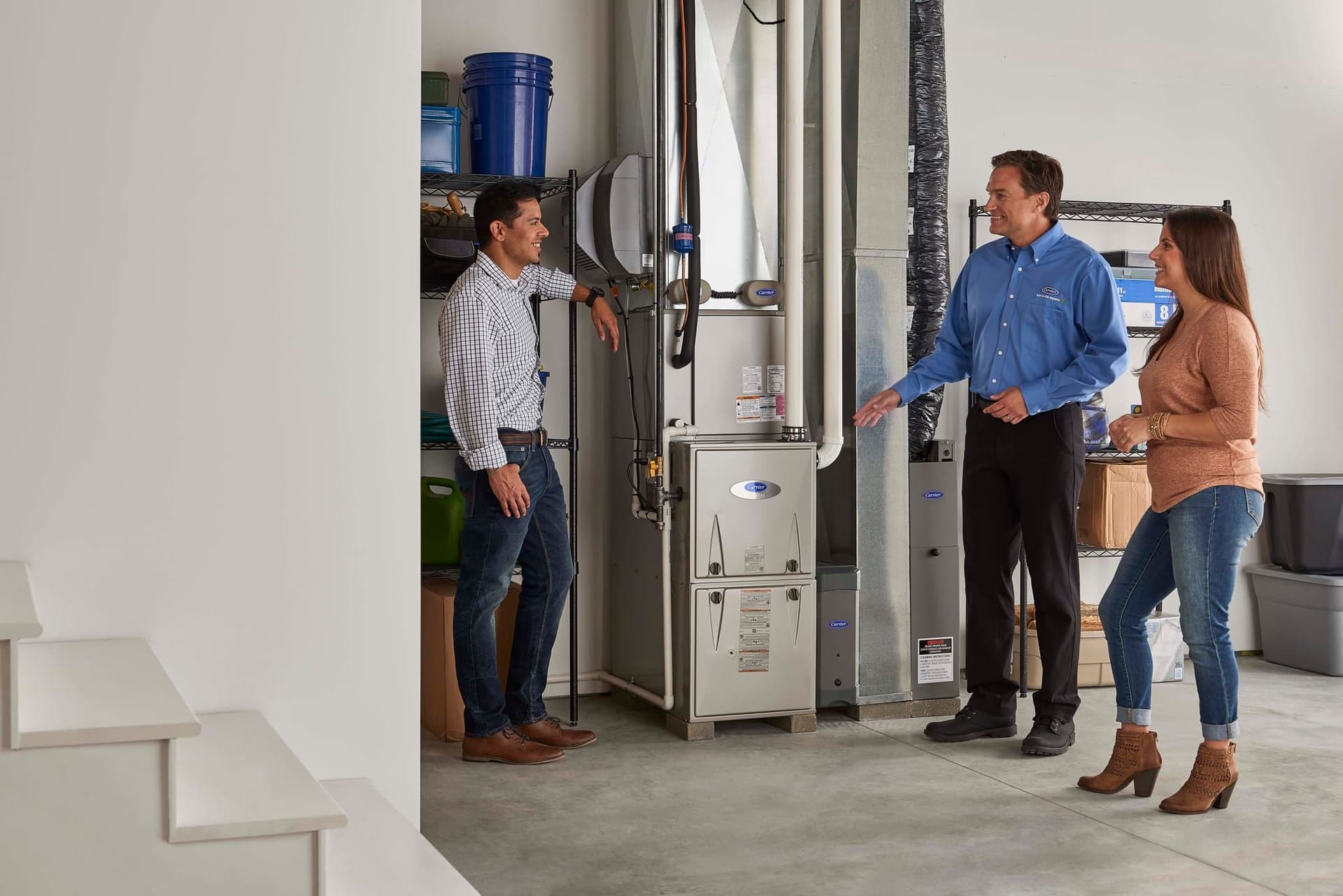
Here's the sequence for a standard gas furnace replacement:
- Homeowner walkthrough (10-20 minutes). Before tools come out, the lead tech walks through the job with you. For a like-for-like furnace swap, this is brief - covers access, thermostat wiring questions, and any concerns from the estimate. If venting changes or ductwork modifications are involved, this walkthrough is longer.
- Prep (15-20 minutes). Tarps laid down in the work area and main traffic path. Old furnace powered off, gas shut off at the valve.
- On-site component QC (10 minutes). New furnace inspected before installation begins. Second check after the warehouse QC.
- Old furnace removal (45-60 minutes). Gas line disconnected. Electrical disconnected. Venting disconnected. Ductwork disconnected at supply and return. Old furnace removed from the home. The duct connections and gas line are inspected at this stage.
- New furnace installation (2-3 hours). New furnace set in position. Gas line connected - fitting verified for leaks. Electrical connected. Ductwork reconnected and sealed. Venting installed (same metal flue pipe if staying standard efficiency, or new PVC if upgrading to high efficiency). Filter housing installed.
- Altitude calibration and commissioning (45-90 minutes). Covered below.
- Handover (15-30 minutes). System tested in heating mode. Thermostat walkthrough. Permit documentation completed.
Total for a like-for-like replacement: 6-8 hours. Standard-to-high-efficiency upgrade: 7-9 hours. If duct modifications are needed, add 1-2 more hours.
Noise, downtime, and what to expect
Noise. Moderate. Disconnecting ductwork, cutting venting penetrations (for high efficiency), drilling for electrical - similar to a plumber or electrician working for a day. The loudest parts are venting work and removing the old unit.
HVAC downtime. Your heating is off from when the old furnace is disconnected until commissioning is complete - roughly 3-5 hours. In winter, plan for your home to cool down. A well-insulated house at 68°F will drop to around 60°F over 4-5 hours on a 20°F day. The system is back on and heating before the crew leaves.
Dust. More than an AC replacement because furnace work often involves cutting into ductwork and modifying venting. Drop cloths are used in work areas, but plan to vacuum afterward.
Gas smell. Brief and normal. When gas connections are made and tested, there may be a momentary smell. The tech checks every connection with a leak detector before starting the furnace.
Parking. One to two vehicle spaces. Let us know about any restrictions in advance.
Why altitude matters for Denver furnace installs
Denver sits at 5,280 feet. Gas furnaces need altitude-specific calibration to work correctly at elevation. This isn't optional - it directly affects safety, efficiency, and equipment lifespan.
At altitude, air is less dense. A furnace calibrated for sea level burns too rich at 5,280 feet - too much gas for the available oxygen. This causes incomplete combustion, soot buildup, higher carbon monoxide output, and premature heat exchanger failure.
What we do:
- Gas pressure adjustment. Manifold gas pressure is set to the manufacturer's altitude specification, not the default factory setting.
- Orifice verification. Some high-altitude installations require altitude-specific orifices (the small opening that controls gas flow to the burner). We verify the correct orifice is installed.
- Combustion analysis. A combustion analyzer measures CO, O2, and stack temperature in the flue gas. This confirms the furnace is burning cleanly at elevation.
- Combustion air. Furnaces need adequate air supply for combustion. In tight modern homes or utility closets, an additional combustion air duct is sometimes required.
Standard to high efficiency: what changes
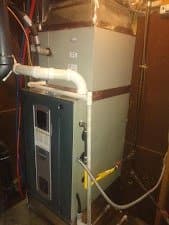
Standard efficiency furnaces (80% AFUE) vent hot exhaust through a metal flue pipe vertically through the roof. High efficiency furnaces (90-98% AFUE) extract so much heat from combustion that the exhaust cools enough to vent through PVC pipe horizontally through an exterior wall.
If you're upgrading efficiency tiers, the venting system changes completely:
- Old metal flue pipe is removed or capped
- New 2-inch or 3-inch PVC venting is run from the furnace to an exterior wall penetration
- A second PVC pipe is run for combustion air intake
- Exterior wall penetrations are cut and weatherproofed
This adds 1-2 hours to the installation. The exterior penetrations are visible from outside - two white PVC pipes at ground level or just above grade, usually on the side of the home where the furnace is located.
High efficiency models also typically have a condensate drain - a small PVC pipe that drains water produced during combustion to a floor drain or condensate pump. This is part of the installation.
What commissioning means for a gas furnace
Commissioning for a gas furnace involves both safety verification and performance verification. This takes 45-90 minutes. Here's what's checked:
- Gas leak check. Every gas connection tested with a leak detector before the furnace is started.
- Combustion analysis. CO, O2, and stack temperature measured in the flue gas. Confirms complete combustion at Denver elevation.
- Temperature rise. The temperature difference between supply and return air is measured. Should be within the manufacturer's specified range (typically 35-65°F depending on the furnace). Too high means airflow restriction; too low means oversized or not heating fully.
- Airflow (CFM). Supply and return air measured. If ducts are undersized or heavily restricted, temperature rise will be out of spec and the furnace will limit itself.
- Static pressure. Duct system resistance measured. Excessively high static pressure causes the blower to work harder than designed, increases noise, and reduces equipment life.
- Ignition sequence. The furnace starts, ignites, and runs through a full heating cycle. Draft inducer, igniter, flame sensor, and pressure switches all verified.
- Thermostat programming. Schedules, heat stages, and fan settings configured.
If measurements are outside spec - which happens more often with older ductwork - we address the cause rather than adjusting other settings to compensate.
Common surprises and how they're handled
Furnace installs are generally predictable. These are the situations that come up most often:
Undersized return air duct. Many older Denver homes have undersized return ducts - designed for a furnace installed 20 years ago. When static pressure measurements are too high, we explain and quote duct modifications. We don't leave a system with critically high static pressure and hope it holds up.
Gas line issues. If the existing gas line is undersized for the new furnace's BTU rating, or if there's a corroded fitting, we flag it and resolve before the new furnace starts. Gas line modifications are permitted work and are reflected in the install cost.
Venting complications. If upgrading from standard to high efficiency in a home with unusual layout, routing the PVC venting to an exterior wall can require going through finished areas. We identify routing options before cutting.
Existing flue shared with water heater. If the existing metal flue also serves a gas water heater, removing or capping it for a high efficiency furnace install requires verifying the water heater can vent independently. This is assessed during the estimate. If not caught, work pauses and options are explained before proceeding.
High carbon monoxide at startup. Occasionally a new furnace produces high CO during initial firing due to manufacturing residues burning off. The tech monitors CO levels for the first 10-15 minutes. If elevated readings persist beyond that, the gas pressure settings are rechecked and combustion analysis is repeated.