


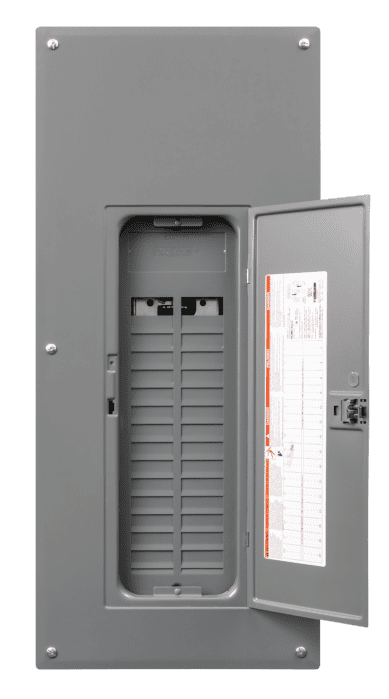
About half of Denver-area homes need some electrical work when electrifying. That ranges from adding a simple circuit ($300-$800) to a full panel upgrade ($2,500-$7,000). Very few homes need to go beyond 200 amps.
That last point matters, because the cost jump beyond 200A is dramatic. Knowing which category your home falls into before getting quotes saves significant time and money.
200 amps is the magic number
If your home has 200-amp electrical service, you can likely electrify everything - heat pump, Level 2 EV charger, heat pump water heater - without an expensive service upgrade.
The expensive line is 320 or 400 amps. In Xcel Energy territory, upgrading beyond 200A costs $15,000 to $20,000 minimum for existing homes. That is not a typo. You pay for everything Xcel does: new transformer, new lines to your home, new meter base, everything.
The real question is not "do I need electrical work?" - it is "can I stay at or under 200 amps?" For most Colorado homes, the answer is yes.
What electrification actually requires
| Equipment | Circuit Required | Typical Amp Draw |
|---|---|---|
| Heat pump (whole home) | 240V, 30-60A breaker | 15-50A running |
| Heat pump (mini-split, single zone) | 240V, 15-30A breaker | 8-15A running |
| EV charger (Level 2, 40A) | 240V, 50A breaker | 32-40A charging |
| EV charger (Level 2, 48A) | 240V, 60A breaker | 40-48A charging |
| Heat pump water heater | 240V, 30A breaker | 15-25A running |
| Induction range | 240V, 40-50A breaker | 20-40A cooking |
Can you run everything at once?
Technically, yes - but practically, you rarely do. Your EV charges overnight when HVAC load is low. Your water heater runs intermittently. Your stove peaks briefly during cooking. This is why 200A service works for most full electrification projects.
When 200A might not be enough
- Very large homes (4,000+ sq ft) with multiple HVAC zones
- Charging multiple EVs simultaneously (two 48A chargers = 96A just for cars)
- Workshop with heavy equipment
- Pool or hot tub combined with full electrification
For typical Denver metro homes under 3,000 sq ft? 200A handles it.
The 200-amp reality in Colorado
What most homes have
Homes built after 1980 typically have 200-amp service. Homes built before 1960 often have 60-100 amps. The 1960s-1980s is a mix. In our experience, about half of Denver-area homes need some electrical work when electrifying, but very few need to exceed 200A.
What Xcel Energy allows
Xcel's standard residential service maxes out at 200 amps. Beyond that, you are in commercial-grade service territory with commercial-grade costs.
Going from 200A to 320A in Xcel territory:
- Minimum $15,000-$20,000 for retrofits
- You pay for the new transformer
- You pay for the new service line to your home
- You pay for the new meter base
- Timeline: months, not weeks
The cost difference between a $4,000 panel upgrade and an $18,000 service upgrade is why staying at 200A matters.
Note: UniColorado does panel upgrades up to 200A as part of HVAC projects. 320A service is a major utility-coordination project that is well outside HVAC scope.
What electrical upgrades actually cost in Colorado
Adding a dedicated circuit
$300-$800
If you have panel capacity but need a new circuit for your heat pump or water heater. Covers running new wire from panel to equipment location, installing the breaker, and permits. Varies by distance and accessibility.
Panel upgrade (100A to 200A)
$2,500-$7,000
Most Denver-area upgrades fall in the $3,500-$5,500 range. Varies by panel location, whether Xcel needs to upgrade the meter base, local permit requirements, and condition of existing wiring.
Service upgrade (200A to 320A/400A)
$15,000-$20,000+
Major project involving Xcel Energy directly. Add electrician's work, permits, and any trenching, and costs can exceed $25,000. Exhaust every option to stay at 200A before going this route.
Alternatives to avoid expensive upgrades
If you are close to maxing out 200A, several options can help you avoid the expensive jump to 320A:
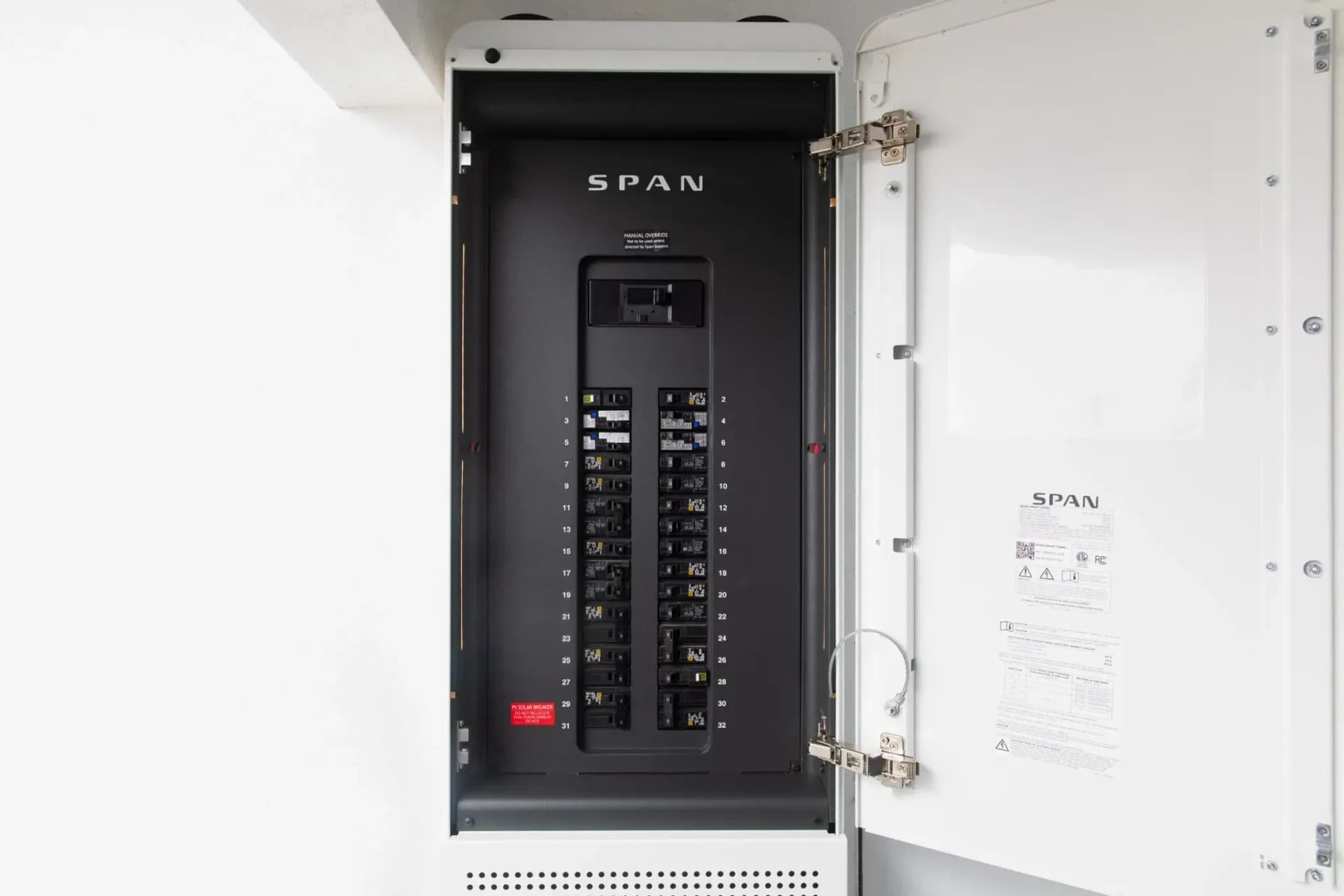
Smart electrical panels
Products like SPAN and Lumin add load management to your electrical system. They automatically balance power between circuits, preventing overloads and eliminating the need for service upgrades in many cases.
- SPAN Panel: Full panel replacement with circuit-level control. $7,000-$8,500 installed.
- Lumin: Retrofits onto your existing panel. $4,000-$6,000 installed.
These are not cheap, but dramatically less than an $18,000 service upgrade.
Lower-power equipment options
- Smaller EV charger: A 32A charger (7.7 kW) instead of 48A (11.5 kW) still adds 25+ miles of range per hour
- Right-sized heat pump: Oversized systems draw more power - proper sizing matters
Staging upgrades
If you are not electrifying everything at once, you have flexibility. Add the heat pump now. Plan for EV charging later when you can also address any panel limitations.
How to know what you need
Check your main breaker
Open your electrical panel and look at the main breaker at the top. It is labeled with an amp rating: 100, 150, 200, etc.
- Says 200: You are in good shape for electrification.
- Says 100 or 150: Budget for a possible panel upgrade.
- Says 60: You will definitely need an upgrade.
Count available breaker slots
Even with adequate amperage, you need physical space for new breakers. A heat pump typically needs a 30-50A double-pole breaker (2 slots). An EV charger needs a 50-60A double-pole (2 slots). A heat pump water heater needs a 30A double-pole (2 slots).
If your panel is full, you may need a subpanel ($500-$1,500) or panel replacement even if your service amperage is adequate.
When to get a professional load calculation
If you are planning multiple upgrades - heat pump, EV charger, water heater - get an electrician to run the numbers before committing. This costs $100-$300 standalone, or is often included in a comprehensive HVAC quote.
Incentives that help with costs
HEAR Program (Colorado)
The Home Electrification and Appliance Rebates program offers up to $4,000 for electrical panel upgrades for qualifying households. Income limits apply - rebates are highest for low- and moderate-income households. HEAR is available now through registered contractors.
Xcel Energy EV Wiring Rebate
Xcel offers $500-$1,200 toward Level 2 charger wiring installation, depending on income qualification. Helps offset circuit installation costs, though it does not cover panel upgrades.
Federal Tax Credits (Note)
The 25C tax credit for panel upgrades ended December 31, 2025 and is no longer available for new installations. The 30C credit (EV charger infrastructure) is still available.
The bottom line
Electrical upgrades are a common part of home electrification, but they do not have to be a dealbreaker. Most Colorado homes can fully electrify with 200-amp service. About half need some panel work, but few need the expensive jump beyond 200A.
Know your current service, understand what you are adding, and get a proper assessment before committing. The difference between a $4,000 upgrade and an $18,000 service upgrade is worth understanding before you start.
Schedule a free assessment - we evaluate electrical capacity as part of every heat pump quote.